Info
Commonly known as the Tussock Moth, the Dasychira genus is often discovered by gardeners who mistake these flamboyant caterpillars for a strange part of a plant's foliage. While they look like tiny, animated makeup brushes or colorful pipe cleaners, they are the ultimate "look but don't touch" residents of the garden. In many cultures, the sudden appearance of these fuzzy wanderers signals the peak of the growing season as they forage heavily before their transformation.
🔍 How to Identify
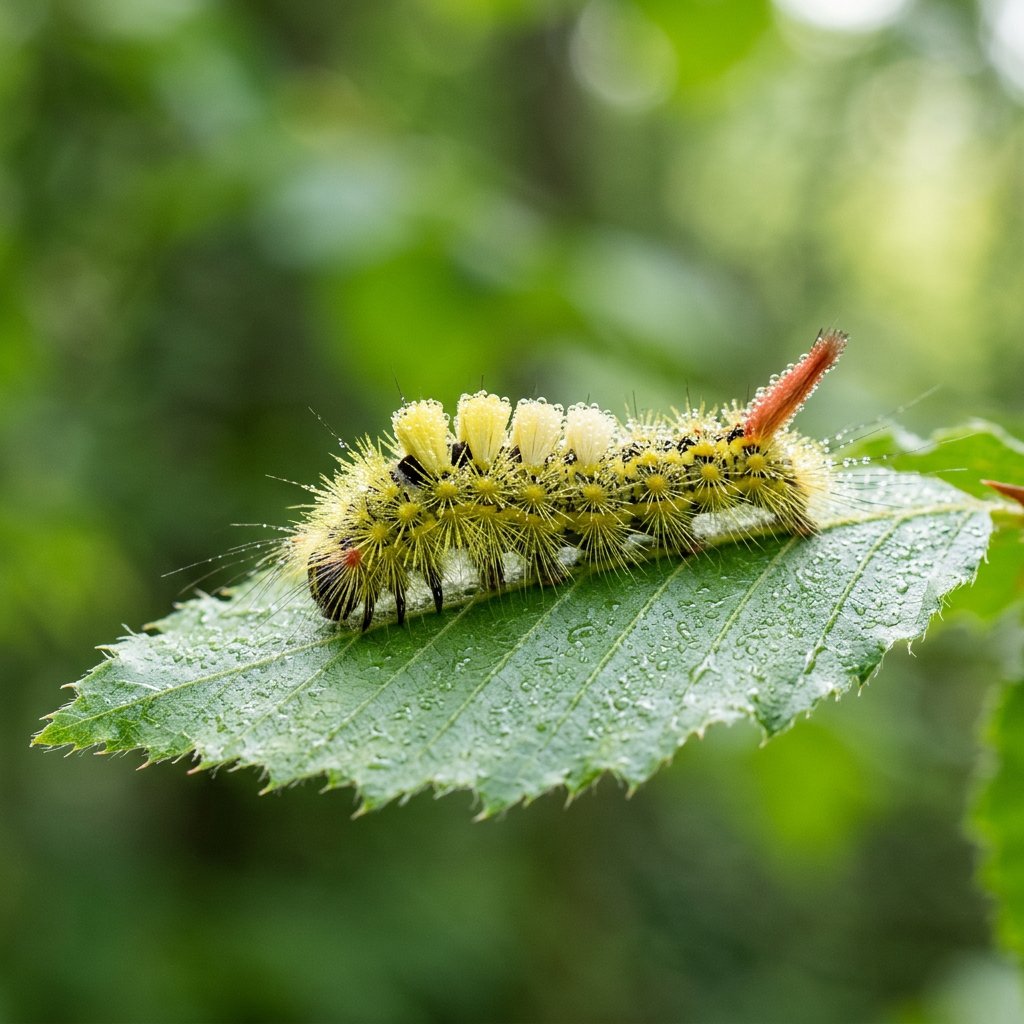
- 🐛 Tussock Tufts: The most striking feature is a row of four dense, brush-like clumps of hair on the back, resembling the bristles of a toothbrush.
- 🖌️ Hair Pencils: Look for long, thin "pencils" of dark hair extending forward from the head and backward from the tail, giving the larva a symmetrical, elongated look.
- 🎨 Vibrant Coloring: While the adult moths are often a camouflaged, dusty grey or brown, the caterpillars sport vivid accents of yellow, white, and sometimes bright red or orange "buttons" along their spine.
🌲 Habitat & Ecology
- 🍂 Host Plant Variety: These caterpillars are not picky eaters; they are frequently found on the leaves of Willow, Oak, Maple, and various fruit trees, where they can occasionally cause noticeable "skeletonizing" of the foliage.
- 🕸️ Recycled Protection: When it comes time to spin a cocoon, the Dasychira pulls out its own hairs and weaves them into the silk, creating a toxic "barbed wire" fence around its pupa to deter predators.
⚠️ Safety & Toxicity
- 🚫 Hazardous Fuzz: These are not "petable" caterpillars. Their hairs are urticating, meaning they are hollow, brittle, and filled with irritating toxins.
- 🔴 Skin Irritation: Contact with the skin often results in a painful, itchy red rash or hives (a condition known as erucism). Children and pets should be kept at a distance, as even a discarded cocoon can still trigger a reaction.
✨ Fun Fact
The name Dasychira is derived from the Greek words for "hairy" and "hand," referring to the way the adult moths hold their incredibly fuzzy front legs straight out in front of them while resting, making them look like they are reaching out for a tiny high-five!
More Details








