Info
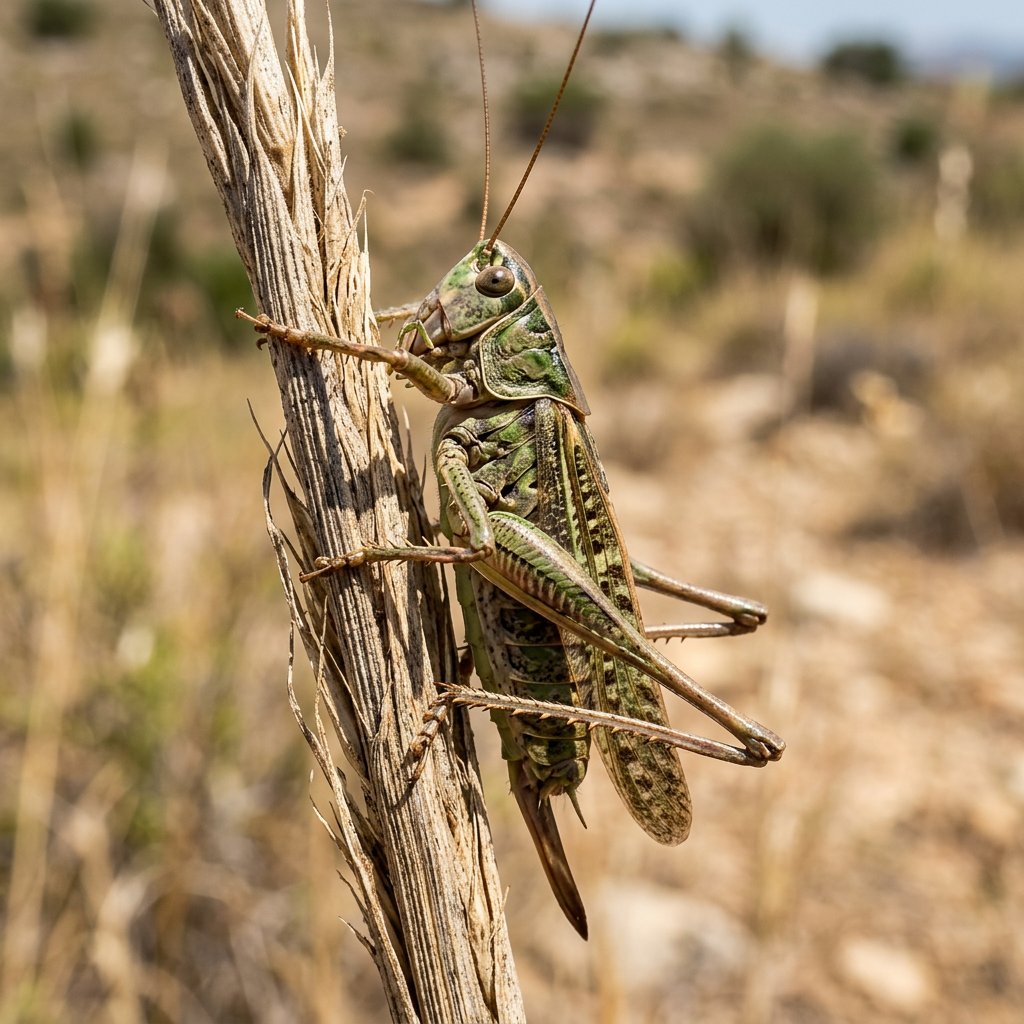
Known as the White-faced Bush-cricket, this insect is one of the true titans of the Mediterranean grasslands. With its massive, prehistoric silhouette and its signature creamy-white "mask," it looks like a creature straight out of a miniature safari. While its size can be intimidating, it is a fascinating architect of the summer soundscape, known for its loud, rhythmic clicking that resonates during the hottest parts of the day.
🔍 How to Identify
- ⚪ The White Mask: Its most defining feature is the stark, pale-white or ivory-colored forehead and face, which contrasts sharply against its darker body.
- 🟤 Robust Body: It sports a heavy, powerful body usually mottled in shades of brown, grey, and ochre, allowing it to blend perfectly into dry stalks and soil.
- 📏 Impressive Size: This is a large insect, often reaching 4 to 5 centimeters in length, with long wings that extend well beyond the tip of its abdomen.
🌲 Habitat & Ecology
- ☀️ Sun Seeker: You will typically find them in dry, sun-drenched habitats like meadows, shrublands, and coastal dunes across Southern Europe and North Africa.
- 🍽️ Opportunistic Predator: Unlike many of its cousins, the White-faced Bush-cricket is an omnivore with a predatory streak; it uses its powerful jaws to hunt smaller insects and grasshoppers, though it also snacks on seeds and foliage.
- 🎶 Summer Songwriter: Males produce a distinctive "song" consisting of short, sharp chirps that sound like a mechanical clicking, used to attract females during the peak of summer heat.
⚠️ Safety & Toxicity
- 🤏 Handle with Care: While not aggressive or venomous, this insect possesses incredibly strong mandibles designed for crushing prey and tough plant matter.
- 🩹 The "Nip": If handled roughly or squeezed, it can deliver a surprisingly painful pinch that might even break the skin. It is best to observe these giants from a short distance or let them crawl onto a flat hand rather than picking them up.
✨ Fun Fact
The biting power of the White-faced Bush-cricket is legendary among entomologists; it is rumored to be able to bite through thin cardboard or even draw blood, earning it a reputation as the "lion" of the European cricket world.
More Details








