Info
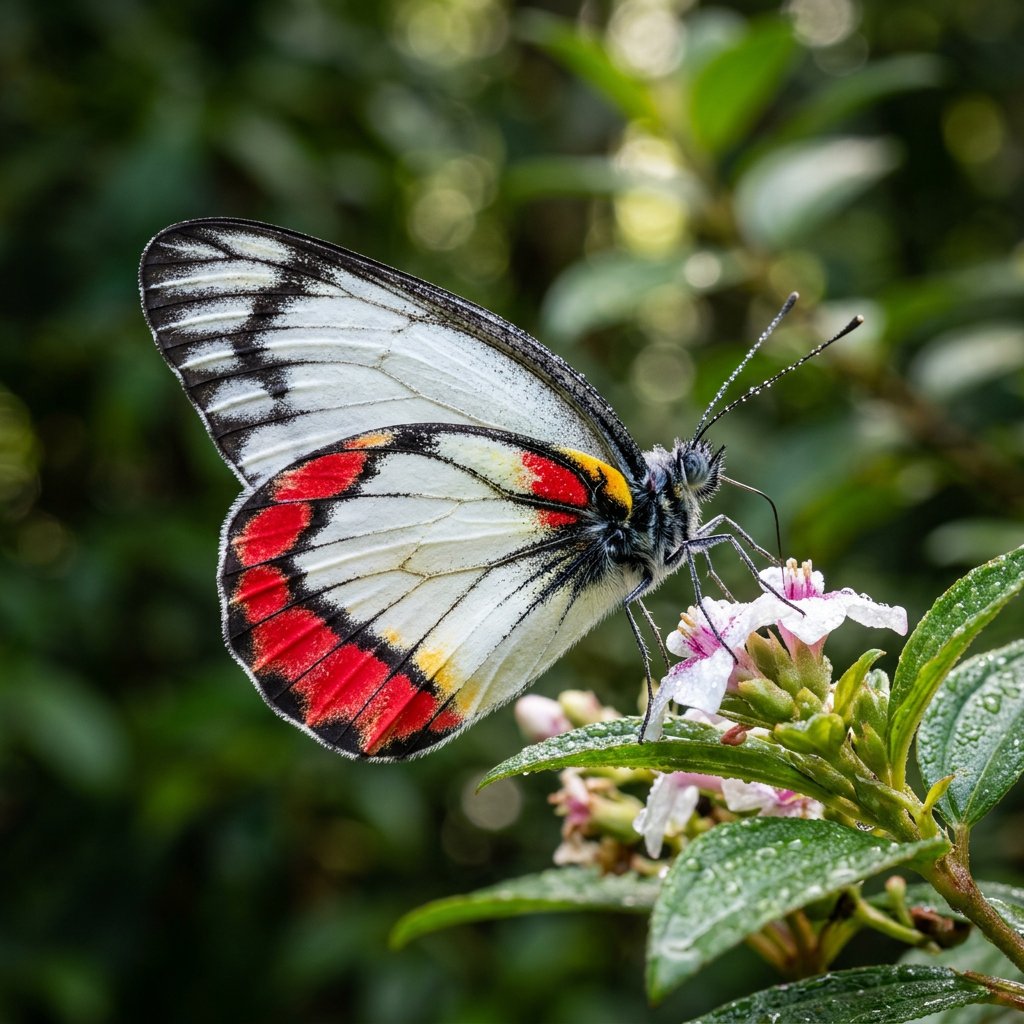
The Common Jezebel (Delias mysis) is a high-flying jewel of the Australian and New Guinea tropics, often nicknamed the "Union Jack" butterfly due to its striking red, white, and blue-ish patterns. While it looks like a delicate flower drifting through the air, its bold colors serve a much tougher purpose: warning predators that it is definitely not on the menu. This butterfly is a canopy specialist, spending most of its life dancing around the tops of rainforest trees.
🔍 How to Identify
- 🦋 The Underside "Window": The most iconic feature is the underside of the hindwing, which displays a brilliant red arc and bright yellow patches separated by thick black veins.
- ⚪ Topside Contrast: From above, the wings appear mostly snowy white with thick, smoky black borders, making them easy to spot against green foliage.
- 📏 Wing Shape: They have a medium wingspan (about 6-7 cm) with soft, rounded wing edges typical of the Pieridae family.
🌲 Habitat & Ecology
- 🌿 Mistletoe Specialists: These butterflies are "mistletoe addicts." Females lay their eggs exclusively on various species of mistletoe, a parasitic plant. This relationship is vital for the butterfly's survival and its chemical defense system.
- ☁️ Canopy Dwellers: You will rarely find them near the ground unless they are descending to drink nectar from garden flowers. They prefer the sunlight and safety of the upper forest canopy and mangrove tops.
⚠️ Safety & Toxicity
- 🛡️ Aposematic Coloring: The bright red and yellow colors are a "stop sign" for birds. Because the larvae eat mistletoe, the adult butterflies carry bitter toxins in their bodies that make them unpalatable.
- ✅ Completely Harmless: For humans, the Common Jezebel is a friend. They do not bite or sting, and they are safe for curious children or pets to observe in the garden.
✨ Fun Fact
Common Jezebel caterpillars are surprisingly social! Unlike many other butterfly larvae that live solitary lives, these caterpillars live and feed together in groups on a single mistletoe leaf, often lining up in neat rows to eat.
More Details








