Info
Often mistaken for a plant disease or a strange growth, Depressariidae is actually a family of "Flat-body Moths." They are the secret architects of the garden, known for their caterpillars that skillfully roll, fold, and silk-tie leaves into tiny, protective "log cabins." If you see a leaf on your herbs neatly rolled up like a cigar, you’ve likely found a member of this clever family.
🔍 How to Identify
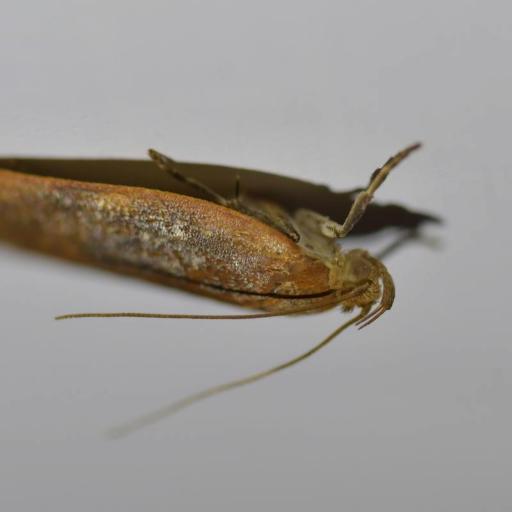
- 📏 Flat Resting Position: Unlike many moths that hold their wings in a tent shape, adults in this family rest with their wings folded perfectly flat over their backs, making them look almost 2D.
- 🐛 Spotted Caterpillars: The larvae are often quite striking—vibrant lime green or yellow with distinct, bold black polka dots along their segments.
- 🕸️ Silk Webbing: You will often find them inside "webbed" flower heads or leaf-rolls, specifically on plants in the carrot, fennel, or daisy families.
🌲 Habitat & Ecology
- 🥕 The Herb Garden Tenant: These insects are specialists. You’ll most frequently encounter them on Umbellifers (plants with umbrella-shaped flower clusters) like Dill, Parsley, Fennel, and Wild Carrot.
- 🍂 Master of Camouflage: As adults, they are incredibly difficult to spot. Their wings usually mimic the texture of dried leaves or tree bark, allowing them to hide in plain sight during the day.
⚠️ Safety & Toxicity
- 🦋 Harmless to Humans: Depressariidae moths and their caterpillars do not bite, sting, or possess any venom. They are "friends" of the ecosystem and serve as a food source for birds.
- 🌿 Host Plant Risk: The primary safety concern is the plants they inhabit. Many species live on Poison Hemlock or Giant Hogweed. If you are inspecting a "leaf roll," be careful not to touch the plant sap, which can cause severe skin irritation or toxicity.
- 🐾 Pet Safety: These moths are non-toxic to cats and dogs, though the silk webbing they leave behind might be a sticky nuisance for a curious snout.
✨ Fun Fact
The Parsnip Webworm (Depressaria radiella), a member of this family, is involved in an evolutionary "arms race" with its host plants. The plants produce intense toxins to stop being eaten, but the caterpillars have evolved a specialized liver-like function that allows them to detoxify the chemicals and eat the plant anyway!
More Details








