Info
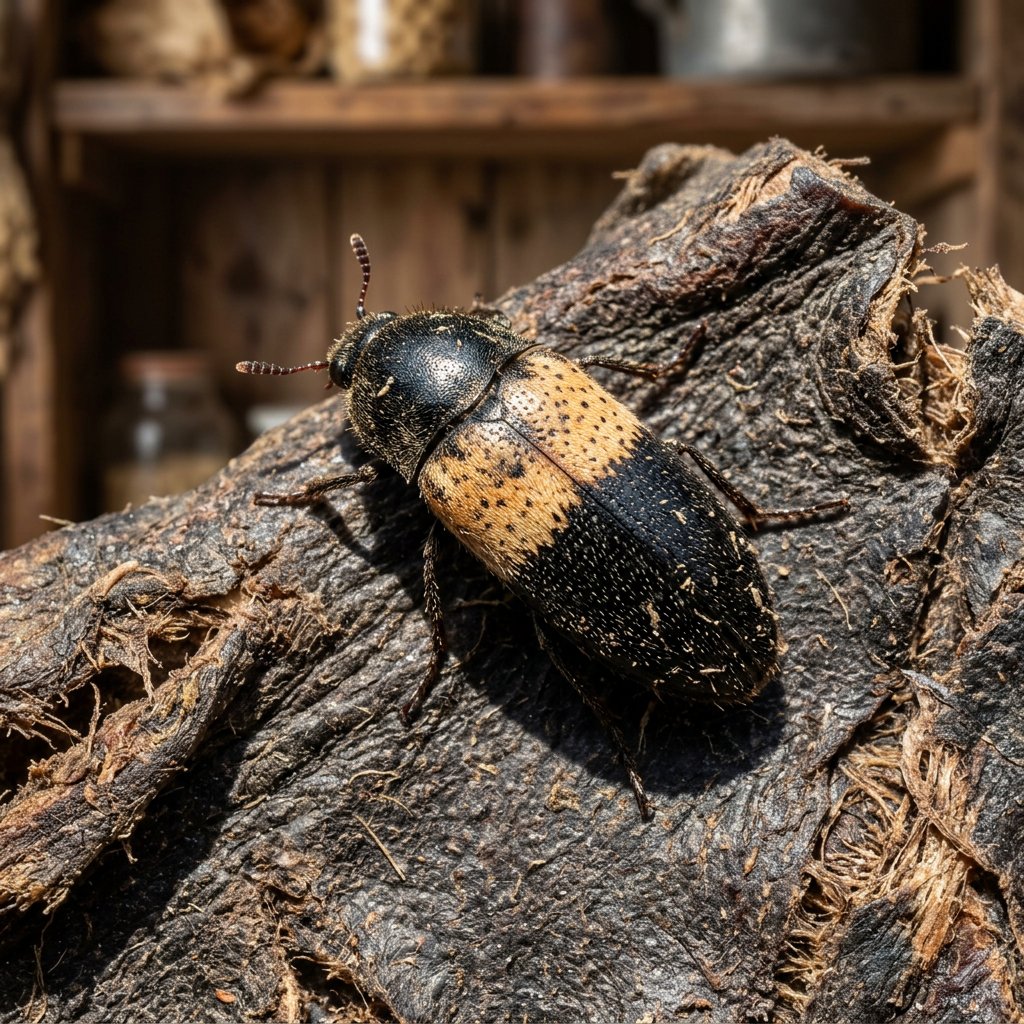
Known as the "Larder Beetle," this little scavenger is the ultimate uninvited pantry guest. Historically, it was a nightmare for sailors and settlers who relied on cured meats for survival, earning its name by raiding the "larder." While it doesn't sting or bite, finding one usually means there is a forgotten high-protein snack—like pet food or dried meat—hiding nearby.
🔍 How to Identify
- 🪲 The "Belt": Its most famous feature is a broad, pale-yellowish band across the top half of its dark wing covers.
- ⚫ Dark Spots: If you look closely at that yellow band, you will see six distinct dark spots arranged in a row.
- 🧬 Body Shape: It has an elongated, oval body, typically measuring about 7 to 9mm in length, and is covered in fine, microscopic hairs.
🌲 Habitat & Ecology
- 🍗 The High-Protein Diet: Unlike many beetles that eat plants, the Larder Beetle craves protein. It thrives on dried fish, ham, cheese, pet food, and even animal hides or feathers.
- 🏠 Wall Cavity Explorer: In modern homes, they are often found near "dead" spaces. If a mouse or a collection of flies dies inside a wall, these beetles will find them and act as nature’s tiny cleanup crew.
- 🐛 Boring Larvae: The larvae are fuzzy and reddish-brown. When they are ready to transform into adults, they have a strange habit of boring into hard materials like wood, cork, or even soft lead to create a safe chamber.
⚠️ Safety & Toxicity
- 🛡️ Harmless to Humans: Larder Beetles are not venomous and do not possess a stinger or a bite that can pierce human skin.
- 🤧 Allergy Warning: The larvae are covered in stiff, "bristly" hairs. If handled, these hairs can cause skin irritation or mild allergic reactions in sensitive individuals.
- 📦 Property Damage: While they aren't a health threat, they are a major "nuisance pest." They can ruin expensive leather, wool, and stored food supplies if left unchecked.
✨ Fun Fact
Museums and taxidermists actually use close relatives of the Larder Beetle (Dermestid beetles) to clean delicate animal skeletons! They are so efficient at eating dry tissue that they can strip a carcass clean without damaging the fragile bones.
More Details








