Info
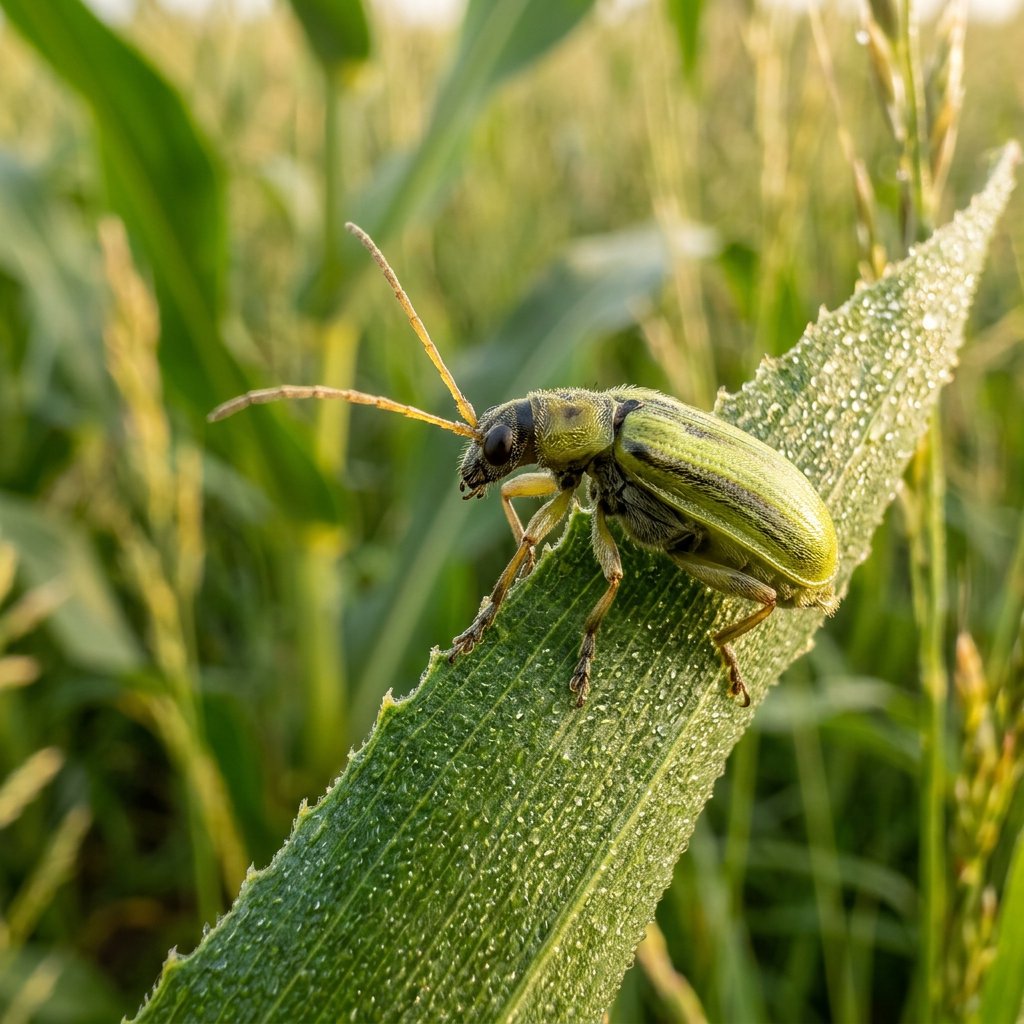
The Diabrotica barberi, commonly known as the Northern Corn Rootworm, is often called the "green ghost" of the cornfield. While it looks like a harmless, tiny leaf beetle, it is a significant player in the agricultural world. Often found clinging to corn silks or garden flowers, this lime-green visitor is a master of survival with a lifecycle deeply tied to the rhythms of the American Midwest and beyond.
🔍 How to Identify
- 🟢 Coloration: Adults are a solid, uniform pale green or yellowish-green. Unlike its cousin, the Spotted Cucumber Beetle, it lacks any black spots or stripes on its wing covers.
- 📏 Size & Shape: These are small, delicate, oval-shaped beetles, typically measuring about 1/4 inch (5-6 mm) in length.
- 🐜 Antennae: They possess long, thread-like antennae that are usually slightly darker than their body, which they use to sniff out pollen and silk.
🌽 Habitat & Ecology
- 🚜 The Corn Connection: As the name suggests, they are heavily associated with maize. The larvae live underground, munching on roots, which can cause corn stalks to "gooseneck" or lean over due to a weakened base.
- 🌸 Late Season Foraging: Once they emerge as adults, they branch out. If corn isn't nearby, you'll find them in your garden snacking on the pollen and petals of sunflowers, daisies, and goldenrod.
- 🥚 Overwintering Strategy: They lay their eggs in the soil during late summer. These eggs are incredibly hardy, surviving freezing winters to hatch exactly when the next season's crops begin to sprout.
⚠️ Safety & Toxicity
- 🛡️ Human & Pet Safety: The Northern Corn Rootworm is completely harmless to humans and pets. They do not bite, sting, or carry diseases that affect mammals.
- 🌱 Garden Impact: While they are a "foe" to large-scale farmers, they are usually just a minor nuisance to home gardeners. If you see them on your flowers, they are likely just looking for a pollen snack and won't cause structural damage to your landscape.
✨ Fun Fact
🧪 The Two-Year Sleep: Some populations of Northern Corn Rootworms have evolved a "superpower" called extended diapause. Their eggs can stay dormant in the soil for two years instead of one, allowing them to "outsmart" farmers who rotate their crops every other year to starve the larvae!
More Details








