Info
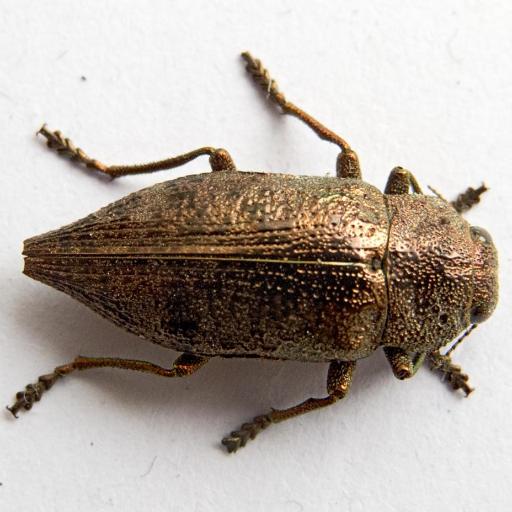
Commonly known as the Copper Buprestid or the Brassy Jewel Beetle, this insect looks like a piece of ancient, hammered bronze come to life. Often found sunning itself on the bark of hardwood trees, it is a member of the "Jewel Beetle" family, celebrated by collectors for their brilliant, metallic exoskeletons that seem to glow under the sunlight.
🔍 How to Identify
- 🪖 The Sculpted Shell: Its body is covered in deep, irregular pits and ridges, giving it a rugged, "sculpted" texture rather than a smooth one.
- ✨ Metallic Sheen: While primarily a dark, coppery bronze, it often flashes tints of brass or metallic green when the light hits it at the right angle.
- 🚤 Boat-Shaped Body: Like most jewel beetles, it has a distinctively tapered, aerodynamic shape, ending in a blunt point at the abdomen.
🌲 Habitat & Ecology
- 🪵 The Wood-Worker: The larvae (grubs) are wood-borers that live inside the wood of weakened or dead hardwood trees, such as willow, poplar, and alder, helping to break down old timber.
- ☀️ Sun Worshiper: You are most likely to spot an adult during the hottest parts of the day. They are excellent fliers and love to bask on sun-drenched logs to regulate their body temperature.
⚠️ Safety & Toxicity
- 🛡️ Harmless to Humans: This beetle is a "gentle giant" of the insect world; it possesses no stinger and is not known to bite humans or pets.
- 🌳 Garden Impact: While they don't harm people, a large population can be a sign that your trees are stressed or dying, as they rarely target perfectly healthy, vigorous plants.
✨ Fun Fact
Jewel beetles like Dicerca aenea don't get their color from pigments; instead, their shimmer is "structural color," caused by microscopic layers in their shell that reflect light in a way that mimics the glint of precious metals!
More Details








