Info
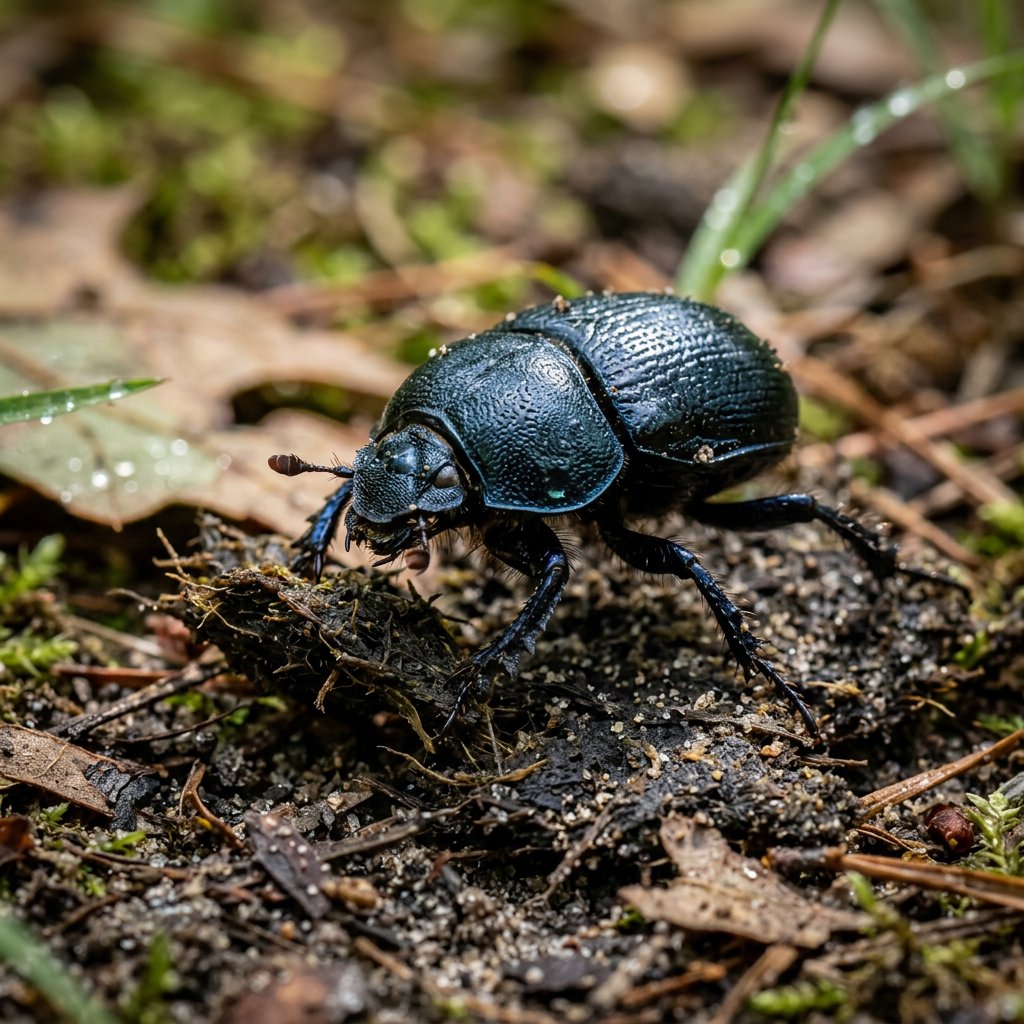
Often called the Carolina Copris Beetle, this robust, obsidian-colored tank is one of nature’s most dedicated recyclers. Found throughout the eastern United States, these beetles are the unsung heroes of the pasture, working under the cover of darkness to clear the land and fertilize the soil. While their choice of food might seem unappealing to us, their tireless work is essential for a healthy ecosystem.
🔍 How to Identify
- 🪖 Heavy Armor: They possess a large, chunky, and very shiny jet-black body that can reach over an inch in length, making them one of the more imposing beetles in the garden.
- 🚜 Grooved Wing Covers: Their elytra (hard wing cases) feature deep, distinct vertical grooves that look as though they were carved with precision.
- 🦄 The Head Horn: Males sport a short, blunt horn on their head used for shoving rivals, while females have a smaller, subtle ridge.
🌲 Habitat & Ecology
- 💩 The Deep Tunnelers: Unlike "rollers" that move dung across the surface, these are "paracoprids." They dig deep, elaborate tunnels directly beneath a food source to bury it, which helps aerate the soil and deliver nutrients to plant roots.
- 💡 Nighttime Navigators: They are strictly nocturnal and are frequently found bumping into porch lights or window screens during mid-summer, as they are easily disoriented by artificial light.
- 👃 Acute Senses: They have a highly developed sense of smell, using their clubbed antennae to "sniff" out fresh resources from significant distances.
⚠️ Safety & Toxicity
- 🛡️ Harmless Giant: Despite their size and "scary" horn, they are completely harmless to humans and pets. They do not sting, and their mandibles are not designed for biting skin.
- 🧼 Wash Your Hands: Because these beetles spend their lives handling animal waste, they can carry bacteria. If you handle one to move it back to the grass, always wash your hands thoroughly afterward.
✨ Fun Fact
- 🧬 Devoted Parents: These beetles exhibit rare "subsocial" behavior. After burying a dung ball, the female stays in the underground chamber to guard her eggs and larvae, cleaning the "brood balls" to prevent lethal fungi from growing on them.
More Details








