Info
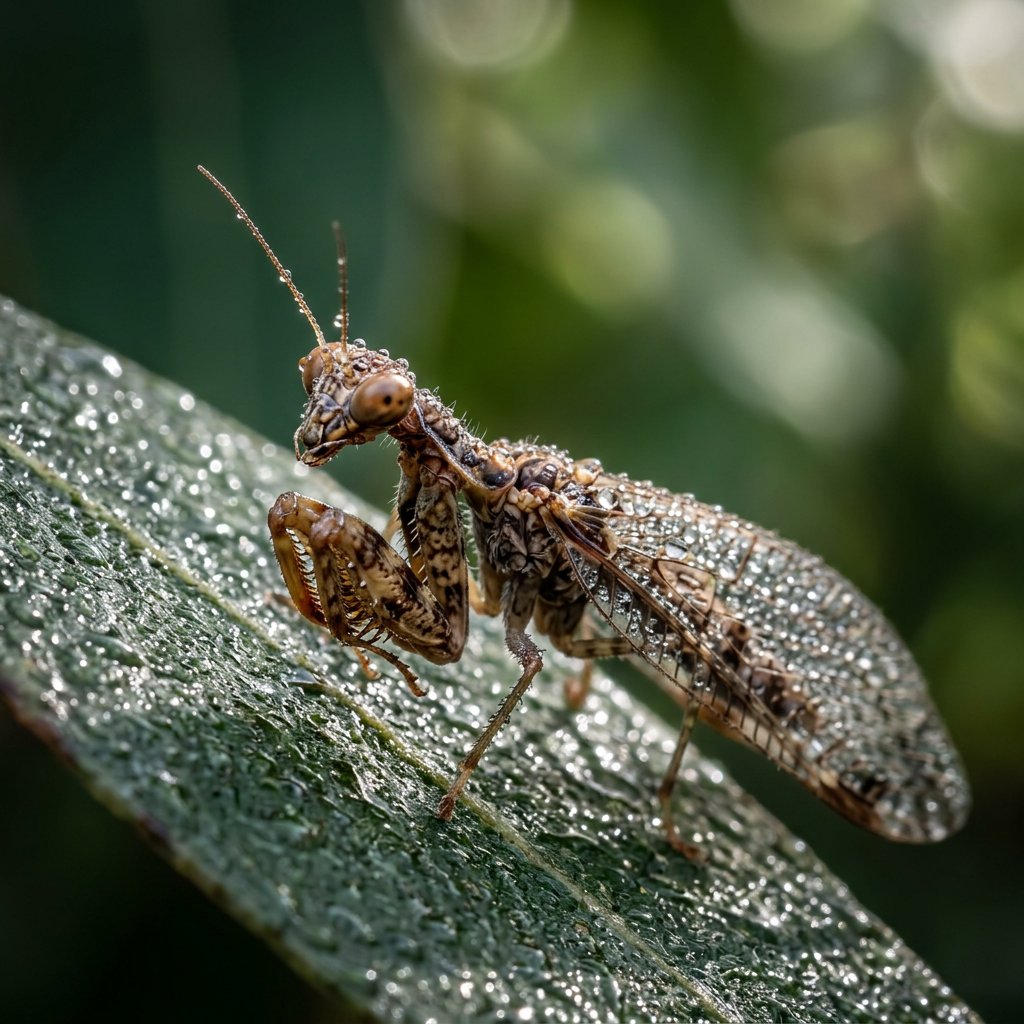
At first glance, you might think you’ve discovered a tiny science experiment gone wrong. The Interrupta Mantidfly is a biological "chimera," sporting the delicate wings of a lacewing, the triangular head and grasping arms of a praying mantis, and the intimidating colors of a wasp. These fascinating insects are masters of mimicry, using their "scary" appearance to trick predators into leaving them alone.
🔍 How to Identify
- 🏗️ Raptorial Forelegs: It possesses powerful, folded front legs lined with small spikes, used for snapping up prey with lightning speed, much like a miniature Praying Mantis.
- 🛡️ Wasp Mimicry: The body is slender and marked with bold yellow and reddish-brown patterns, designed to make it look like a stinging wasp to hungry birds.
- 🕸️ Intricate Wings: Unlike a mantis, it has large, clear wings with a dense network of veins that it holds tent-like over its back when resting.
🌲 Habitat & Ecology
- 🦟 Aerial Predators: As adults, these insects are fierce hunters. They sit motionless on leaves or flowers, waiting for small flies or moths to wander too close before snatching them out of the air.
- 🕷️ The Spider Connection: Their life cycle is incredibly strange. The larvae are "spider boarders"—they hitch a ride on a female spider and wait for her to spin an egg sac. Once she does, the larva crawls inside to feast on the spider’s eggs.
⚠️ Safety & Toxicity
- ✅ Harmless to Humans: Despite their "wasp-like" appearance and "mantis-like" arms, they have no stinger and no venom. They are completely harmless to people and pets.
- 🛡️ Visual Bluff: Their only real defense is their disguise. If you see one, there is no need to be afraid; they are simply trying to look much tougher than they actually are!
✨ Fun Fact
Mantidfly larvae are so determined to reach a food source that if they accidentally land on a male spider, they will wait patiently and "jump ship" onto a female spider during the spiders' mating process!
More Details








