Info
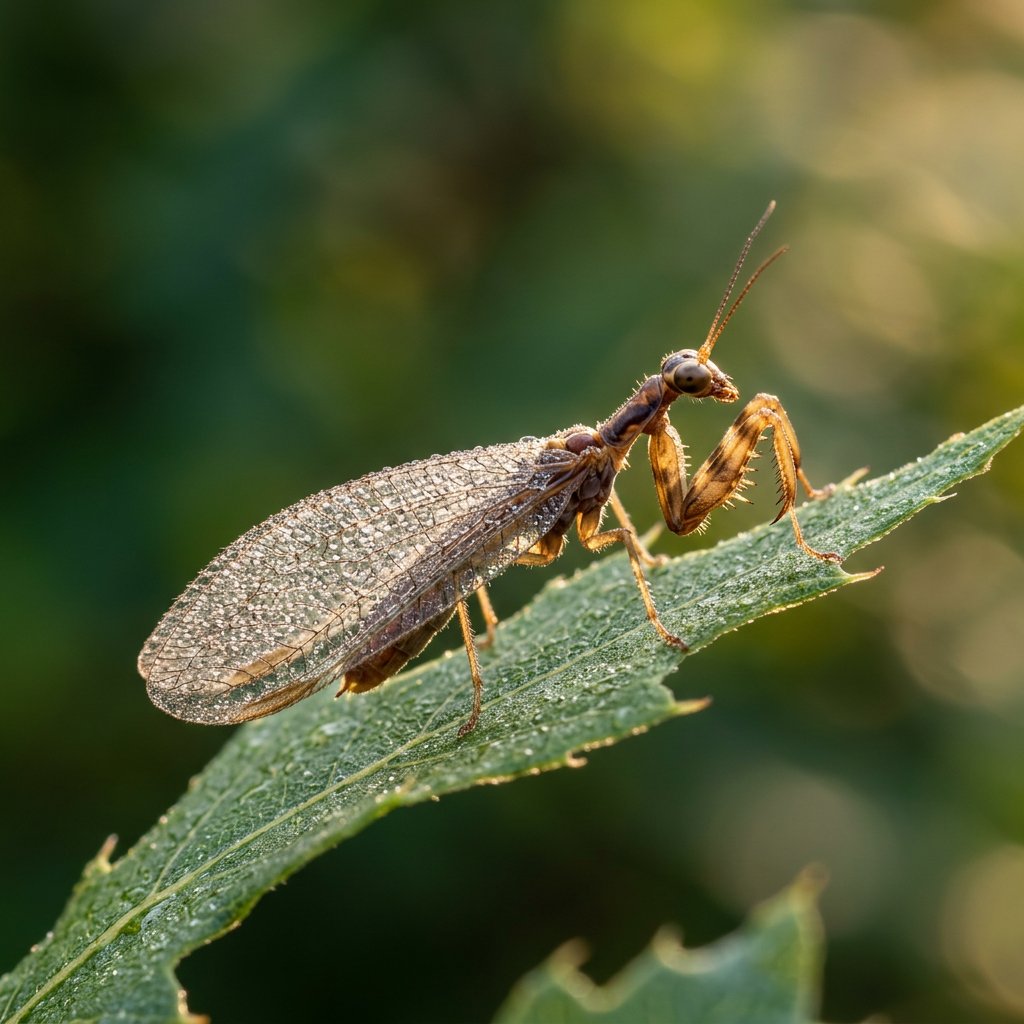
Is it a wasp? A mantis? A fly? Dicromantispa sayi, commonly known as Say’s Mantidfly, is nature’s ultimate mashup. Despite its fierce appearance, this insect is actually a relative of the delicate Green Lacewing. It is a master of "Batesian mimicry," essentially wearing a high-quality wasp costume to scare off birds and predators while it goes about its business as a stealthy garden hunter.
🔍 How to Identify
- 🪝 Raptorial Forelegs: The most striking feature is its front legs, which are folded and spiked exactly like a praying mantis, perfectly designed for snatching prey out of mid-air.
- 🕸️ Intricate Wings: Unlike a mantis, it has two pairs of clear, complexly veined wings that look like fine lace, typical of the lacewing family.
- 🦒 The Long "Neck": It possesses an elongated prothorax (the segment behind the head) that allows it to swivel its head independently, giving it a wide field of vision for hunting.
🌲 Habitat & Ecology
- 🕷️ The Spider Hitchhiker: These insects have one of the strangest life cycles in the animal kingdom. As tiny larvae, they seek out female spiders and hitch a ride on their backs. They wait patiently until the spider spins an egg sac, then slip inside to feast on the spider eggs as they grow.
- 🍃 Summer Sightings: You are most likely to spot an adult Mantidfly in mid-to-late summer. They love patrolling goldenrod and other flowering plants where small flies and pollinators congregate.
⚠️ Safety & Toxicity
- 🛡️ Harmless Mimic: Despite looking like a yellowjacket or a paper wasp, Say's Mantidfly has no stinger and no venom. The "stinger" you might think you see is simply the end of its abdomen.
- 🤏 Gentle Touch: They are not aggressive toward humans. If handled roughly, they might give a tiny, harmless pinch with their front legs, but they generally prefer to fly away if disturbed.
✨ Fun Fact
🧬 The Waiting Game: A Mantidfly larva is so determined to reach a spider's egg sac that if it accidentally lands on a male spider, it will wait until the male mates, then "hop" across to the female spider during the encounter to continue its journey!
More Details








