Info
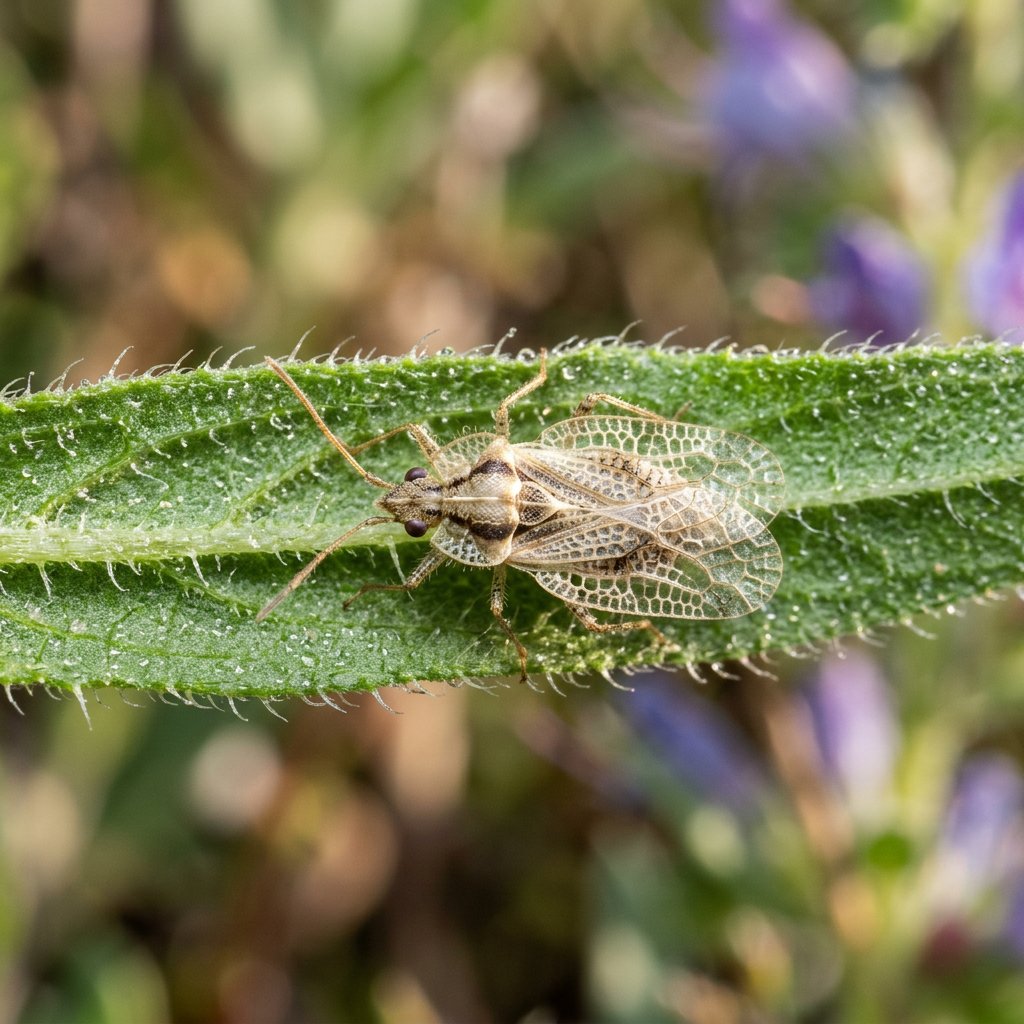
Often called the Viper's Bugloss Lace Bug, this tiny insect is a masterpiece of natural engineering. From a distance, it looks like a mere speck of dust on a leaf, but under a magnifying glass, it reveals an intricate, stained-glass-like wing structure. It is a specialist feeder, spending almost its entire life cycle dedicated to its favorite host plant, the striking purple Viper's Bugloss.
🔍 How to Identify
- 🕸️ Lace-Like Wings: The wings have a delicate, mesh-like network of veins that resemble fine lace or a honeycomb, which is characteristic of the Tingidae family.
- 🌑 Intricate Patterns: They typically display a mottled pattern of dark brown or blackish spots against a translucent, grayish-white background.
- 📏 Compact Shape: They are very small (about 3-4mm) and have a distinctly flattened, oval body shape designed to hug the surface of leaves and stems tightly.
🌲 Habitat & Ecology
- 🌿 Dietary Specialist: These bugs are sap-suckers. They use their needle-like mouthparts to pierce the "skin" of plants in the Boraginaceae family, specifically targeting the Viper's Bugloss (Echium vulgare).
- 🍂 Life on the Leaf: You will often find them in small clusters on the undersides of leaves or tucked away within the fuzzy flower spikes. They overwinter as adults, hiding in plant debris or cracks in the soil until the spring sun wakes them up.
⚠️ Safety & Toxicity
- ✅ Harmless to Humans: The Viper's Bugloss Lace Bug is a "gentle" insect. It does not bite, sting, or carry any diseases that affect humans or pets.
- 🌱 Garden Impact: While they are technically "foes" to the plant, their damage is usually cosmetic. You might notice "stippling"—tiny white or yellow dots on the leaves where they have fed. Unless the infestation is massive, they won't harm the overall health of your garden.
✨ Fun Fact
Members of the Lace Bug family are so specialized that many species have evolved to live on only one specific type of plant. If you find a Dictyla echii, you can almost guarantee there is a Viper's Bugloss plant nearby!
More Details








