Info
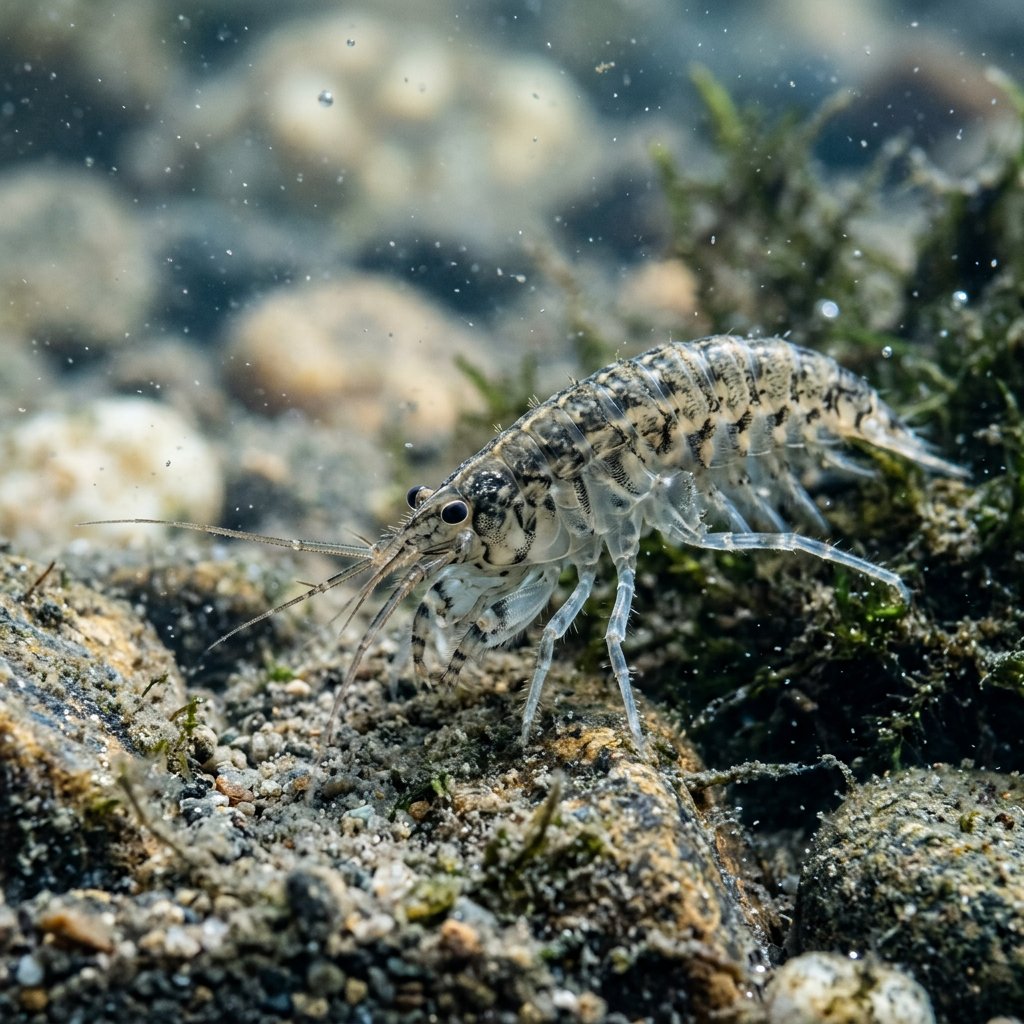
Known widely as the "Killer Shrimp," Dikerogammarus is a formidable freshwater warrior that has gained notoriety across Europe and the UK. Though it looks like a harmless pond resident, this aggressive amphipod (a cousin to the shrimp) is a master of its domain. It is often the subject of ecological warnings because of its ability to rapidly take over new territories and outcompete local species.
🔍 How to Identify
- 🦐 The Size: Much larger than your typical native freshwater shrimp, often reaching up to 30mm in length—nearly the size of a thumb joint.
- 🦓 Striking Patterns: Its body is often semi-translucent but marked with distinct dark stripes or spots, giving it a leopard or zebra-like appearance.
- 🪵 Tail Ridges: If you look closely at its rear segments (the pleon), you will see small, cone-shaped bumps or "tubercles" that aren't found on common native shrimp.
🌊 Habitat & Ecology
- 🪨 Hard Surfaces: These creatures are experts at hiding. They prefer to cling to submerged rocks, bridge pilings, or even the shells of zebra mussels in slow-moving rivers and lakes.
- ⚔️ Aggressive Predator: Unlike many scavengers, the Killer Shrimp is a true hunter. It frequently kills other small insects, larvae, and native shrimp, sometimes even when it isn't hungry, a behavior known as "surplus killing."
⚠️ Safety & Toxicity
- 🟢 Safe for Humans: This shrimp is not venomous and does not possess a "bite" that can pierce human skin. You can safely observe them without fear of injury.
- 🚤 Ecological Warning: The real danger is to the environment. They are a highly invasive species. If you find one, it is vital to "Check, Clean, Dry" your boots, fishing gear, or boats to ensure you don't accidentally transport their eggs to a new pond or river.
✨ Fun Fact
The Killer Shrimp is so hardy that it can survive for several days out of the water in damp conditions, such as tucked inside a wet wetsuit or a coiled garden hose, allowing it to "hitchhike" between different bodies of water with ease!
More Details








