Info
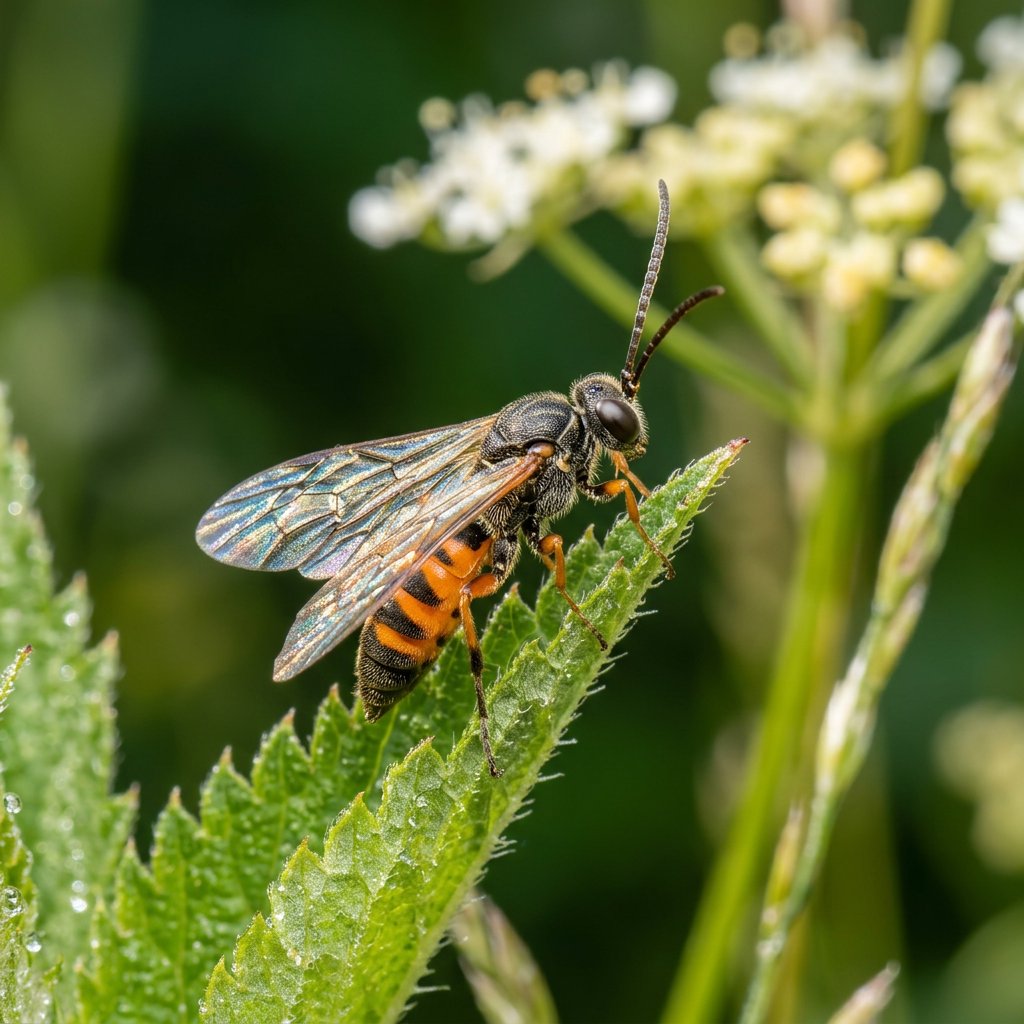
Small, striking, and incredibly focused, the Hoverfly Parasitoid Wasp is the "secret agent" of the insect world. Often found patrolling garden flowers, this tiny wasp is famous for its cosmopolitan lifestyle—it is found on every continent except Antarctica. While its name sounds intimidating, it is a fascinating example of how nature maintains a complex balance between predators and prey.
🔍 How to Identify
- 🐝 The Color Palette: It features a slender black body adorned with bright yellow bands on the abdomen, mimicking the appearance of much larger, more dangerous wasps.
- 🧦 Fancy Footwear: One of its most distinctive field marks is its "socks"—the hind legs are bright orange with a very specific white band sandwiched between two black sections.
- 📏 Size and Shape: It is quite small and delicate (usually under 10mm), with long, thin antennae that are constantly twitching as it searches for a place to lay its eggs.
🌲 Habitat & Ecology
- 🌸 Nectar Lovers: As adults, you will most likely find them hovering around umbellifers (like dill, fennel, or Queen Anne's Lace) sipping nectar to fuel their high-energy search for hosts.
- 🎯 The Hoverfly Hunter: This wasp is an "endoparasitoid." The female hunts for the eggs or young larvae of Hoverflies (Syrphidae). She lays her own egg inside them; her offspring then grows inside the hoverfly larva, eventually emerging from the hoverfly's pupa once it has been fully consumed.
- 🌏 Global Resident: Because they are so effective at traveling and adapting, they are found in almost every backyard, meadow, and agricultural field where flowers and aphids are present.
⚠️ Safety & Toxicity
- 🛡️ Harmless to Humans: Despite its wasp-like appearance and "pointy" tail, Diplazon laetatorius is completely harmless to people and pets.
- 🚫 No Stinger: The long structure at the back of the female is an ovipositor, used strictly for laying eggs inside other insects. It lacks the ability to sting or bite humans, making it a safe guest in your garden.
✨ Fun Fact
This wasp is a master of timing! It has the incredible ability to lay its egg inside a hoverfly egg before it has even hatched. The wasp larva then waits patiently, letting the hoverfly caterpillar grow and eat aphids, essentially "fattening up" its future meal before taking over.
More Details








