Info
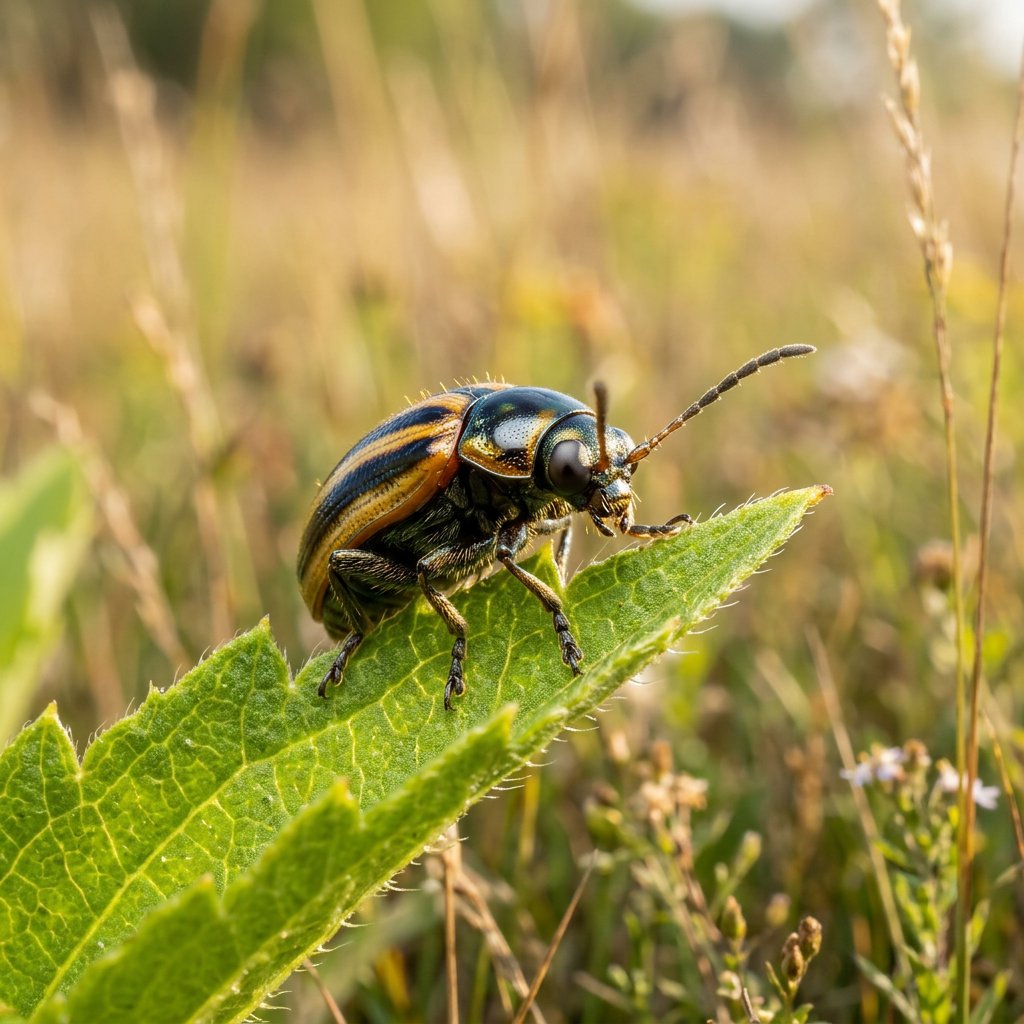
Often mistaken for miniature racing cars due to their bold patterns, beetles in the genus Disonycha—commonly known as Striped Flea Beetles—are the Olympic long-jumpers of the insect world. While their bright colors might suggest a warning, these beetles are generally peaceful vegetarians that prefer a quick "pop" into the air over any kind of confrontation.
🔍 How to Identify
- 🎨 Bold Stripes: Most species feature striking, longitudinal yellow and black (or dark blue) stripes running down their smooth, shiny wing covers.
- 🦵 Powerful Thighs: Look closely at the hind legs; they are noticeably thickened and muscular, functioning like high-tension springs for rapid escapes.
- 📏 Oval Shape: They have a neat, compact, and oval-shaped body, usually measuring between 5 to 10 millimeters in length.
🌲 Habitat & Ecology
- 🥗 Specialized Diners: These beetles are often "host-specific," meaning certain species only eat specific plants. You will most likely find them lounging on Amaranth, Purslane, or Willow leaves.
- 🦘 Spring-Loaded Defense: Their primary survival tactic is their jump. If you shadow them with your hand, they will use their enlarged femurs to launch themselves several feet away in a split second.
- 🍃 Skeletonizers: In the larval stage, they live on the underside of leaves, munching away at the tissue but often leaving the veins intact, creating a "see-through" lace effect on the foliage.
⚠️ Safety & Toxicity
- ✅ Safe for Humans: Disonycha beetles are completely harmless to people and pets. They do not bite, sting, or carry any venom.
- 🌱 Garden Health: While they can cause "shotholes" (tiny round holes) in leaves, they rarely cause enough damage to kill a plant. They are usually a cosmetic concern rather than a botanical emergency.
✨ Fun Fact
Despite their name, they are not related to actual fleas! They earned the "flea" title exclusively because of their incredible jumping ability, which allows them to leap over 100 times their own body length to escape predators.
More Details








