Info
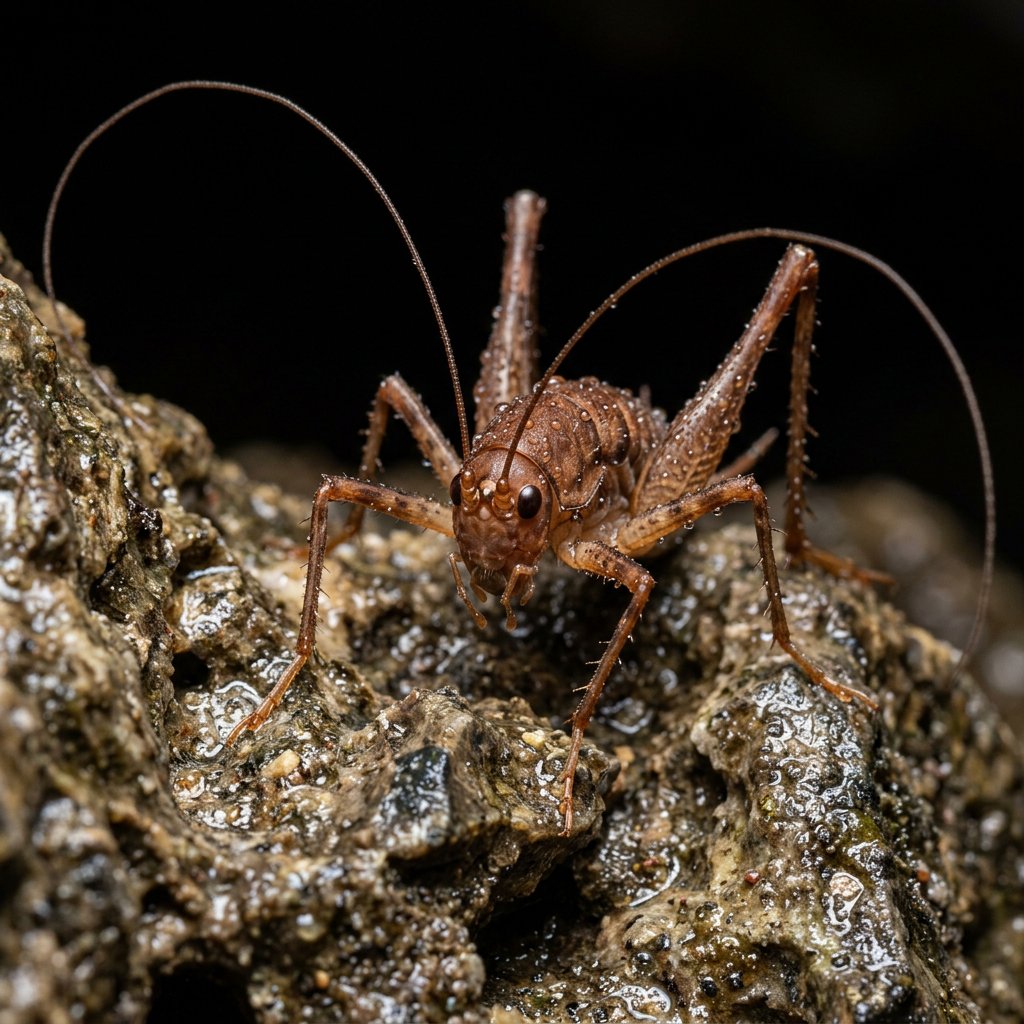
Commonly known as Azam’s Cave Cricket, this delicate, spindly insect is a master of the Mediterranean underworld. While its spider-like silhouette might startle a hiker exploring a grotto, it is a fascinating example of "troglophilous" life—creatures that have evolved to thrive in the perpetual twilight of caves and rocky crevices.
🔍 How to Identify
- 📡 Extraordinary Antennae: Their most striking feature is a pair of incredibly long, whip-like antennae that can be several times the length of their actual body, used to "feel" their way through pitch-black tunnels.
- 🐪 Humped Silhouette: Like other camel crickets, they lack wings and possess a distinctively arched, high-backed thorax that gives them a prehistoric appearance.
- 🦵 Spindly Limbs: They sport exceptionally long, thin legs designed for sudden, powerful leaps, allowing them to vanish into shadows in the blink of an eye.
🌲 Habitat & Ecology
- 🔦 Shadow Dwellers: Dolichopoda azami is primarily found in the cool, damp environments of Southern France and Italy. They prefer the stable temperatures of caves, but can occasionally be found in dark cellars or deep forest leaf litter.
- 🍂 Subterranean Scavengers: They play a vital role in their ecosystem as scavengers. Their diet consists of organic debris, fungi, and occasionally small, dead invertebrates, helping to break down matter in environments where food is scarce.
⚠️ Safety & Toxicity
- 🛡️ Harmless Resident: These insects are entirely non-toxic and do not possess a stinger or functional biting mouthparts that can harm humans or pets.
- 🦗 The "Jump Scare": Their only defense mechanism is their powerful jump. Because they are sensitive to light and vibrations, they may accidentally leap toward a person when startled, which can be surprising but is completely harmless.
✨ Fun Fact
Because they live in dark environments where eyes are less useful, Dolichopoda azami relies on "mechanoreceptors" on its legs and antennae. They are so sensitive that they can detect the slight change in air pressure caused by a predator—or a curious human—moving nearby!
More Details








