Info
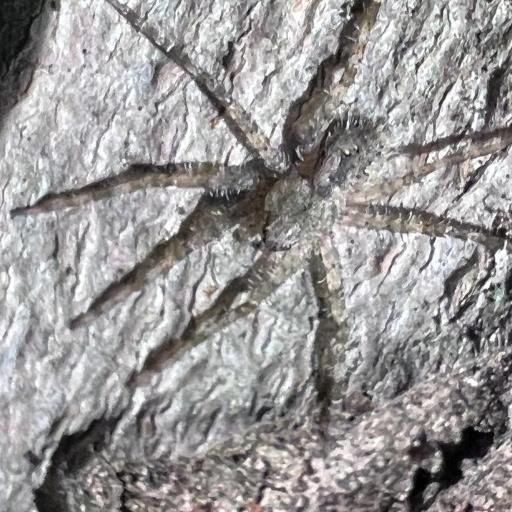
Commonly known as the White-banded Fishing Spider, this arachnid is a master of camouflage, often blending seamlessly into lichen-covered tree trunks or wooden docks. While it belongs to a family of spiders known for "fishing" at the water's edge, this species is unique for its tendency to wander further from the shoreline into the forest canopy. Its ghost-like appearance and impressive size make it a striking find for any nature explorer strolling through the wetlands.
🔍 How to Identify
- 👻 Coloration: A mottled mix of white, grey, and sage green that perfectly mimics the look of lichen or weathered bark.
- 🕷️ Body Shape: Large and notably flattened with long, robust legs that sprawl out wide to help distribute its weight across water or bark.
- 🧔 The "Mustache": It features a distinct horizontal white band of hairs just below the eyes, giving it a characteristic "white-banded" face.
🌲 Habitat & Ecology
- 🌳 The Tree-Dweller: Unlike other fishing spiders that stay glued to the water's surface, Dolomedes albineus is often found high up on cypress trees or bridge pilings near swamps and slow-moving rivers.
- 👟 Surface Tension Skater: Despite its arboreal habits, it is perfectly capable of "skating" across the surface of the water to hunt for aquatic insects or small minnows.
- 🦅 Stealth Predator: It does not build a web to catch food. Instead, it sits motionless and uses its sensitive leg hairs to detect the tiniest vibrations from approaching prey before pouncing with lightning speed.
⚠️ Safety & Toxicity
- 🛡️ Status: Non-Aggressive. These spiders are quite shy and will almost always choose to sprint away or dive underwater if they feel threatened.
- 🩹 Details: If handled roughly, they may bite. The sensation is similar to a bee sting, resulting in localized redness or swelling, but the venom is not considered medically significant to humans or pets.
✨ Fun Fact
The White-banded Fishing Spider is an expert scuba diver! When threatened, it can plunge beneath the water's surface and stay submerged for up to 30 minutes by trapping a thin layer of air against its body using its dense, water-repellent hairs.
More Details








