Info
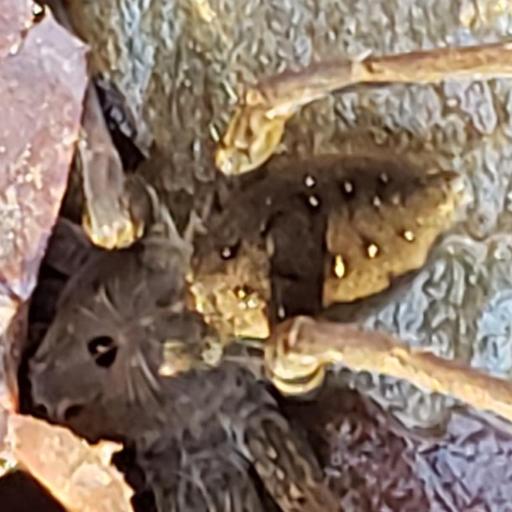
Often mistaken for a giant wolf spider, the White-banded Fishing Spider is a true marvel of the water’s edge. Known as a "semi-aquatic athlete," it spends its life prowling the margins of ponds and slow-moving streams. Unlike most spiders that rely on sticky webs to trap prey, this species uses the water's surface tension as a sensitive vibration detector to ambush its next meal.
🔍 How to Identify
- ⚪ The "White Bands": Look for the distinct, pale-white or cream-colored stripes running along the sides of its dark brown cephalothorax (the front body segment).
- 📏 Impressive Span: These are among the largest spiders in North America; a mature female can have a leg span reaching nearly 3 inches (7-8 cm).
- 🦵 Velvety Hairs: Their long, sturdy legs are covered in fine, water-repellent hairs (hydrophobic) that allow them to stand and run on the water's surface without sinking.
🌊 Habitat & Ecology
- 💧 The Surface Skater: You will most likely spot them perched on docks, floating logs, or partially submerged rocks. They keep their front legs resting on the water to "feel" for the ripples of passing insects or small fish.
- 🐟 Subsurface Hunter: They are one of the few spiders capable of diving. If threatened or hungry, they can submerge themselves to catch small minnows and tadpoles or hide from birds.
- 🕸️ Nursery Builders: They belong to the "Nursery Web" family. Instead of a hunting web, the mother carries her egg sac in her jaws and eventually builds a silk "tent" in the foliage to protect her babies until they are ready to disperse.
⚠️ Safety & Toxicity
- 🛡️ Non-Aggressive: Despite their intimidating size, these spiders are quite shy. Their first instinct is almost always to dive underwater or scuttle into a crevice when a human approaches.
- 🩹 The Bite: They are capable of biting if handled roughly or pinned against the skin. The venom is not considered medically significant to humans; the sensation is often compared to a bee or wasp sting, resulting in minor localized swelling and redness.
✨ Fun Fact
- 🤿 Scuba Specialist: The White-banded Fishing Spider can stay underwater for up to 30 minutes! It does this by trapping a thin silver film of air against its body hairs, creating a temporary "physical gill" that allows it to breathe while submerged.
More Details








