Info
Meet the Spotted Fruit Fly, the slightly larger and more rugged cousin of the common kitchen fly. While most fruit flies are famously obsessed with overripe bananas, Drosophila repleta is a versatile survivor that can be found in everything from desert cacti to urban restaurant drains. Often called the "Spotted-Thorax Fruit Fly," it is a master hitchhiker that has successfully followed human civilization across the entire globe.
🔍 How to Identify
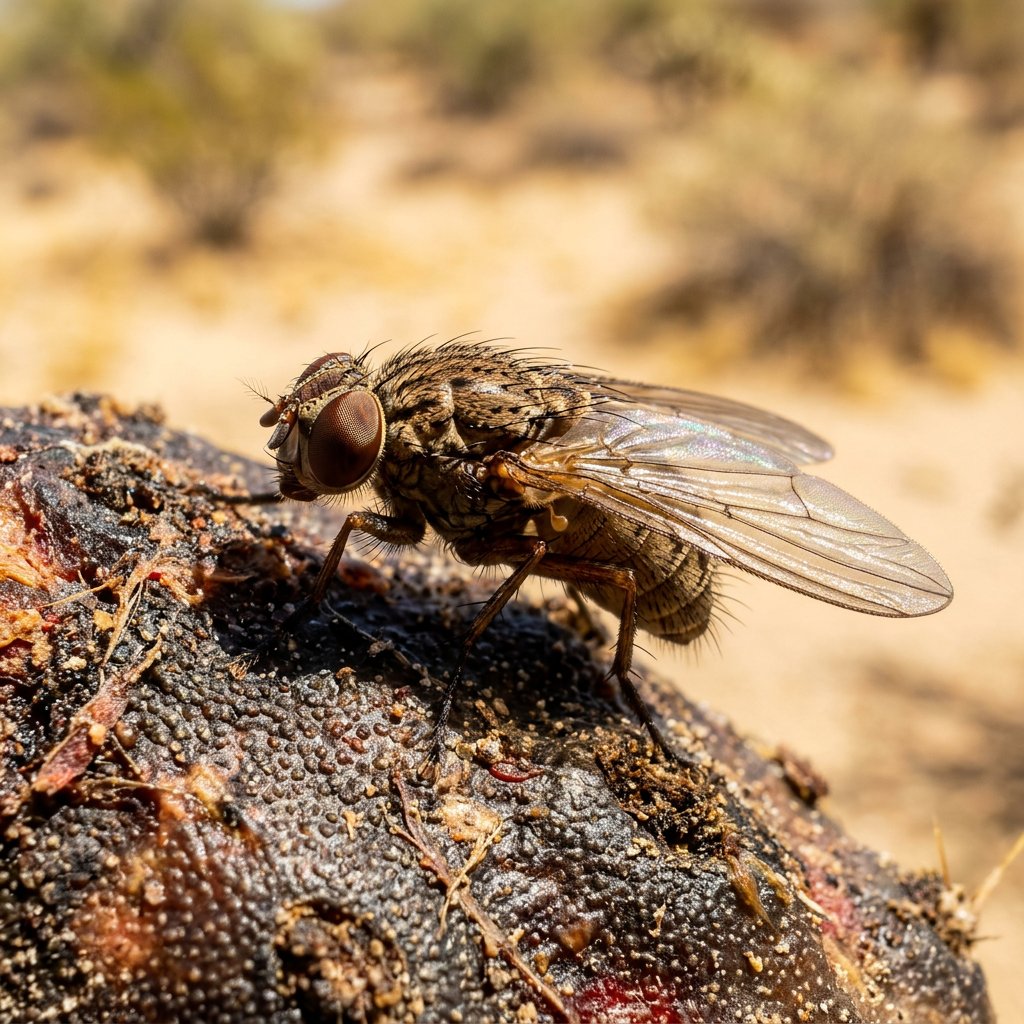
- 🦟 Spotted Thorax: The most defining feature is the pattern of small, dark brown spots at the base of each bristle on its light-gray back.
- 👀 Deep Red Eyes: It possesses the classic, large, reddish-brown compound eyes typical of the Drosophilidae family, which are highly sensitive to light and movement.
- 📏 Robust Frame: Compared to the tiny "vinegar flies" you might see in a lab, this species is noticeably larger and has a stouter, more "hunched" appearance.
🌲 Habitat & Ecology
- 🗑️ The Ultimate Scavenger: In your home, this fly is drawn to fermenting organic matter, but it is particularly fond of floor drains, damp mops, and even the sludge found at the bottom of trash cans.
- 🌵 Cactus Specialist: In the wild, many members of the Repleta group are famous for living in decaying cacti, showing a unique ability to detoxify the harsh chemicals found in rotting desert plants.
⚠️ Safety & Toxicity
- ✅ Non-Aggressive: This fly is completely harmless to humans and pets in terms of physical contact; it does not bite, sting, or carry venom.
- 🧼 Sanitation Note: While they aren't "dangerous," they are considered a nuisance and a minor hygiene risk. Because they land on waste and then on food, they can mechanically spread bacteria, so keeping kitchen surfaces clean is the best defense.
✨ Fun Fact
- 🌍 A Global Citizen: Scientists call Drosophila repleta a "cosmopolitan species" because it has successfully colonized nearly every continent on Earth by traveling inside fruit shipments and cargo ships!
More Details








