Info
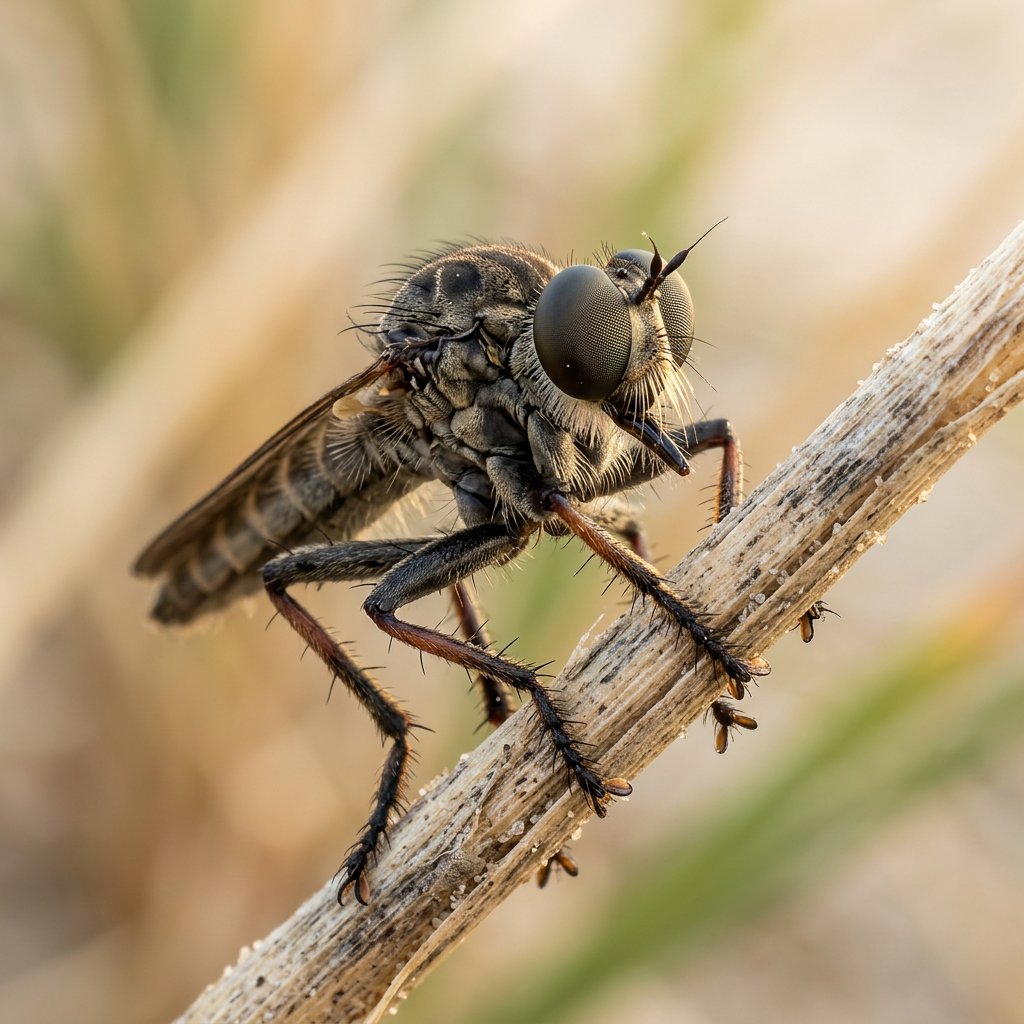
Known as the Fan-bristled Robberfly, this insect looks like a tiny, armored aviator from a steampunk novel. While it might look intimidating with its bristly "beard" and long, powerful legs, it is a master hunter of the insect world. You will most likely spot it patrolling sun-drenched coastal dunes and sandy meadows, acting as a natural check on other insect populations.
🔍 How to Identify
- 🧔 The Mystax: It features a dense "beard" of stiff bristles on its face, which serves as a shield to protect its eyes from the kicking legs of struggling prey.
- 🦵 Fan-like Bristles: Look closely at the hind legs; this species is named for the specific, fan-shaped arrangement of bristles that help it grip its catch.
- 🗡️ Tapered Abdomen: Like most robberflies, it has a long, pointed body and a hunched "shoulder" (thorax) that houses its powerful flight muscles.
🌲 Habitat & Ecology
- 🏜️ Sand Specialist: Unlike many flies that prefer gardens, Dysmachus trigonus loves heat and bare ground. It is a signature species of sand dunes, heaths, and dry, sandy grasslands.
- 🦅 The Aerial Assassin: It is a sit-and-wait predator. It perches on a warm stone or a low leaf, scanning the sky. When a victim flies past, it launches with incredible speed to snatch them mid-air using its Velcro-like legs.
- 🦟 Dietary Role: It is a generalist predator, eating everything from small beetles and bees to other flies, making it a beneficial inhabitant for controlling potential pests.
⚠️ Safety & Toxicity
- 🛡️ Neutral: This fly is not a blood-sucker and does not carry diseases. It has zero interest in humans or pets.
- 🤏 Handling Warning: If handled roughly or squeezed, it can deliver a sharp, painful bite with its proboscis. The sensation is similar to a bee sting but without the long-term swelling or venom complications.
✨ Fun Fact
Robberfly saliva is a biological marvel; it contains a potent cocktail of neurotoxins that paralyzes prey instantly and digestive enzymes that liquefy their insides, allowing the fly to drink its meal like a protein shake!
More Details








