Info
The Dusky Cockroach (Ectobius lapponicus) is often the victim of a bad reputation simply because of its family tree. Unlike its infamous cousins that raid pantries, this is a "wild" cockroach that prefers the fresh air of the forest over the corners of a kitchen. It is a vital recycler in the European and North American outdoors, spending its days tidying up the forest floor.
🔍 How to Identify
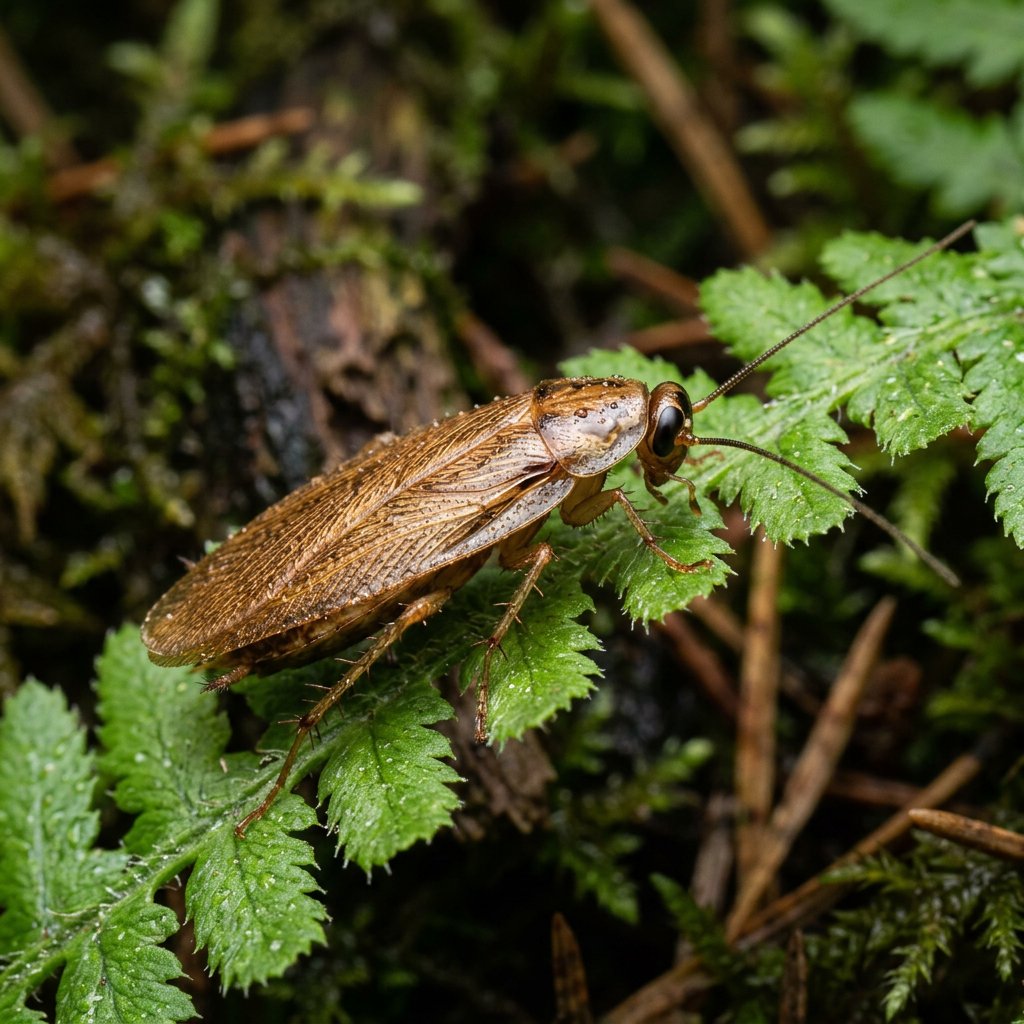
- 🪳 The Pronotum Shield: Look for a translucent "shield" behind the head with a dark, brownish-black central blotch that has blurred, smudged edges.
- 🪽 Wing Length: Males have long, functional wings that extend past their abdomen and are capable flyers. Females have much shorter, "vestigial" wings that leave the end of their body exposed.
- 🎨 Dusky Coloring: Their bodies are generally a tawny, grayish-yellow or "dusky" brown, providing perfect camouflage against dried leaves and twigs.
🌲 Habitat & Ecology
- 🍂 The Forest Floor: This insect is a specialist of leaf litter, meadows, and heaths. It plays a crucial role as a decomposer, breaking down fallen leaves, lichen, and organic debris into nutrient-rich soil.
- ☀️ Sun Lovers: Unlike the nocturnal household pests we fear, the Dusky Cockroach is diurnal. You are most likely to spot males scurrying across low-growing shrubs or flying toward light sources on warm summer days.
- 🏠 Accidental Visitors: While they occasionally wander into homes or fly through open windows (especially the males), they cannot survive or breed indoors. They require the humidity and diet of the outdoors to thrive.
⚠️ Safety & Toxicity
- ✅ Harmless Neighbor: The Dusky Cockroach is completely harmless. They do not bite, they do not sting, and they do not carry the same pathogens associated with "pest" cockroach species.
- 🐾 Pet & Human Safe: If your cat or dog decides to chase one, there is no cause for alarm. They are non-toxic and do not produce irritating chemical sprays.
✨ Fun Fact
Unlike the German or American cockroach, which scuttle away the moment a light turns on, the male Dusky Cockroach is actually attracted to light. This "phototactic" behavior is why they are frequently found near porch lights or windows during the mid-summer mating season!
More Details








