Info
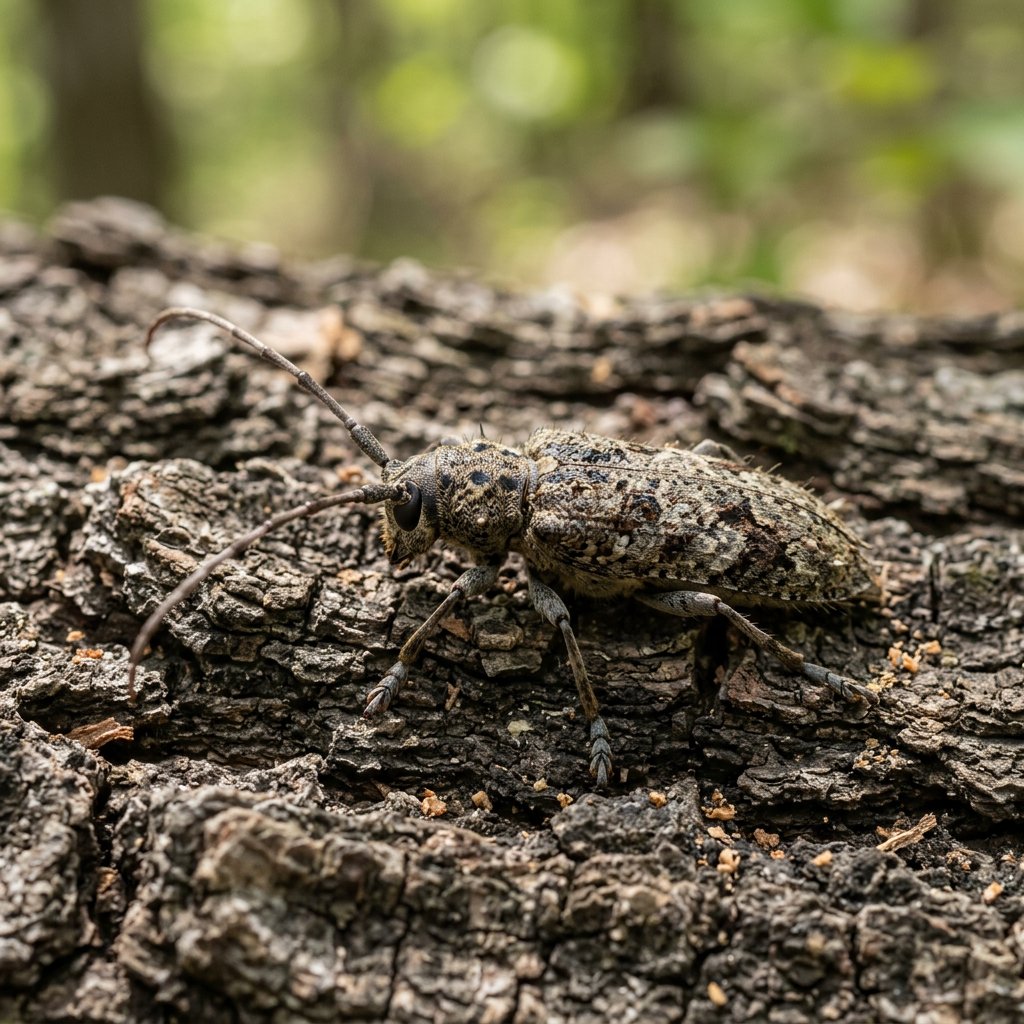
Often called the Oak Borer, this impressive beetle looks like it was carved directly from a piece of weathered hardwood. As a member of the "Longhorn" beetle family, it is famous for its sweeping antennae and its role as a deep-forest architect. While it might look like a miniature tank when it bumps into your porch light at night, it is actually a shy scavenger of the canopy.
🔍 How to Identify
- 🪲 Mottled Camouflage: The wing covers (elytra) are covered in irregular patches of tan, gray, and brown "dust," which helps it blend perfectly against oak bark and lichen.
- 📡 Sweeping Antennae: It features long, segmented antennae that curve backward over the body, often reaching or exceeding the length of the beetle itself.
- 📏 Robust Body: A large, heavy-set beetle, it typically grows between 0.8 to 1.2 inches long with a thick, cylindrical thorax that looks like a protective collar.
🌲 Habitat & Ecology
- 🌳 Oak Tree Specialist: As the name suggests, this beetle is deeply tied to Oak and Hickory forests. The larvae spend up to two years boring deep into the heartwood of stressed or dying trees, aiding in the natural cycle of forest decomposition.
- 🌙 Nighttime Navigator: You are most likely to encounter an adult Enaphalodes atomarius near artificial lights. They are strictly nocturnal, spending their days hiding in bark crevices to avoid birds.
⚠️ Safety & Toxicity
- 🛡️ Harmless to Humans: This beetle does not have a stinger, is not venomous, and does not carry diseases. It is considered a "neutral" insect for homeowners.
- 🤏 The Pinch Factor: Like most longhorn beetles, it possesses strong mandibles used for chewing through wood. If handled roughly, it may deliver a surprising (but non-toxic) pinch in self-defense.
✨ Fun Fact
If you pick one up, you might hear it "scream!" This beetle can produce a distinct squeaking or clicking sound by rubbing its body parts together, a behavior known as stridulation used to startle would-be predators.
More Details








