Info
The White-shouldered House Moth is one of the most common uninvited guests in homes across the globe. Often spotted resting motionless on interior walls or fluttering near lamps, this moth is a master scavenger that has traded the wild for the comforts of human pantries and closets. While they are harmless to humans directly, they are famous for their "indoor appetite" for everything from wool sweaters to forgotten bags of flour.
🔍 How to Identify
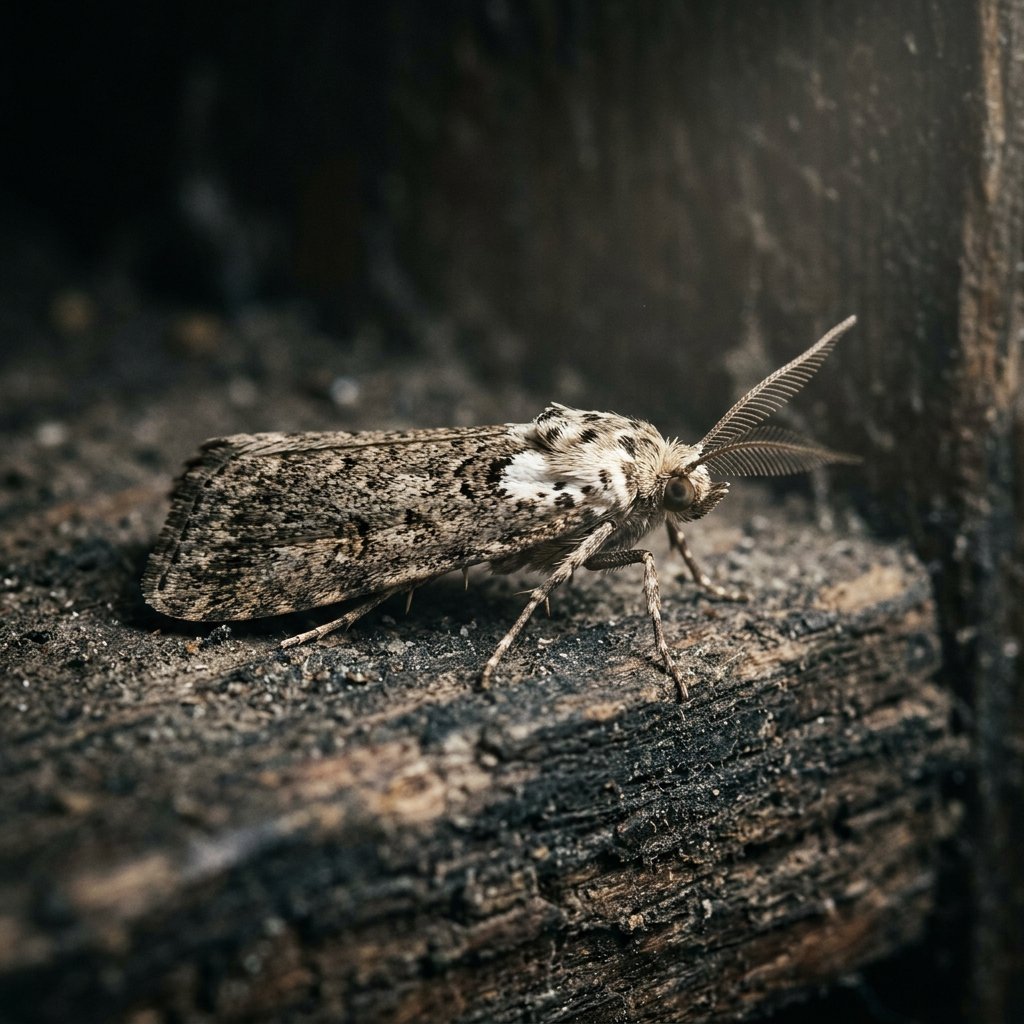
- ⚪ The "Shoulders": Its most defining feature is a distinct patch of bright white scales on its head and thorax, giving it the appearance of wearing a tiny white shawl.
- 🟤 Wing Pattern: The forewings are mottled with a mix of buff, grey, and dark brown spots, which provides excellent camouflage against tree bark or dusty corners.
- 📏 Size and Shape: A small moth with a wingspan of about 15–25mm. When resting, it holds its wings flat and narrow over its back in a tidy triangular shape.
- ✨ Fringed Edges: If you look closely at the trailing edge of the wings, you’ll see delicate, hair-like fringes typical of the scavenger moth family.
🏠 Habitat & Ecology
- 🧺 The Ultimate Scavenger: In the wild, they live in bird nests or hollow trees, but indoors, the larvae feast on "dry organic debris." This includes spilled cereal, pet food, wool carpets, and even lint trapped under baseboards.
- 🌙 Nocturnal Habits: While they are active at night and attracted to artificial lights, you will most often find them during the day resting perfectly still on light-colored walls or curtains.
- 🌡️ Year-Round Presence: Unlike many insects that disappear in the winter, the White-shouldered House Moth can breed continuously throughout the year inside heated buildings.
⚠️ Safety & Toxicity
- ✅ Status: Completely harmless to humans and pets. They do not bite, sting, or carry diseases.
- 📦 Property Damage: The primary "risk" is to your belongings. The larvae can chew small holes in natural fibers like wool, silk, and fur, and can contaminate stored dry foods in your kitchen.
✨ Fun Fact
The White-shouldered House Moth is considered "synanthropic," a scientific term for wild animals that benefit from living in close association with humans and the habitats we create!
More Details








