Info
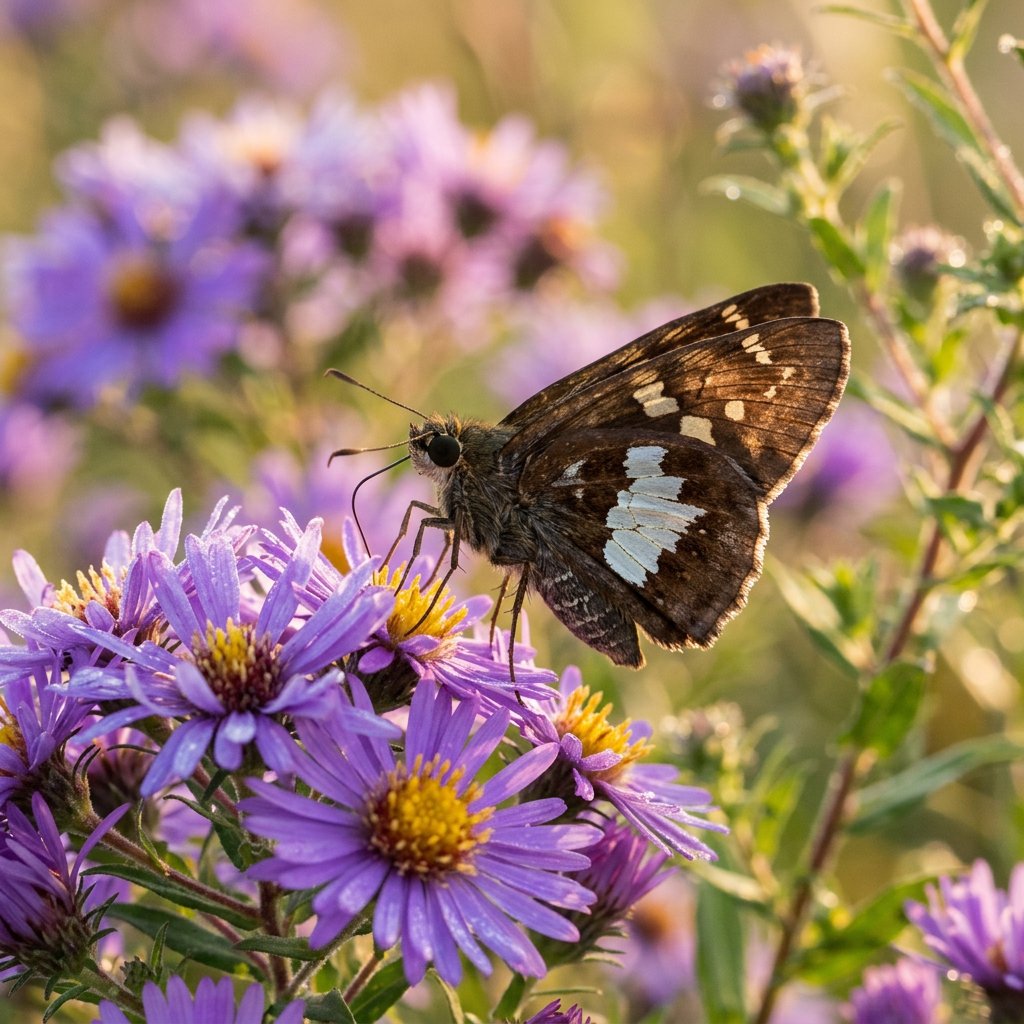
Often mistaken for a moth due to its stout, fuzzy body and rapid, darting flight, the Silver-spotted Skipper is actually one of the most widespread butterflies in North America. It gets its name from a brilliant, metallic-white patch on the underside of its wings that flashes like a beacon when it flits through the garden. These high-energy insects are the "sprinters" of the butterfly world, moving so fast they are often hard to track with the naked eye.
🔍 How to Identify
- 🦋 The "Silver Sequin": The most iconic feature is a large, irregular silvery-white patch located on the underside of the hindwing, which is highly visible when the butterfly rests with its wings closed.
- 🍫 Chocolate & Gold: The upper side of the wings is a deep, rich brown, accented by a distinctive band of translucent, golden-yellow spots across the forewings.
- 💪 Robust Shape: Unlike the delicate, fluttering movement of a Monarch, this skipper has a thick, muscular thorax and large eyes, giving it a powerful, "jet-like" silhouette.
🌲 Habitat & Ecology
- 🍃 The Master Architect: As caterpillars, they are known as "leaf-folders." They use silk to zip together the leaves of host plants—usually Black Locust trees or Wisteria—to create a private, protective sleeping bag.
- 🌸 Nectar Enthusiast: You will find them in sun-drenched meadows and backyards, frantically visiting blue, red, and purple flowers. They have an exceptionally long proboscis (tongue) that allows them to drink from deep flowers other butterflies can't reach.
⚠️ Safety & Toxicity
- ✅ Friend of the Gardener: These insects are entirely harmless. They do not sting, bite, or carry any toxins that could harm humans or pets.
- 🛡️ Natural Defense: While they are safe to handle, they are very skittish. If you approach too quickly, they will "skip" away at high speed to avoid perceived threats.
✨ Fun Fact
To stay hidden from predators, the Silver-spotted Skipper caterpillar has a "ballistic" bathroom habit: it can "flick" its frass (waste) up to 40 times its body length away from its leaf shelter so that wasps can’t follow the scent to find them!
More Details








