Info
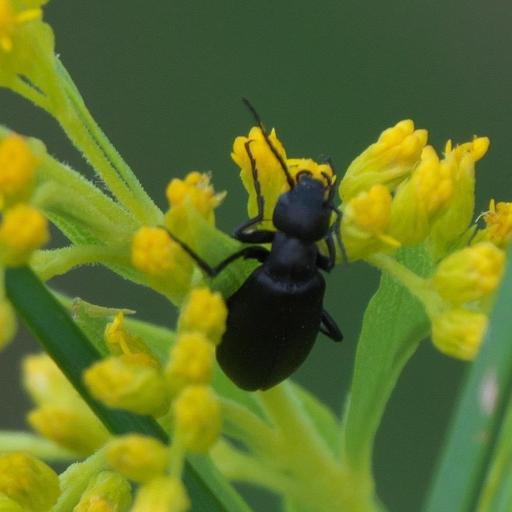
Often called the Black Blister Beetle, this sleek, midnight-colored insect is a late-summer regular in meadows and gardens across North America. While they might look like simple, unassuming beetles, they carry a hidden chemical defense that commands respect from predators and humans alike. In the garden, they are a bit of a "frenemy"—their larvae are beneficial hunters of garden pests, but the adults can be a nuisance to your flowers.
🔍 How to Identify
- 🖤 Matte Finish: They are entirely jet-black from head to toe, lacking the metallic shimmer found in many other beetle species.
- 📏 Slender Silhouette: They have a distinctive "neck" (prothorax) that is narrower than both the head and the soft, elongated wing covers.
- 🪶 Soft Texture: Unlike the hard, armor-like shells of most beetles, their wing covers (elytra) are relatively soft and flexible to the touch.
🌲 Habitat & Ecology
- 🌼 Goldenrod Lovers: You will most frequently find these beetles clustered on yellow autumn flowers, particularly Goldenrod and Asters, where they feast on pollen and nectar.
- 🦗 Grasshopper Control: They play a vital role in the ecosystem; their larvae live underground and specifically seek out and consume grasshopper egg pods, helping to keep grasshopper populations from exploding.
⚠️ Safety & Toxicity
- 🧪 Blistering Agent: These beetles do not sting or bite. Instead, they produce a toxic chemical called cantharidin. If the beetle is crushed or handled roughly, this liquid is released from its joints.
- 🚫 Skin & Pet Warning: Contact with the chemical causes painful, red blisters on human skin. They are exceptionally dangerous to horses; if the beetles are accidentally crushed into alfalfa hay during harvest, they can be fatal to livestock if ingested. Always wear gloves if you must move them.
✨ Fun Fact
The chemical these beetles produce, cantharidin, is the same substance found in the infamous "Spanish Fly." Historically, it was used in ancient medicine and as a dangerous aphrodisiac, though today it is primarily used by dermatologists to safely remove warts!
More Details








