Info
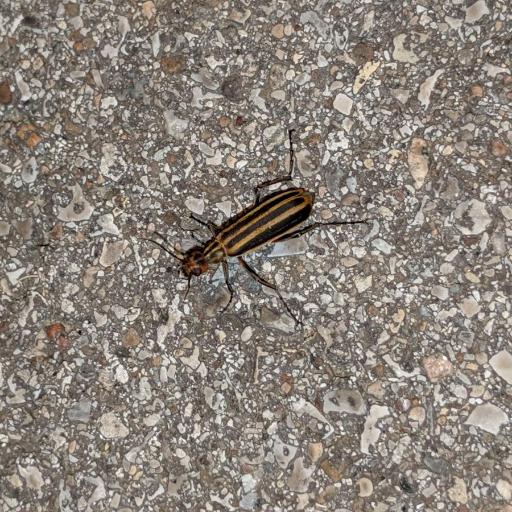
Commonly known as the Striped Blister Beetle, this slender insect is a notorious "frenemy" of the garden. While they arrive in dramatic, marching swarms that can deflate a gardener’s spirit, they lead a double life that begins with a helpful act underground. Often nicknamed "Old-fashioned Potato Bugs," they are famous for their bold yellow and black racing stripes and their potent chemical defense system.
🔍 How to Identify
- 🪲 Body Shape: They have a distinct, elongated, and soft body, reaching about half an inch to 1 inch in length. Unlike many beetles, their "neck" (the area behind the head) is narrower than both the head and the wing covers.
- 🚧 The Stripes: The wing covers are marked with two or three prominent, longitudinal black stripes on a dull yellow or orange background, resembling a tiny Victorian pinstripe suit.
- 🐜 Antennae & Legs: They possess long, slender legs and thread-like antennae that are constantly twitching as they navigate through foliage.
🌲 Habitat & Ecology
- 🍽️ The Garden Diet: Adult beetles are voracious herbivores. They are particularly fond of "solanaceous" plants, meaning your tomatoes, potatoes, and peppers are their primary targets. They don't just nibble; they often congregate in large groups and can strip a plant to its stems overnight.
- 🥚 A Secret Ally: In a strange twist of fate, the larvae of the Striped Blister Beetle are actually beneficial. They live underground and hunt for grasshopper egg pods, helping to keep grasshopper populations in check before they even hatch.
- 🏃 Herd Mentality: Unlike solitary beetles, these insects are highly social and mobile. They tend to move through gardens in "waves," appearing suddenly in large numbers and disappearing just as quickly once the food source is depleted.
⚠️ Safety & Toxicity
- 🚫 Chemical Hazard: These beetles contain a toxic chemical called cantharidin. If the beetle is crushed or pressed against the skin, it releases this "blood" as a defense mechanism, which causes painful, fluid-filled blisters.
- 🐎 Livestock Danger: They are a major concern for horse owners. If beetles are accidentally crushed into alfalfa hay during harvest, even dried beetles remain toxic. If ingested by a horse, cantharidin can be fatal.
- 🧤 Handling Advice: Never pick these up with bare hands. If you need to remove them from your garden, wear gloves or use a container to shake them off the plants.
✨ Fun Fact
The chemical these beetles produce, cantharidin, is the legendary active ingredient in "Spanish Fly." Historically used as a dangerous and ill-advised aphrodisiac, it is now strictly used in controlled medical settings to treat certain types of skin warts!
More Details








