Info
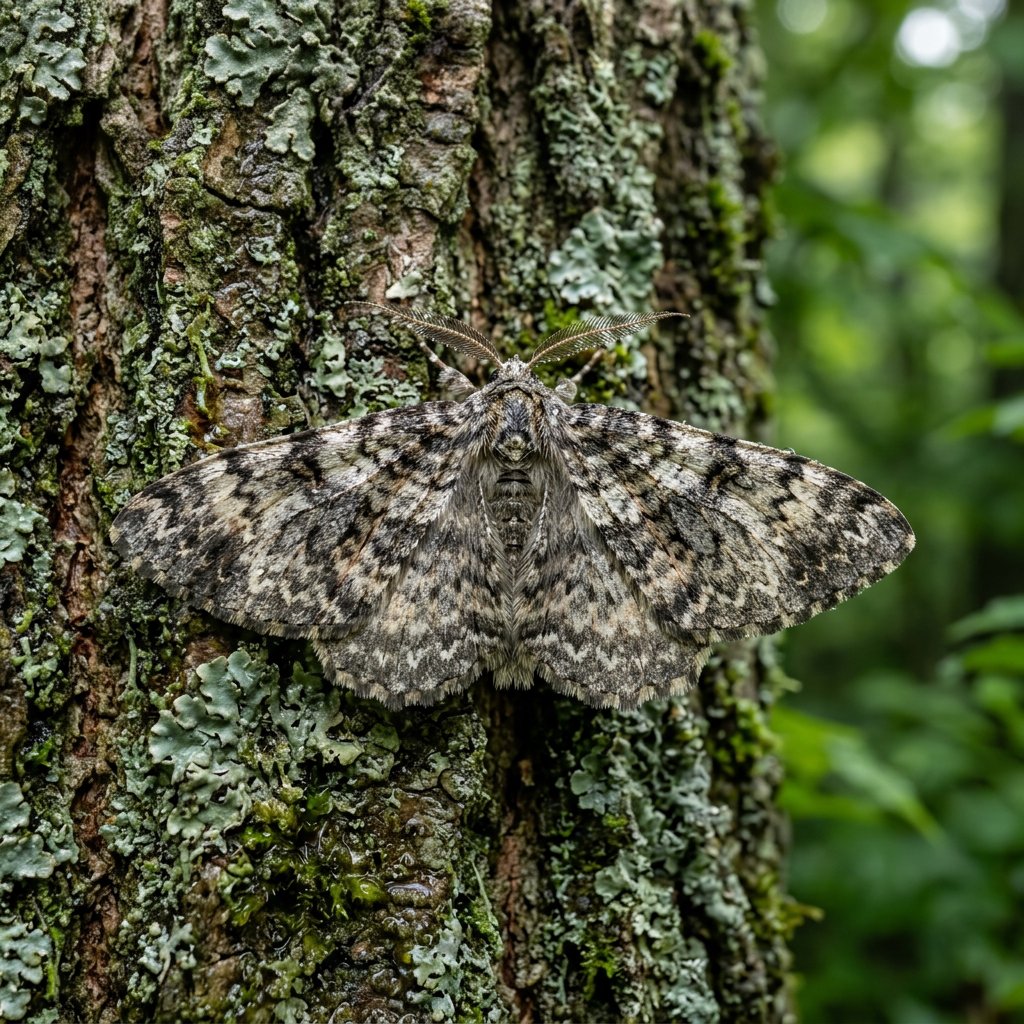
Often mistaken for a piece of living lichen or a patch of weathered bark, the Tulip-tree Beauty (Epimecis hortaria) is a phantom of the eastern North American forests. Its intricate patterns are a masterclass in natural camouflage, making it nearly invisible to the untrained eye during the day. This moth proves that "brown and gray" insects can be breathtakingly complex when viewed up close.
🔍 How to Identify
- 🦋 Broad Wingspan: This is one of the largest members of the "geometer" moth family, holding its broad, scalloped wings flat against surfaces to eliminate shadows.
- 🎨 Granite Patterns: The wings are a mosaic of wavy black, gray, and creamy-white lines that perfectly mimic the texture of tree bark or stone.
- 📍 Resting Posture: Unlike moths that fold their wings like a tent, the Tulip-tree Beauty spreads them wide, pressing its body tight against tree trunks to disappear into the background.
🌲 Habitat & Ecology
- 🍽️ Host Trees: As the name suggests, the larvae (caterpillars) are specialists that dine on the leaves of Tulip trees, Sassafras, Magnolias, and Pawpaws.
- 🌿 The "Twig" Trick: Before they become moths, the caterpillars are classic "inchworms." When threatened, they stand perfectly still at an angle, looking exactly like a small, dead twig to fool predators.
- 🔦 Nocturnal Visitors: While they hide during the day, they are highly active at night and are frequently attracted to porch lights and garden lanterns.
⚠️ Safety & Toxicity
- 🛡️ Harmless Neighbor: The Tulip-tree Beauty is a "gentle" insect. It does not bite, sting, or possess any chemical defenses that could harm humans.
- 🐕 Pet Friendly: These moths and their caterpillars are non-toxic. If a curious dog or cat happens to catch one, there is no risk of poisoning or irritation.
✨ Fun Fact
The Tulip-tree Beauty is so committed to its disguise that it will actually orient its body vertically on a tree trunk to ensure the wavy lines on its wings align perfectly with the natural grain and shadows of the bark!
More Details








