Info
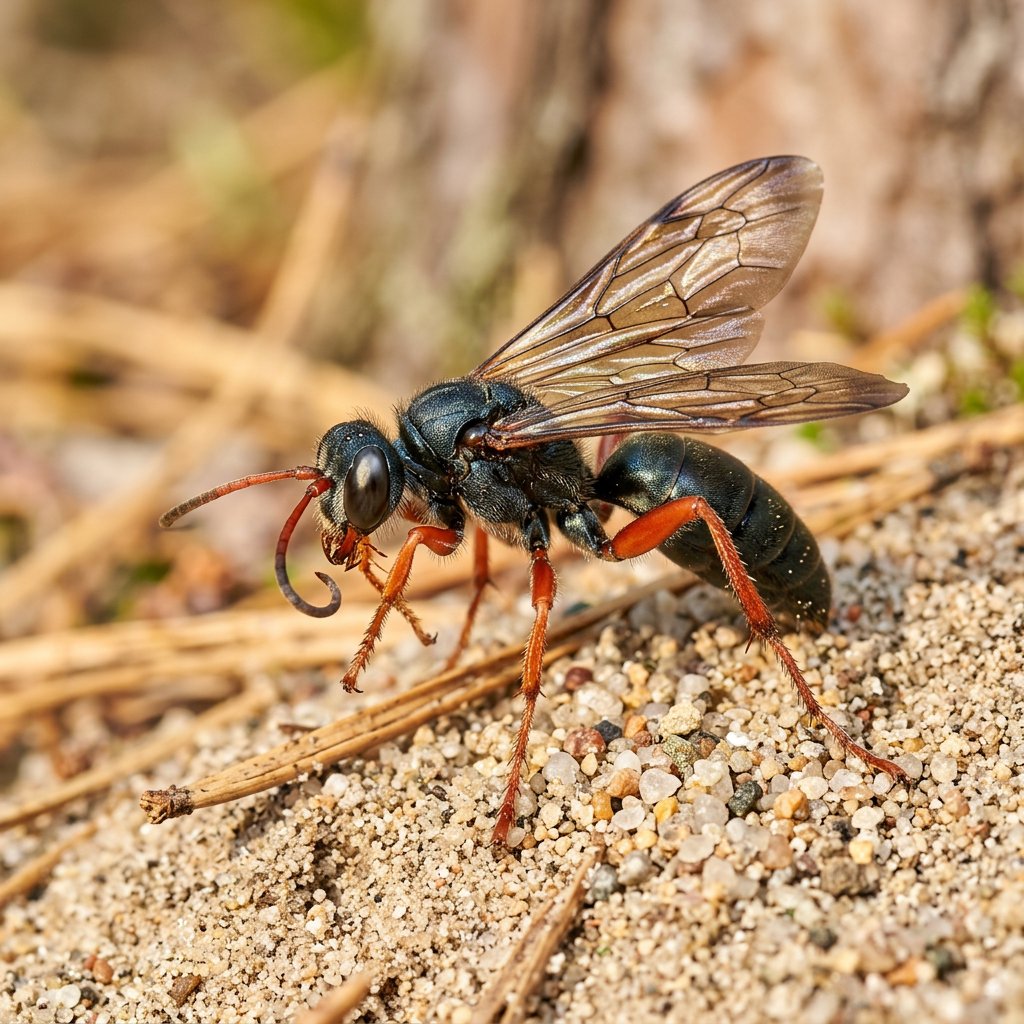
Often called the Red-legged Spider Wasp, this striking insect is a masterpiece of precision and speed. While its frantic wing-flicking and bold colors might seem intimidating, it is a solitary architect that plays a vital role in balancing spider populations. In folklore, spider wasps are often seen as symbols of focused determination due to their relentless hunting style.
🔍 How to Identify
- 🦵 The Signature Legs: Its hind legs are a distinct, burnt-orange or reddish-brown color, which stands out sharply against its dark body.
- ⚪ Abdominal Spots: Look for small, creamy-white or pale yellow spots on the sides of its black abdomen, usually appearing in pairs.
- 🪽 The Nervous Twitch: It has a highly characteristic way of moving—constantly flicking its dark-tipped wings and scurrying in rapid, jerky bursts as it searches the ground.
🐝 Habitat & Ecology
- ⏳ Sandy Foundations: These wasps are specialists of "loose ground." You’ll most likely spot them in sandy gardens, coastal dunes, or heathlands where they can easily dig burrows.
- 🕷️ The Spider Hunter: Despite their small size, they are formidable predators. They specifically target orb-weaver spiders, paralyzing them with a surgical sting before dragging them back to a sandy tomb to feed their larvae.
- 🌸 Nectar Fuel: While the larvae eat spiders, the adults are actually peaceful pollinators! You will often find them refueling on flat-topped flowers like Wild Carrot or Fennel.
⚠️ Safety & Toxicity
- 🛡️ Non-Aggressive: As a solitary wasp, the Red-legged Spider Wasp has no "hive" to defend. They are not aggressive and will generally fly away if you get close.
- 💉 The Sting: Like most wasps, they can sting if trapped in clothing or handled roughly. The sting is sharp and painful—designed to paralyze large spiders—but it is not considered medically dangerous to humans unless you have a specific allergy.
✨ Fun Fact
The Episyron rufipes is a bit of a thief! If a female sees another wasp digging a burrow, she may wait for the owner to leave, sneak in, and "hijack" the paralyzed spider for her own eggs, saving herself the trouble of hunting.
More Details








