Info
Often called the "Ghost of the Orchard," the Pear Leaf Blister Mite is a tiny architect that creates bumpy, wart-like homes on your favorite fruit trees. While you’ll likely never see the creature itself without a microscope, its distinctive "artwork" on leaves is a common sight for gardeners and orchardists worldwide. It is a specialist that transforms leaf tissue into a protective nursery for its young.
🔍 How to Identify
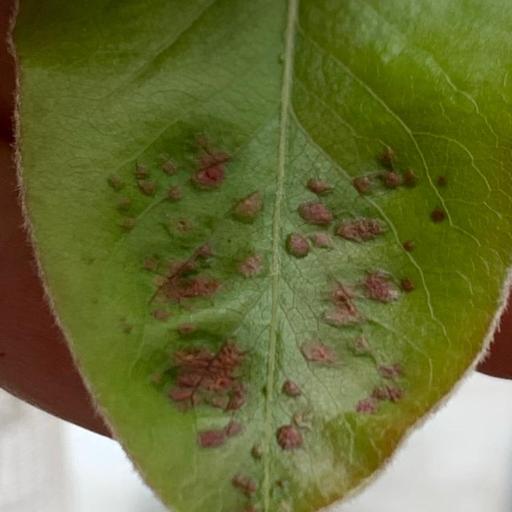
- 🍃 Blister Patterns: Look for small, pimple-like bumps (galls) scattered across the leaf surface. These start out pale green or pinkish-red and eventually turn a crusty dark brown or black as the season progresses.
- 📐 Leaf Distortion: In heavy infestations, the leaves may become curled, thickened, or stunted. If you look closely, the "blisters" are usually arranged in rows near the central vein of the leaf.
- 🍎 Fruit Russeting: While they prefer foliage, they can occasionally move to young fruit, causing reddish, depressed spots or a rough, sandpaper-like texture on the skin of developing pears.
🌲 Habitat & Ecology
- 🍎 Host Preference: These mites are highly specific. They are almost exclusively found on Pear trees (Pyrus), though they occasionally migrate to Apple trees or Mountain Ash if their preferred host isn't available.
- ❄️ The Winter Hiding Spot: They are masters of timing. To survive the cold, they tuck themselves deep inside the tree's bud scales. They emerge exactly as the buds "burst" in early spring, hopping onto the brand-new leaves to begin feeding and triggered the blister growth.
- 🛡️ Internal Living: Unlike aphids that sit on the surface, these mites live inside the blisters they create. This "indoor" lifestyle protects them from many predators and even some topical pesticides.
⚠️ Safety & Toxicity
- ✅ Harmless to Humans: The Pear Leaf Blister Mite is completely harmless to people and pets. They do not bite, sting, or carry diseases that affect mammals.
- 🌳 Plant Impact: While they make a tree look "sick" or unsightly, they rarely cause permanent damage to a mature tree. However, if you are growing pears for food, a heavy infestation can reduce the size and quality of your harvest.
- 🧤 Garden Hygiene: If you find infested leaves, pruning them early and disposing of them away from the garden can help slow the spread to other branches.
✨ Fun Fact
Most "bugs" or arachnids have six or eight legs, but the Pear Leaf Blister Mite is a minimalist. It belongs to a group of mites that evolved to have only four legs, all located at the very front of its long, worm-like body, helping it pull itself through tight crevices in tree bark!
More Details








