Info
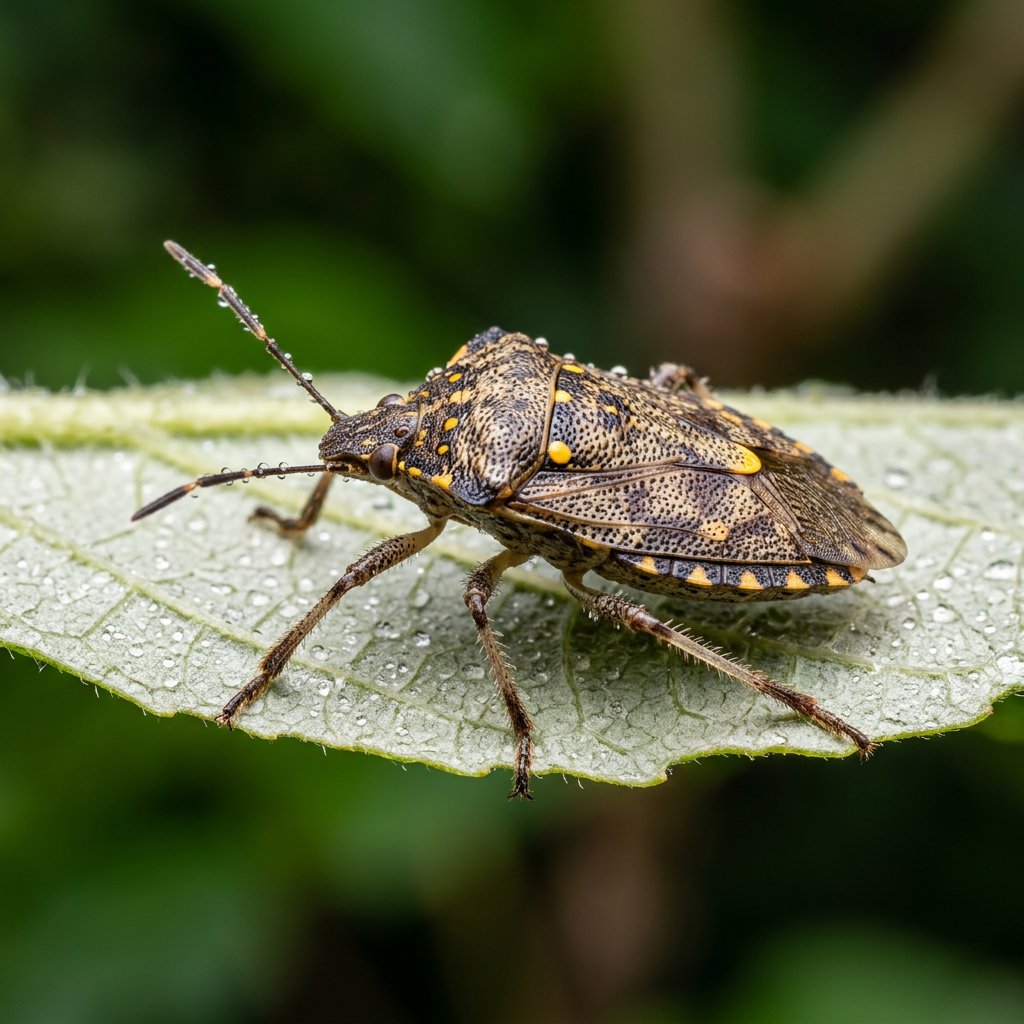
Often called the Yellow-spotted Stink Bug, this sturdy traveler is a master of camouflage against textured tree bark. Native to East Asia, it is a prominent member of the "shield bug" family, known for its protective armor and its pungent chemical defense. While it looks like a miniature armored tank, it is primarily a sap-sipper with a particular craving for orchard fruits and hardwood trees.
🔍 How to Identify
- 🛡️ Shield Shape: Features the classic wide, pentagonal "shield" body typical of its family, usually measuring about 20mm in length.
- 🟡 Yellow Markings: Look for a distinctive line of small, creamy-yellow spots along the midline of its head and the edges of its "shoulders" (pronotum).
- 🏁 Patterned Edges: The sides of its abdomen (the connexivum) display a striking alternating pattern of black and yellow blocks, visible even when the wings are folded.
🌲 Habitat & Ecology
- 🍎 A Generalist Feeder: This insect is a generalist herbivore that uses needle-like mouthparts to pierce the skin of plants. It is particularly fond of fruit trees like pears, apples, and cherries, where its feeding can cause "cat-facing" (dimpling) on the fruit.
- 🏠 Winter Guests: Like many stink bugs, they are "overwintering" specialists. As temperatures drop, they seek out cracks in tree bark or gaps in window frames to huddle together and wait for spring.
⚠️ Safety & Toxicity
- 🛡️ Status: Non-venomous and physically harmless to humans and pets. They do not bite or sting.
- 👃 Chemical Defense: Their primary weapon is a pungent fluid released from glands on their thorax. This liquid can cause mild skin irritation or a temporary burning sensation if it gets in your eyes, so it is best to move them with a tissue or a jar rather than your bare hands.
✨ Fun Fact
In some parts of its native range, the Erthesina fullo is being studied for its potential as a high-protein food source for livestock, though most gardeners currently view it more as an unwelcome guest in the orchard than a snack!
More Details