Info
Often called the Salt Marsh Moth, this insect is a master of disguise throughout its life cycle. While the adult is a sophisticated, polka-dotted beauty, the caterpillar is a famously fuzzy "wanderer" that looks like it’s wearing a tiny, oversized fur coat. Don't let the name fool you—you are just as likely to find them in a suburban backyard or a farm field as you are in a coastal marsh!
🔍 How to Identify
- 🦋 The Wings: Adult moths have elegant white forewings peppered with small, irregular black spots. Interestingly, males usually have buff-orange hindwings, while females keep theirs white.
- 🟡 The Abdomen: Beneath the wings, the body is a vivid orange or yellow with a row of bold black dots, a classic "warning" pattern used to signal to predators that they might not be a tasty snack.
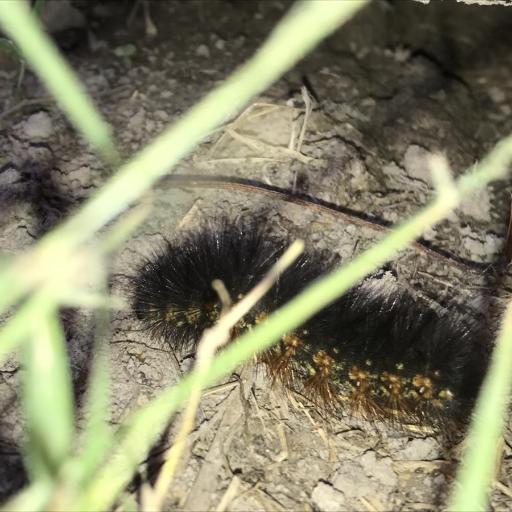
- 🐛 The "Woolly" Larva: The caterpillars are densely covered in long, stiff bristles. Their color is incredibly variable; you might find siblings where one is pale yellow and the other is deep charcoal black.
🌲 Habitat & Ecology
- 🍽️ A Generalist Appetite: These insects are not picky eaters. They feast on a massive range of host plants, including clover, cabbage, corn, and many common garden weeds, which allows them to thrive across almost all of North America.
- 🏃 The Great Migration: In late summer and autumn, you will often see the caterpillars scurrying quickly across roads or garden paths. They are "wandering" to find a sheltered spot to spin a silk cocoon (reinforced with their own body hairs) to survive the winter.
⚠️ Safety & Toxicity
- 🧤 Handle with Care: While they don't have a venomous sting like a wasp, the stiff hairs of the caterpillar can cause skin irritation or a prickly rash in sensitive individuals. It is best to admire their "fur" without picking them up.
- 🐾 Pet Watch: They are generally non-toxic, but if a curious dog or cat tries to eat one, the coarse hairs can cause irritation to the mouth and throat.
✨ Fun Fact
Male Salt Marsh Moths possess bizarre, inflatable scent organs called coremata. When they are ready to mate, they puff these out from the end of their abdomen like four long, translucent, hairy balloons to broadcast their pheromones across the fields!
More Details








