Info
Often called the Autumnal Rustic, this moth is a gentle harbinger of the changing seasons. While many insects begin to vanish as the air cools, this species emerges in late August and September, looking like a piece of finely carved slate or weathered stone. It is a quiet, frequent visitor to gardens across Europe, often found resting near porch lights during crisp autumn evenings.
🔍 How to Identify
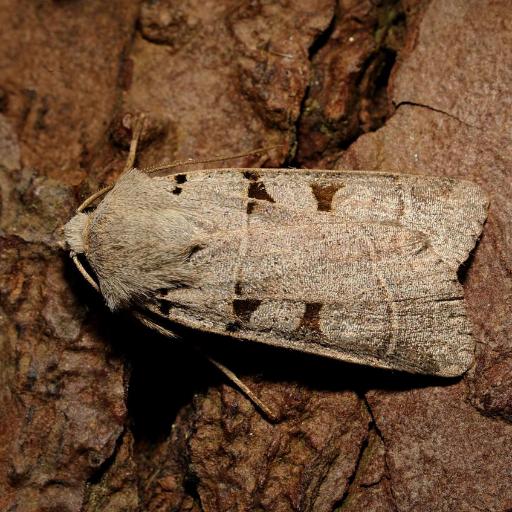
- 🦋 The "Beauty Marks": The most striking feature is a pair of distinct, jet-black spots or short dashes located near the base of the upper wings, which stand out sharply against the paler background.
- 🎨 Soft Camouflage: The wings are typically a pale, pearly grey with subtle, wavy lines, though a rare "form rosea" exists where the moth takes on a beautiful pinkish-brown tint.
- 📐 Aerodynamic Shape: When resting, it folds its wings into a neat, flat triangle that mimics the shape of a fallen leaf or a chip of bark.
🌲 Habitat & Ecology
- 🍽️ Generalist Diet: As caterpillars, they are not fussy eaters. They spend the winter and spring munching on various low-growing plants like heather, bedstraws, and plantains, and occasionally woody shrubs.
- 🌙 Nighttime Navigator: Adults are strictly nocturnal and are highly attracted to light. They play a minor but helpful role in late-season pollination as they visit flowers like Ragwort to fuel up on nectar before the frost sets in.
⚠️ Safety & Toxicity
- ✅ Harmless Friend: The Autumnal Rustic is completely safe. It does not bite, sting, or possess any chemical defenses that could harm humans.
- 🐾 Pet Friendly: If your cat or dog happens to catch one of these during an evening walk, there is no cause for concern; they are non-toxic to household pets.
✨ Fun Fact
- ✨ A Sandy Heritage: Its scientific name, glareosa, is derived from the Latin word for "gravel." This refers to its favorite breeding grounds—sandy heaths and stony moorlands—where its grey wings make it virtually invisible against the earth.
More Details








