Info
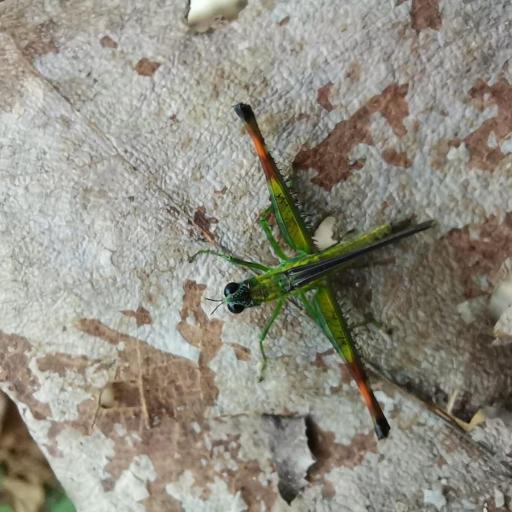
Known as the Monkey Grasshoppers, members of the Eumastacidae family are the acrobats of the insect world. They earned their playful nickname from their remarkable agility and the characteristic way they perch among leaves with their legs splayed out, looking like tiny monkeys swinging through the canopy. While they are cousins to the common field grasshopper, they have evolved a much more eccentric look and lifestyle.
🔍 How to Identify
- 👀 Bulging Eyes: Their eyes are often disproportionately large and wrap around the sides of the head, providing a wide field of vision to spot approaching predators.
- 🤸 The "Monkey" Stance: Unlike standard grasshoppers that tuck their legs neatly against their bodies, Eumastacids often hold their long hind legs out at wide, perpendicular angles.
- 🍃 Compressed Bodies: Most species are "laterally compressed," meaning they look thin from side-to-side, allowing them to disappear against the edge of a leaf or a twig.
- 🪽 Reduced Wings: Many species in this family are wingless or have tiny, scale-like wings, relying entirely on their powerful legs for transport.
🌲 Habitat & Ecology
- 🌿 Fern & Shrub Specialists: You won't usually find these in a typical lawn. They prefer the complex architecture of ferns, mosses, and tropical undergrowth where their camouflage works best.
- 🥗 Picky Eaters: While many grasshoppers eat almost any greenery, Monkey Grasshoppers are often specialists, feeding on specific types of ancient plants like ferns or gymnosperms.
- 🌦️ Tropical Leanings: Although they can be found in various climates, they reach their highest diversity in tropical rainforests, where they play a vital role in the food web as nutrient recyclers.
⚠️ Safety & Toxicity
- ✅ Harmless Acrobat: These insects are completely harmless to humans. They do not sting, and they lack the "defensive spit" (tobacco juice) common in larger grasshopper species.
- 🛡️ Shy Nature: Their primary defense is their incredible jumping ability. If you get too close, they will vanish into the foliage in the blink of an eye.
- 🐱 Pet Safety: They are non-toxic to pets, though their spiny legs might cause minor irritation if a curious cat tries to swallow one.
✨ Fun Fact
Some species of Monkey Grasshopper have evolved to look exactly like withered, crunchy brown leaves. Their mimicry is so perfect that they even have "dead spots" and "mold marks" patterned onto their bodies to fool hungry birds!
More Details








