Info
Often called the Vine Sphinx Moth, this elegant insect is the "fighter jet" of the night garden. With its streamlined, aerodynamic body and rapid wingbeats, it is frequently mistaken for a hummingbird as it hovers over flowers at dusk. Its scientific name, vitis, points to its lifelong love affair with grapevines, where its larvae are most commonly found.
🔍 How to Identify
- ✈️ Wing Pattern: The forewings feature a striking mosaic of olive green, brown, and cream lines that create a distinct geometric "X" or diamond-like pattern when at rest.
- 🌸 Hidden Colors: When the moth takes flight, it reveals brilliant flashes of rosy pink or bright peach on its hindwings, used to startle potential predators.
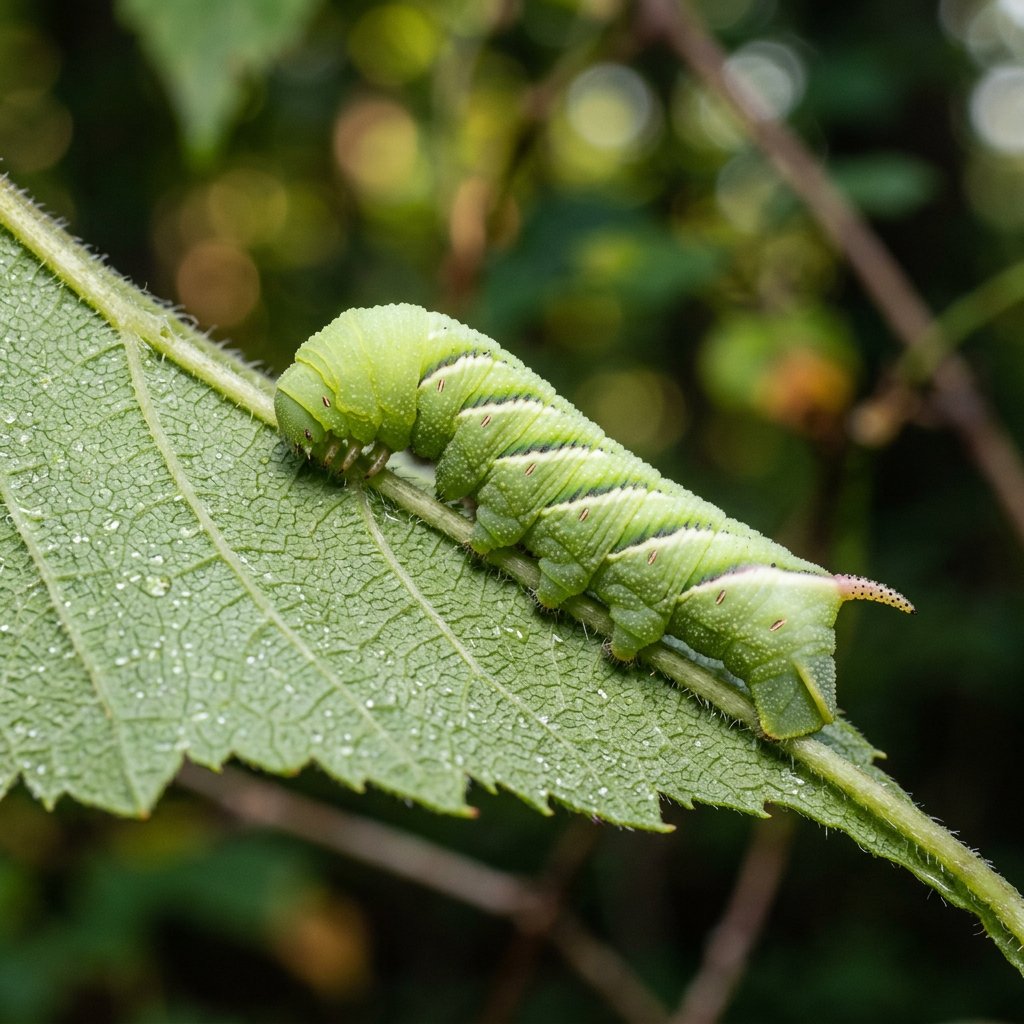
- 🐛 Larval Variation: The caterpillars are master mimics; they can be bright green, yellow, or even deep red, often featuring a small "eye-spot" on their rear instead of the typical sphinx moth horn.
🌲 Habitat & Ecology
- 🍇 Vine Specialist: As the name suggests, these moths are primarily found near wild and cultivated grapes, as well as Virginia Creeper. They play a vital role in these ecosystems as specialized pollinators.
- 🌙 Nocturnal Navigator: They are most active at twilight (crepuscular) and throughout the night. They use their incredibly long proboscis (tongue) to drink nectar from deep-throated flowers that other insects can't reach.
- 🏡 Garden Presence: You are likely to find them in backyard vineyards or gardens with trellis plants, where they zip between flowers with incredible precision.
⚠️ Safety & Toxicity
- ✅ Status: Completely harmless to humans and pets.
- 🛡️ Gentle Giants: Despite their large size and "scary" pointed abdomen, they do not possess a stinger and cannot bite. Even the caterpillars, which may look intimidating with their eye-spots, are non-toxic and do not sting.
✨ Fun Fact
The Vine Sphinx Moth is a world-class athlete; because of its heavy body and high-frequency wingbeats, it must "shiver" its wing muscles to warm them up to about 85°F (29°C) before it can even take off!
More Details








