Info
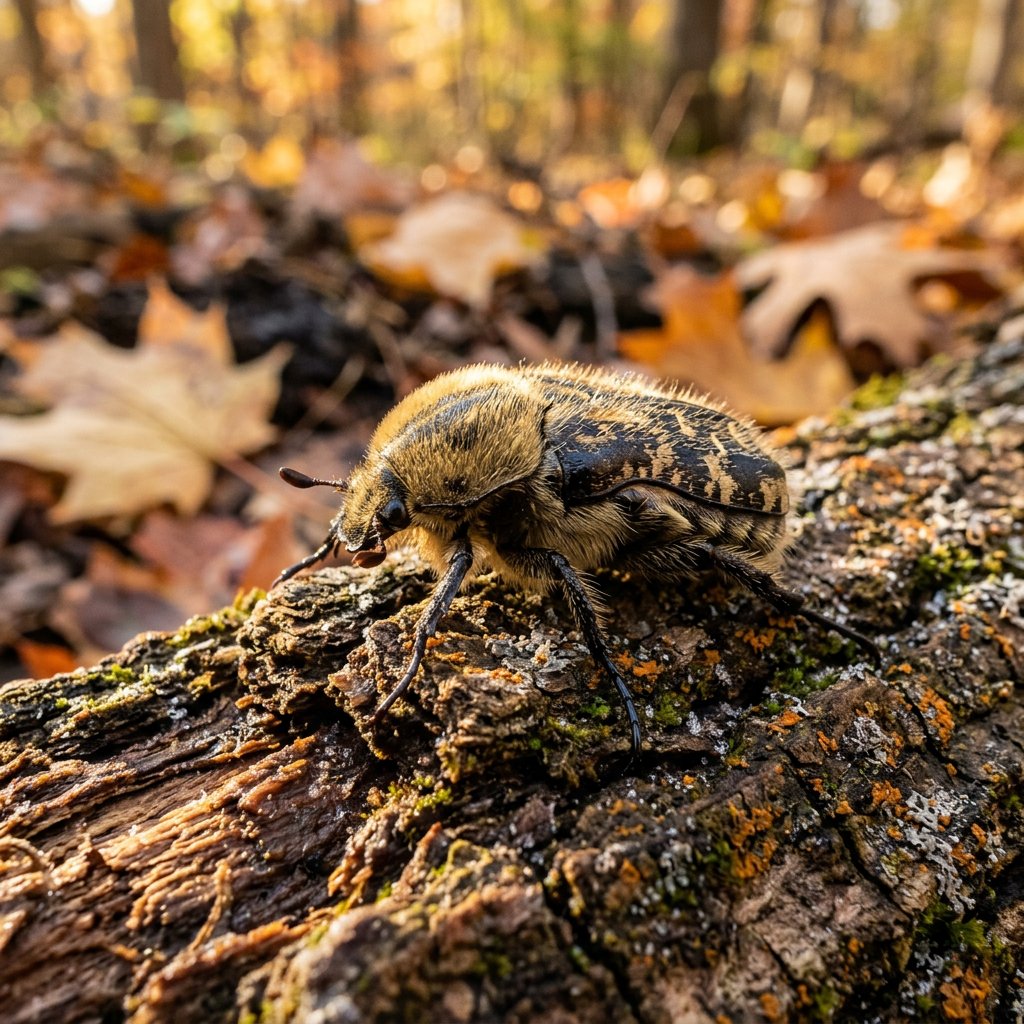
Commonly known as the Bumble Flower Beetle, Euphoria inda is a master of disguise and a charming visitor to early spring gardens. With its fuzzy body and loud, low-pitched hum, it is frequently mistaken for a bumblebee as it zips from flower to flower. This beetle is a gentle giant of the insect world, serving as both a dedicated pollinator and a helpful decomposer.
🔍 How to Identify
- 🐝 The Bee Mimic: Its most striking feature is the dense coat of yellowish-tan hairs on its thorax and underside, which perfectly mimics the "fuzzy" look of a bee to scare off predators.
- 🟤 Mottled Armor: The wing covers (elytra) are a matte reddish-brown or yellowish-tan, covered in tiny dark speckles that provide excellent camouflage against tree bark or soil.
- ✈️ Side-Slipping Wings: Unlike most beetles that must lift their hard wing covers to fly, this beetle keeps its covers closed and slips its flight wings out from the sides, allowing for a faster, more "bee-like" takeoff.
🌲 Habitat & Ecology
- 🍂 Nature’s Recycler: While the adults love nectar, the larvae (grubs) spend their lives underground or in compost piles, eating decaying organic matter and turning it into rich soil.
- 🍎 A Sweet Tooth: In late summer, you might find them congregating on overripe or fermented fruit, such as fallen peaches or cracked corn, or even sipping sap from wounded trees.
- 🌞 Spring Sentinel: They are often the first beetles to emerge in the spring, appearing on warm sunny days to search for early-blooming flowers or sap flows.
⚠️ Safety & Toxicity
- 🟢 Friend or Foe: They are definitely friends! Despite their intimidating "buzzy" flight and bee-like appearance, they have no stinger and are not aggressive.
- 🤏 Gentle Handling: They do not bite humans. If you pick one up, it might try to "dig" into your hand with its strong legs, which can feel a bit prickly, but it is completely harmless to people and pets.
- 🏡 Garden Impact: They are generally beneficial pollinators. While they may occasionally nibble on soft, ripe fruit, they rarely cause enough damage to be considered a pest.
✨ Fun Fact
The Bumble Flower Beetle is so committed to its bee costume that it even mimics the flight pattern of a bee, hovering over the ground in a zigzag motion to search for food or mates!
More Details








