Info
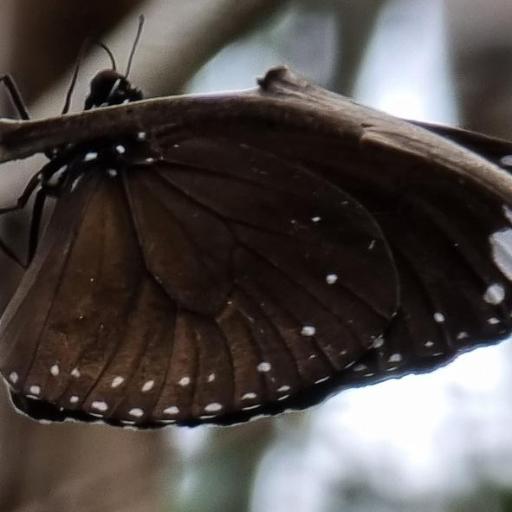
Often referred to as the Dwarf Crow, this delicate butterfly is a master of subtle elegance. While it may look like a simple shadow flitting through the trees, a closer look reveals a galaxy of white and violet-blue spots on its velvety wings. Found across Southeast Asia and Australia, it belongs to a group of butterflies famous for being "distasteful" to predators, allowing it to flutter through life with a slow, confident grace.
🔍 How to Identify
- 🦋 Wing Coloration: The upper side of the wings is a deep, velvety chocolate brown or near-black, decorated with a striking arc of white and blueish spots along the edges of the forewings.
- 📏 Size: True to its name, it is significantly smaller than its cousins (like the Common Crow butterfly), typically sporting a wingspan of only 4 to 8 centimeters.
- 🤎 Underwing Pattern: When resting with wings closed, the underside is a more muted, earthy brown, providing excellent camouflage against tree bark and dried leaves.
🌲 Habitat & Ecology
- 🌿 The Fig Connection: These butterflies are often found near various species of Figs (Ficus) and Firevine, which serve as the primary food source for their brightly striped caterpillars.
- 🌬️ Slow Motion Flight: Because they contain toxins that make them taste bitter to birds, they don't need to fly fast to escape. You will often see them "floating" lazily through the forest understory or urban gardens.
⚠️ Safety & Toxicity
- ✅ Harmless to Humans: The Dwarf Crow is completely safe for gardeners and nature lovers. It does not bite, sting, or possess any hairs that cause skin irritation.
- 🐦 Chemical Defense: While safe for us, they are "toxic" to birds and lizards. By eating specific plants as caterpillars, they store alkaloids in their bodies that make them a very unpleasant, nauseating snack for any predator.
✨ Fun Fact
Male Dwarf Crows possess "hair pencils"—extraordinary, fuzzy yellow organs that they can extrude from the end of their abdomen. They wave these "puffs" in the air to scatter pheromones to attract a mate, or sometimes to confuse a predator with a sudden, strange scent!
More Details