Info
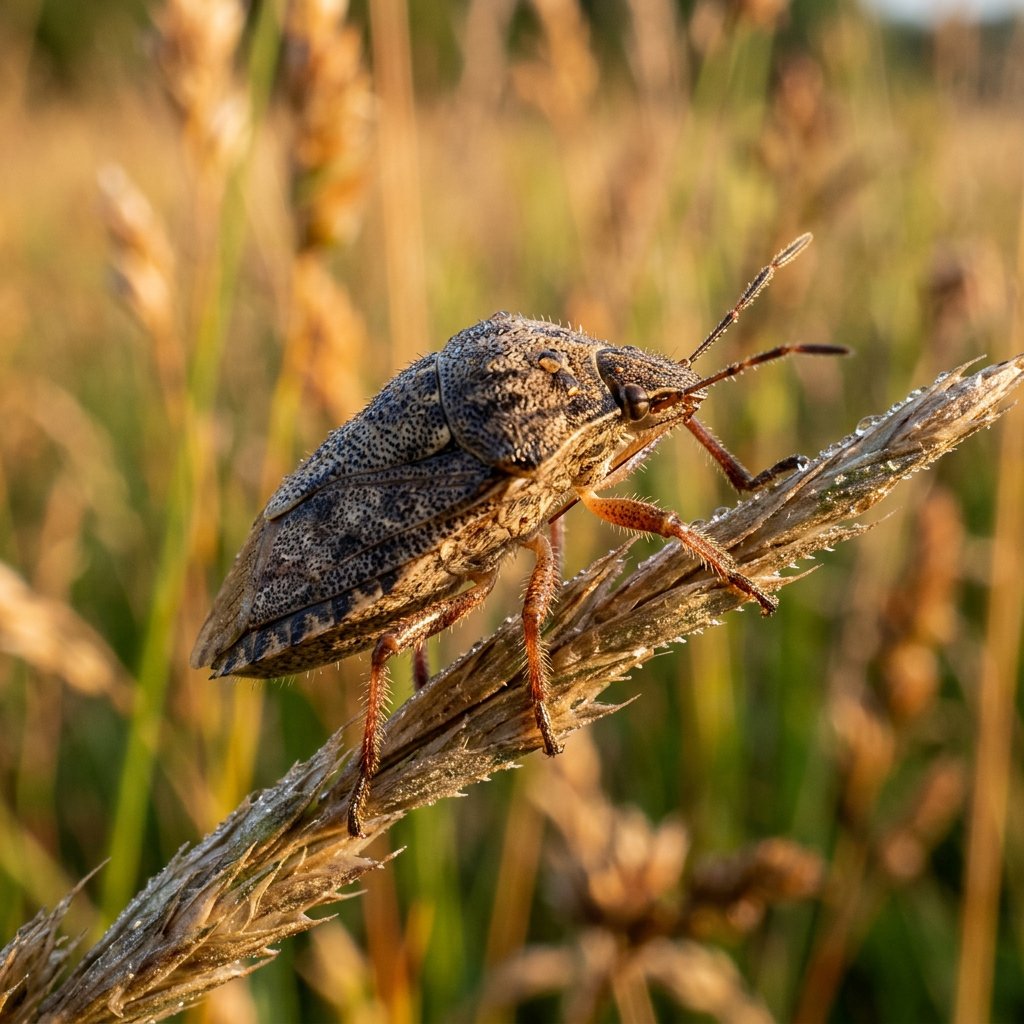
The Eurygaster testudinaria, commonly known as the Tortoise Bug, looks like a tiny, walking piece of medieval armor or a miniature woodland turtle. Often found blending into tall grasses, these masters of camouflage are subtle members of the shield bug family, perfectly mimicking the colors of dried leaves and soil to stay hidden from predators.
🔍 How to Identify
- 🛡️ The Shield (Scutellum): Unlike many other shield bugs, this species has an incredibly enlarged "scutellum" (a hard plate) that covers its entire abdomen and wings, giving it a seamless, shell-like appearance.
- 🍂 Mottled Camouflage: Its body is usually a mix of sandy browns, earthy greys, and ochre, often covered in tiny dark pits that help it disappear against bark or dry vegetation.
- 📐 Blunt Profile: It has a broad, slightly triangular head and a flat, oval body shape that sits very low to the surface it is walking on.
🌲 Habitat & Ecology
- 🌾 Grassland Specialist: You are most likely to find them in damp meadows, marshes, or the "wild" corners of your garden where tall grasses and sedges are allowed to grow.
- 🥤 Sap Sucker: These insects are herbivores. They use their specialized, straw-like mouthparts to pierce the stems of grasses and cereal crops to drink the nutrient-rich fluids inside.
- 🌿 Overwintering: During the cold months, they tuck themselves away in leaf litter or thick moss, emerging in the spring to mate and lay eggs on the undersides of leaves.
⚠️ Safety & Toxicity
- 🟢 Harmless Guest: The Tortoise Bug is a "friend" to humans. They do not bite, they do not sting, and they do not carry any diseases.
- 🦨 Scent Defense: Like most shield bugs, they possess scent glands. If they feel threatened or are squished, they may release a pungent, "stinky" fluid to discourage birds from eating them. It’s best to admire them with your eyes rather than your hands!
✨ Fun Fact
The name testudinaria is derived from the Latin word testudo, meaning "tortoise." In ancient Rome, a testudo was also a famous military formation where soldiers locked their shields over their heads to create an unbreakable, armored shell—just like this bug!
More Details