Info
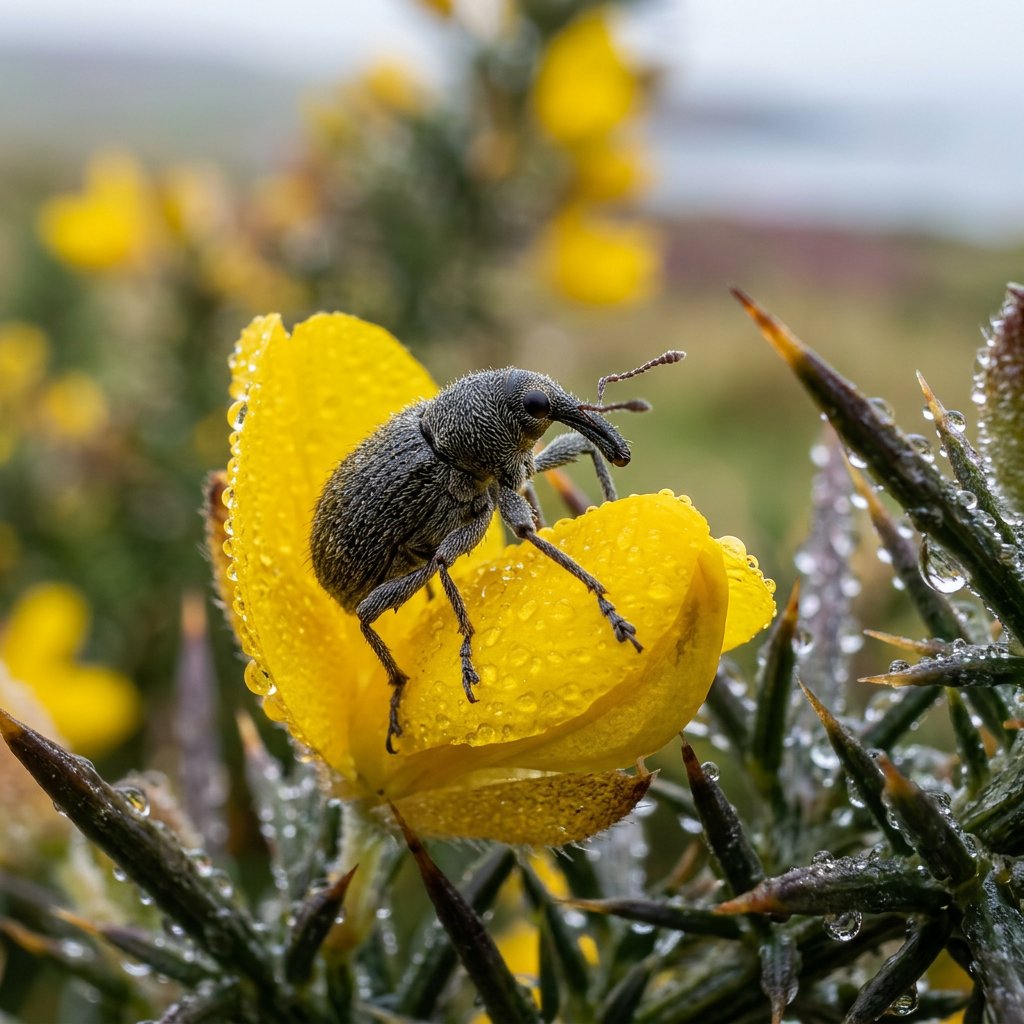
The Gorse Seed Weevil is a tiny, long-snouted specialist with a very specific mission: living inside the prickly pods of the Gorse bush. Originally from Europe, this little beetle has been traveled across the globe to act as "nature's gardener," helping to control the spread of its favorite host plant. Often called the "Gorse-Pod Specialist," it spends most of its life hidden away within the yellow blooms and sharp spines of its home.
🔍 How to Identify
- 👃 The Snout: It features a distinctively long, downward-curving rostrum (snout) typical of weevils, which the female uses to drill into plant tissue.
- 🧥 Textured Body: Its pear-shaped body is covered in fine, greyish or yellowish scales that give it a slightly "dusty" or fuzzy appearance under a magnifying glass.
- 📏 Tiny Scale: These are very small insects, usually measuring only 2 to 3 millimeters in length, making them look like a small moving speck on a flower.
🌲 Habitat & Ecology
- 🥦 A Picky Eater: This insect is "monophagous," meaning it almost exclusively relies on Gorse (Ulex europaeus). You will rarely, if ever, find it on any other type of plant.
- 🏠 Cradle in a Pod: The female drills a hole into young, green gorse pods to lay her eggs. Once hatched, the larvae eat the developing seeds, effectively "sterilizing" the pod and preventing the plant from spreading.
- 🛡️ Prickly Protection: They spend their adult lives crawling through gorse thickets, where the plant's sharp spines protect them from larger predators like birds.
⚠️ Safety & Toxicity
- ✅ Status: Completely harmless to humans, gardens, and pets.
- 🦟 No Bite or Sting: The Gorse Seed Weevil does not bite, sting, or carry diseases. Its mouthparts are designed strictly for boring into plant seeds.
- 🌿 Non-Invasive: While the plant it lives on is often considered a weed, the weevil itself is a beneficial "bio-control" agent and does not attack commercial crops or ornamental garden flowers.
✨ Fun Fact
Because Gorse is such a stubborn invader in places like Hawaii, New Zealand, and California, the Exapion ulicis was one of the very first insects in history to be intentionally moved between continents to act as a natural, pesticide-free way to manage invasive weeds!
More Details








