Info
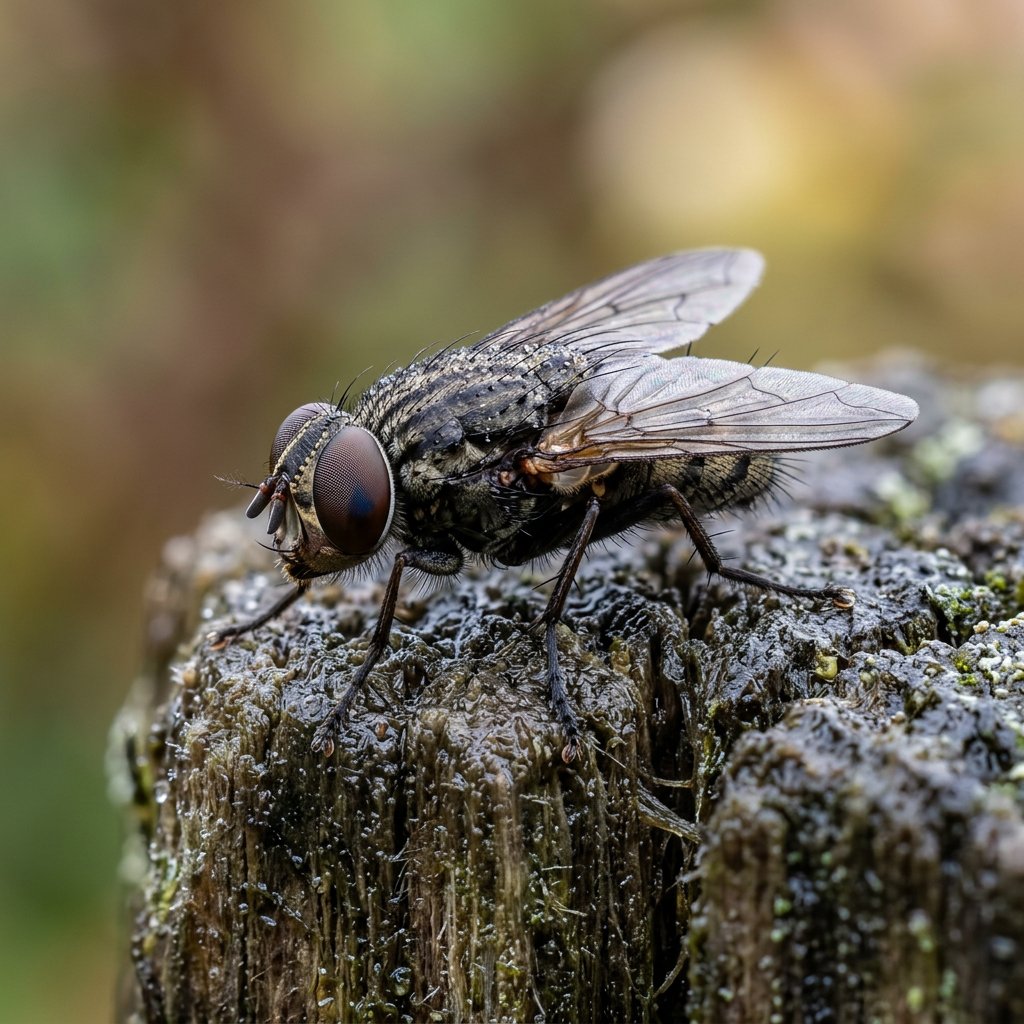
Often called the Lesser House Fly, this zippy insect is the master of the "living room aerial dance." If you’ve ever noticed a fly hovering in jerky, geometric patterns around a lampshade or in the center of a room without ever landing, you’ve likely met Fannia canicularis. While they are frequent uninvited guests in human homes, they are more interested in their mid-air marathons than they are in your dinner.
🔍 How to Identify
- 🪰 Slender Build: They are smaller and noticeably thinner than the Common House Fly, with a greyish-black body and faint yellow patches at the base of the abdomen.
- 📐 Erratic Flight: Their most telling feature is their flight; they fly in sharp, angular patterns, often hovering for long periods and making sudden 90-degree turns.
- 👐 Tucked Wings: When they finally do take a break, they rest with their wings folded flat and overlapping over their backs, unlike the "V" shape seen in many other fly species.
🌲 Habitat & Ecology
- 🏠 Indoor Acrobatics: They are highly attracted to sheltered, shaded areas. Males are the ones you see "dancing" indoors; they are actually patrolling a specific territory, waiting for a female to fly through.
- ♻️ The Clean-Up Crew: In the wild, they are essential decomposers. They seek out moist, decaying organic matter—such as compost, leaf litter, or animal manure—to lay their eggs, helping to break down waste into soil.
⚠️ Safety & Toxicity
- 🛡️ Non-Aggressive: They are completely incapable of biting or stinging. They do not have a stinger or the mouthparts required to pierce skin.
- 🧼 Sanitation Note: While they land on food much less frequently than the Common House Fly, they can still carry bacteria on their legs from the waste they breed in. They are considered a "nuisance pest" rather than a direct health threat, but keeping trash bins sealed is always a good idea.
✨ Fun Fact
- The larvae (maggots) of the Lesser House Fly are remarkably unique; unlike the smooth, worm-like maggots of other flies, Fannia larvae are flattened and covered in strange, fleshy spikes that allow them to "float" or move through semi-liquid decaying material with ease.
More Details








