Info
Often called the Silky Ant or Dusky Ant, Formica fusca is the quiet, hardworking "janitor" of the insect world. Found throughout the Northern Hemisphere, these ants are known for their incredible speed and cautious nature. Unlike their more aggressive red cousins, these ants prefer a life of stealth, darting through garden litter to scavenge for food and keep the ecosystem balanced.
🔍 How to Identify
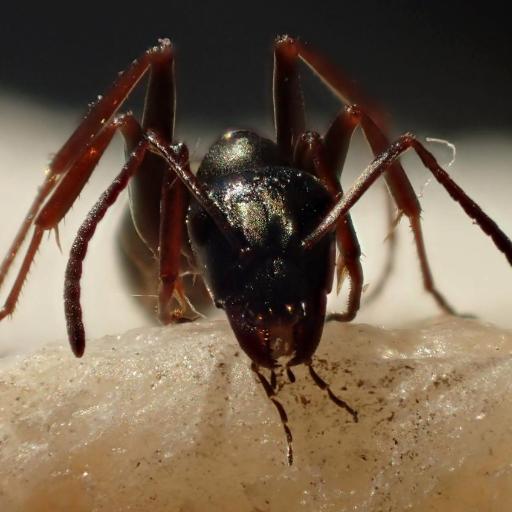
- 🖤 Sooty Coloration: They possess a deep black or very dark brownish-grey body with a matte finish.
- ✨ Silky Sheen: Upon close inspection, their abdomen is covered in fine, microscopic silver hairs that catch the light, giving them a subtle metallic or "silky" glow.
- 🏃 Erratic Movement: They are much faster and more "nervous" than other common ants, often moving in rapid, jerky bursts and retreating quickly if they sense a shadow or vibration.
🌲 Habitat & Ecology
- 🪨 Discrete Nesting: You won’t find giant mounds here. They prefer "low-profile" living, building small colonies under flat stones, inside rotting logs, or in dry, sandy soil.
- 🍬 The Honeydew Harvest: They are master aphid farmers. They "milk" aphids for sugary honeydew, providing the aphids with protection from predators in exchange for a sweet meal.
- 🐜 The Targeted Species: Because of their non-aggressive nature, Formica fusca nests are frequently raided by "Slave-making" ants (like Formica sanguinea), who steal their pupae to raise them as workers in their own colonies.
⚠️ Safety & Toxicity
- 🤝 Harmless Neighbor: These ants are considered "non-pest" insects. They rarely enter homes and do not possess a stinger.
- 💧 Formic Acid: If you pick one up or disturb the nest, they may deliver a tiny nip with their mandibles and spray a microscopic amount of formic acid. While harmless to humans, it can cause a very faint, temporary tingling sensation on sensitive skin.
✨ Fun Fact
Scientists have discovered that Formica fusca workers have an incredible sense of smell. In recent laboratory studies, these ants were successfully trained to "sniff out" the scent of human cancer cells in samples, proving to be even faster to train than dogs!
More Details








