Info
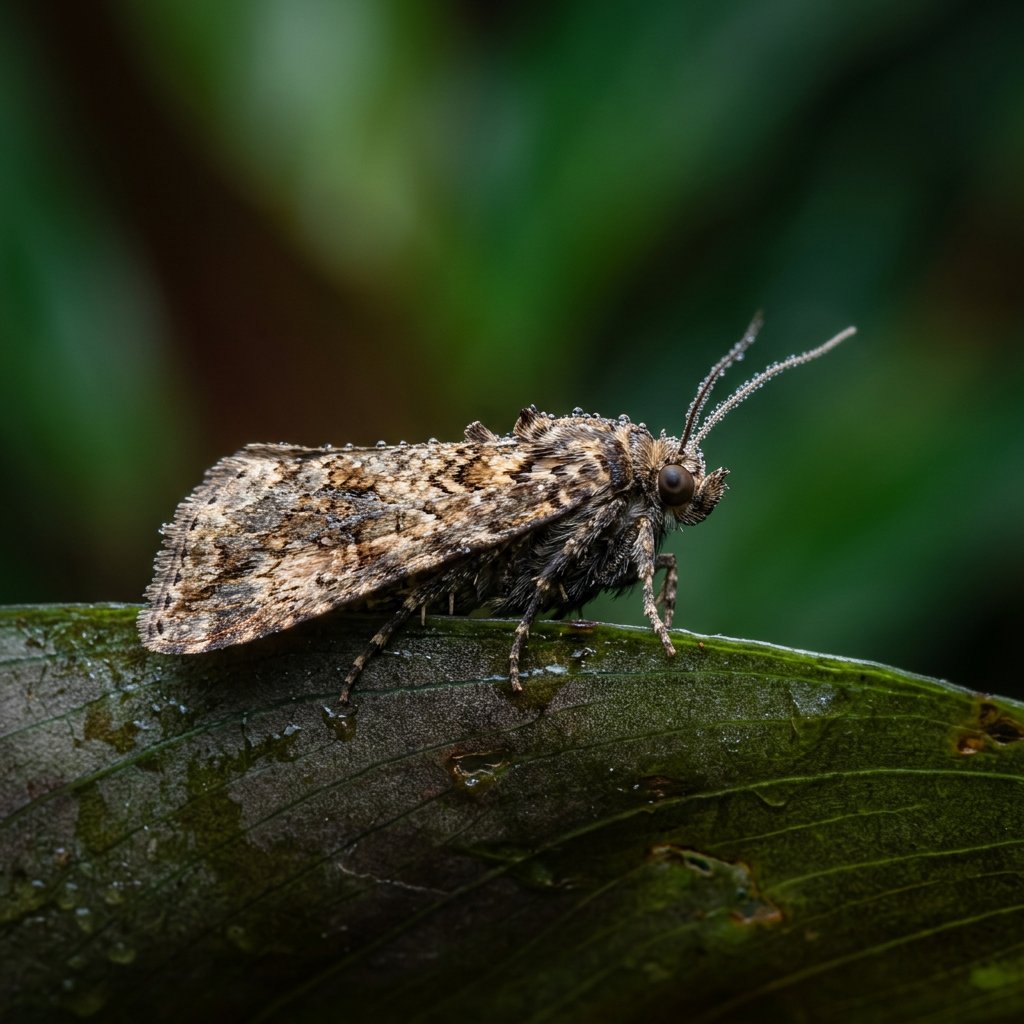
Known as the Planthopper Parasite Moth, this tiny insect tells one of nature’s strangest stories. While most caterpillars spend their days munching on leaves, this species prefers a life of hitchhiking and high-stakes survival. It is a biological oddity that turns other insects into mobile buffets, making it a "friend" to gardeners who struggle with planthopper outbreaks.
🔍 How to Identify
- 🦋 The Adult Moth: A very small, inconspicuous moth (about 1 centimeter long) with smoky, grayish-brown wings that appear slightly "fuzzy" or matte.
- 🐛 The Larval Phase: The most recognizable stage; they look like tiny, waxy white blobs or "dust bunnies" firmly attached to the backs or undersides of jumping planthoppers.
- 🧶 The Cocoon: After feeding, the larva forms a distinct, white, star-shaped or ribbed cocoon, usually tucked away on the underside of a leaf or a twig.
🌲 Habitat & Ecology
- 🦗 The Specialized Diet: These are some of the only moths in the world that are parasitic. The larvae latch onto planthoppers, feeding on the waxy secretions and sugary "honeydew" produced by their host.
- 🌳 Garden Presence: You are most likely to find them in deciduous woodlands or overgrown gardens where planthoppers (their hosts) are abundant. They act as a natural check and balance, preventing planthopper populations from exploding and damaging your plants.
⚠️ Safety & Toxicity
- 🛡️ Status: Harmless to humans and pets.
- 🚫 Interaction: They do not bite, sting, or carry diseases. While they look like "pests" when attached to other bugs, they are actually a fascinating example of natural pest control and are safe to observe closely.
✨ Fun Fact
Most moth caterpillars have sturdy legs to crawl toward their food, but Fulgoraecia exigua larvae are so specialized for "hitchhiking" that they are almost immobile on their own. They simply wait for a planthopper to pass by and then "glue" themselves onto the host's back for a life-long ride!
More Details








