Info
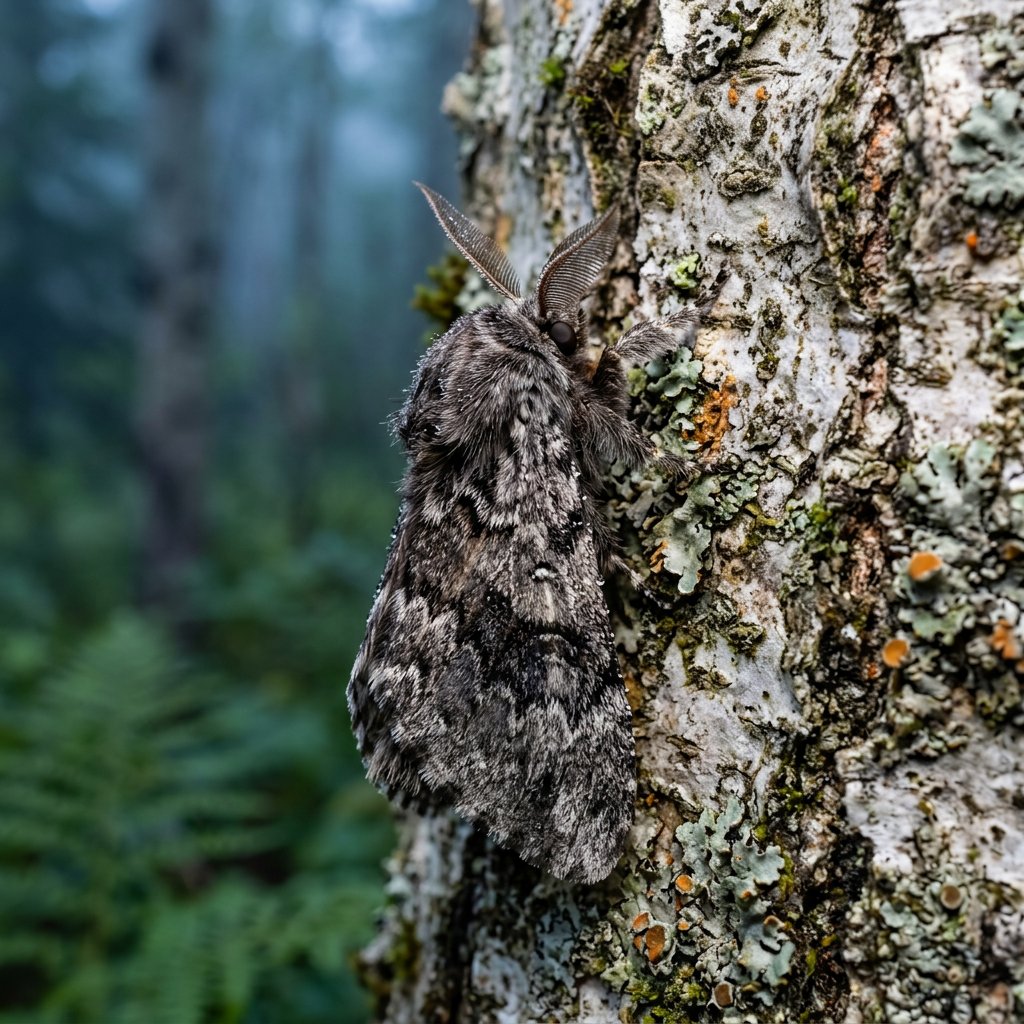
Often called the White Furcula or White Forktail, this moth is a master of monochrome elegance and caterpillar drama. While the adult looks like a piece of sophisticated black-and-white lace resting on a tree trunk, its larval stage is a vibrant, alien-like creature famous for its "scare tactics." Found across North America, it is a frequent visitor to suburban gardens that host its favorite deciduous trees.
🔍 How to Identify
- ☁️ The Wings: The adult moth features a chalky white base color accented by bold, wavy charcoal or black bands across the forewings, giving it a high-contrast, "marbled" look.
- 🧣 The "Mane": It has a very thick, fuzzy thorax (the middle section) that looks like a tiny white fur collar or a ruff, which helps it blend into lichen-covered bark.
- 🐛 The Forked Tail: The caterpillar is the real showstopper—it is bright green with a dark, saddle-shaped patch on its back and two long, whip-like "tails" (modified legs) at the rear that it can wave to confuse predators.
🌲 Behavior & Ecology
- 🍽️ Tree Lovers: You will most likely find this insect near its favorite "host" trees. The caterpillars feed primarily on the leaves of Willows (Salix), Poplars and Aspens (Populus), and occasionally Wild Cherry trees.
- 🌙 Night Owl: Like most moths, the White Furcula is nocturnal. During the day, it sits perfectly still on bark, using its disruptive wing patterns to disappear from the sight of hungry birds.
- 🤺 The Defensive Whip: When threatened, the caterpillar doesn't bite; instead, it rears up its front end and lashes its two long tails, sometimes even extending tiny colorful filaments from the tips to look as "scary" as possible.
⚠️ Safety & Toxicity
- 🟢 Status: Completely harmless to humans, pets, and gardens.
- 🛡️ All Bluff, No Bite: While the caterpillar's forked tail and bright colors might look intimidating or "stinging," it is entirely a bluff. They do not possess venom, stingers, or irritating hairs.
- 🌳 Garden Impact: While they eat leaves, they rarely appear in large enough numbers to cause significant damage to your trees. They are considered a "neutral" or "friendly" part of the local ecosystem.
✨ Fun Fact
When the caterpillar is extra annoyed, it can shoot out bright red, thread-like organs called flagella from its tail-forks. These move independently and are designed to mimic the flickering tongue of a snake or a stinging insect to trick birds into staying away!
More Details








