Info
The Sallow Kitten moth is like a miniature, velvety version of its famous relative, the Puss Moth. Despite its soft and cuddly name, this insect is a master of dramatic theater, especially during its larval stage. Often found near wetlands, riverbanks, or garden ponds where willow trees thrive, it transitions from a "scary-looking" dragon-like caterpillar to a delicate, marble-patterned adult.
🔍 How to Identify
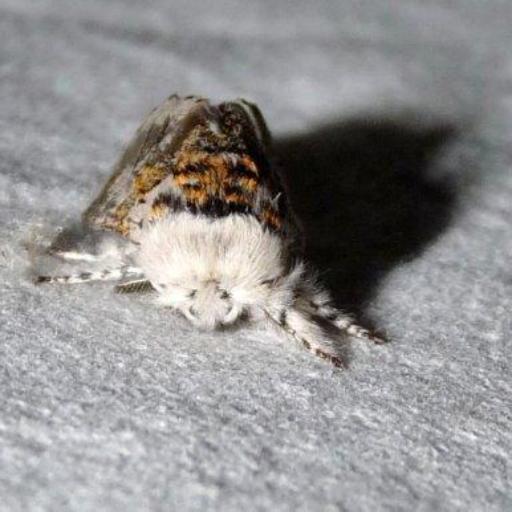
- 🐱 The "Kitten" Look: Adult moths have a distinctively furry appearance with white and soft grey forewings, marked by a prominent dark central band that looks like fine marble.
- 🎭 The False Face: The caterpillar has a bright green body with a purplish-brown "saddle" on its back and a head that it can pull back into its shoulders to create a "scary" enlarged silhouette.
- 🎏 Whip Tails: Unlike most caterpillars, this species has two long, forked "tails" at its rear. These are actually modified legs that can shoot out tiny red filaments when the insect feels threatened.
🌲 Habitat & Ecology
- 🍂 Willow Whisperer: These insects are specialists. You will almost exclusively find them on Sallow (Willow), Poplar, or Aspen trees, which serve as the primary food source for the growing caterpillars.
- 🌙 Night Flyer: The adult moths are nocturnal and are frequently drawn to garden lights during the summer months. During the day, they rest on tree trunks, where their mottled wings provide perfect camouflage against lichen and bark.
⚠️ Safety & Toxicity
- ✅ Harmless: Despite the "scary" defensive display of the caterpillar, the Sallow Kitten is completely harmless. It does not possess a stinger, and it does not secrete the irritating formic acid that its larger cousin, the Puss Moth, is known for.
- 🌿 Garden Neutral: While they do eat leaves, they are typically solitary and rarely occur in high enough numbers to cause any real harm to your garden trees.
✨ Fun Fact
The Sallow Kitten’s tail whips aren't just for show—the red filaments it flicks out are designed to mimic the movements of parasitic wasps, confusing potential predators into thinking the caterpillar is actually an aggressor!
More Details








