Info
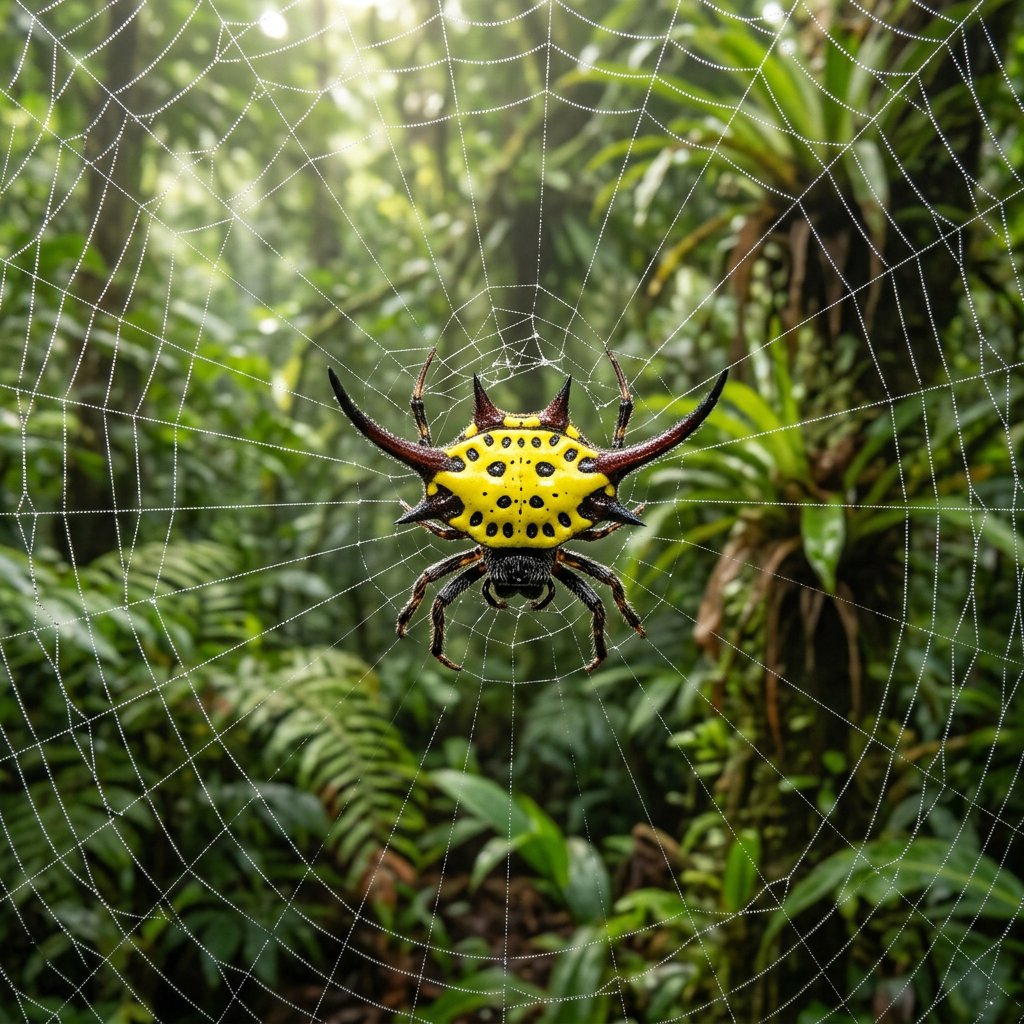
Often called the Spiny-backed Orb-weaver or the Jeweled Spider, Gasteracantha geminata looks like a tiny, porcelain warrior patrolling your garden. Found primarily in South and Southeast Asia, these spiders are famous for their hard, shell-like abdomens adorned with sharp-looking spines. While their "spiky" appearance might look intimidating, they are actually peaceful architects that spend their days weaving intricate circular webs to catch pesky flies.
🔍 How to Identify
- 🛡️ The Shield Abdomen: Unlike soft-bodied spiders, this species has a hard, crab-like abdomen that is wider than it is long.
- 📍 Double Spines: It features two prominent pairs of black spines protruding from the sides of its body, which is where the name geminata (meaning "paired" or "twin") comes from.
- 🎨 Black and White Contrast: The upper surface of the shell usually displays a striking pattern of white or creamy yellow spots against a deep black background, often resembling a tiny mask or a "spirit face."
🌲 Habitat & Ecology
- 🕸️ Master Architects: You will typically find them suspended in the center of a large, vertical orb web. They prefer sun-drenched spots between trees or shrubs where flying insects are likely to pass through.
- 🦟 Natural Pest Control: They are excellent "neighbors" for gardeners. Their diet consists almost entirely of small flying insects like mosquitoes, gnats, and flies, helping to keep local pest populations in check.
- 🏠 Staying Put: Unlike hunting spiders that roam, Gasteracantha geminata is highly sedentary. Once it builds a web in a good spot, it will often stay there for its entire adult life.
⚠️ Safety & Toxicity
- ✅ Harmless Friend: Despite the scary-looking spikes, this spider is not aggressive and is considered harmless to humans.
- 👄 The Bite: They will only bite if squeezed or handled roughly. The bite is medically insignificant and usually results in nothing more than slight redness or a mild pinching sensation.
- 🐾 Pet Safety: While not venomous to pets, their hard, spiny shells can be a choking hazard or cause mouth irritation if a curious dog or cat tries to swallow one.
✨ Fun Fact
The spikes on this spider aren't just for show—they are an evolutionary "anti-swallow" device! If a bird tries to eat the spider, the sharp spines make it very difficult and unpleasant to gulp down, teaching predators to leave these jeweled weavers alone.
More Details








