Info
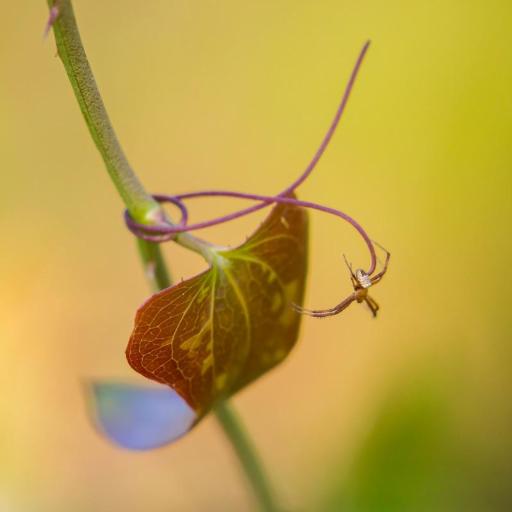
Meet the Gea spider, a subtle and sophisticated relative of the flashy Garden Orb-weaver. Often called "Lobed Spiders" due to their uniquely shaped bodies, these tiny architects prefer the quiet life hidden low in the grass. While they lack the bright "caution" colors of their famous cousins, their intricate patterns and incredible speed make them fascinating miniature predators of the undergrowth.
🔍 How to Identify
- 🕷️ Abdomen Shape: Unlike perfectly round spiders, Gea species usually have a slightly flattened or "lobed" abdomen, often featuring two distinct humps or points near the front.
- 🎨 Cryptic Patterns: They sport earthy tones—browns, tans, and silvers—arranged in complex "foliate" (leaf-like) designs that provide perfect camouflage against dried leaves and soil.
- 🕸️ Low-Profile Webs: They spin small, classic "orb" (circular) webs, but they are almost always positioned very close to the ground, hidden among tall weeds or forest floor debris.
🌲 Habitat & Ecology
- 🌾 Undergrowth Specialists: You won't find these spiders at eye level. They thrive in the "liminal space" of the garden—the transition between the soil and the stems—where they catch low-flying insects and small hoppers.
- 🦗 The Grassland Guardian: As active predators, they serve as excellent natural pest control, snagging gnats, leafhoppers, and small flies that might otherwise damage your garden plants.
- 🍃 Master of Shadows: Unlike other orb-weavers that sit boldly in the center of their web all day, many Gea species are more reclusive, often hiding near the edge of the web under a leaf during the hottest parts of the day.
⚠️ Safety & Toxicity
- 🛡️ Status: Generally harmless and non-aggressive.
- 🐾 Details: While they do possess venom to subduing their prey, it is not considered medically significant to humans or pets. These spiders are incredibly shy; their first instinct is always to flee or hide rather than defend themselves with a bite.
✨ Fun Fact
- ✨ The Vanishing Act: Gea spiders are famous for their "drop-and-disappear" reflex. If they feel the vibration of a large animal (like a human) approaching, they will instantly drop from the center of their web into the leaf litter below and remain perfectly still, becoming nearly invisible until the "giant" passes by!
More Details








