Info
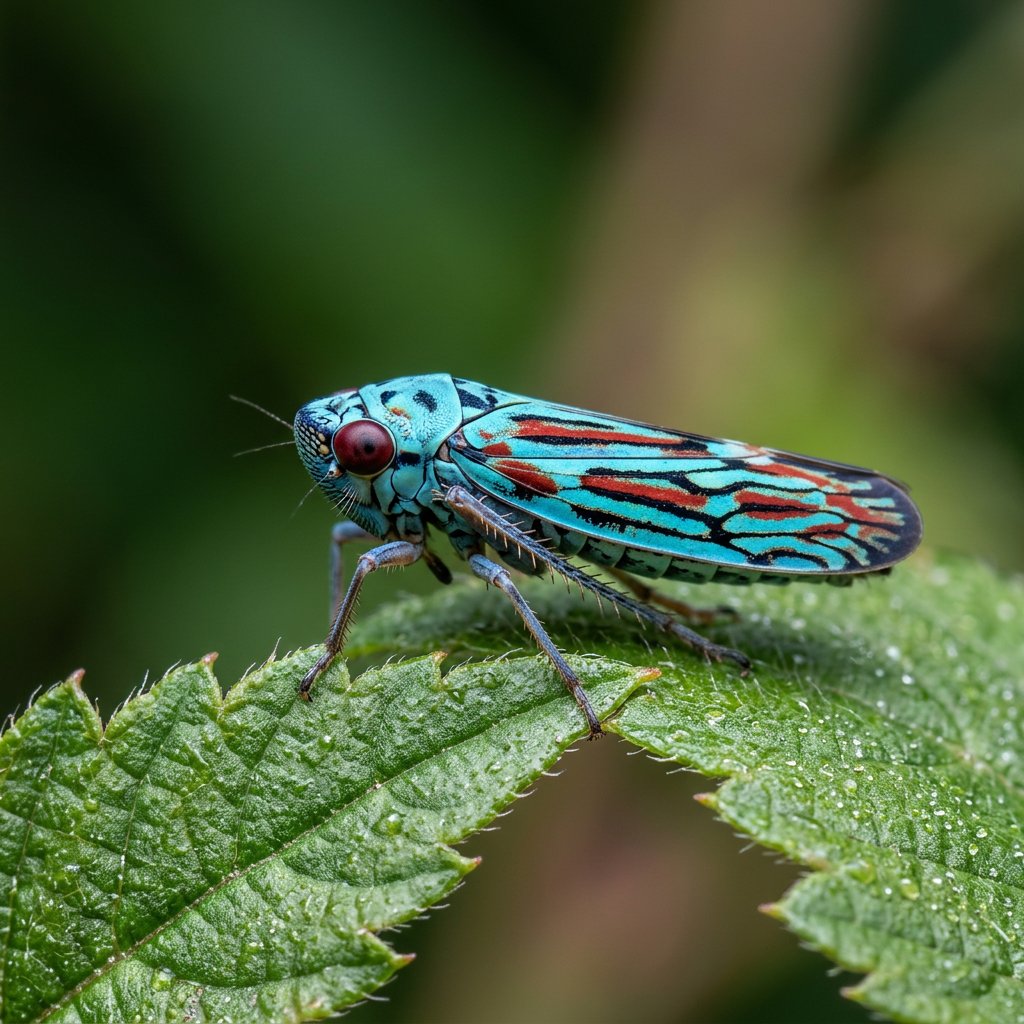
Meet the Blue-green Sharpshooter, a tiny insect that looks like it was painted with a vibrant neon brush. Often found darting around gardens and vineyards along the Pacific Coast, these leafhoppers are famous for their "sharpshooting" habit of flicking droplets of liquid waste. While they look like shimmering jewels on a leaf, they are high-energy sap-suckers with a bit of a notorious reputation among grape growers.
🔍 How to Identify
- 🎨 Electric Color: They possess a striking turquoise or deep blue-green body that stands out vividly against green foliage.
- ⚫ Black Spots: The name atropunctata refers to the distinct, tiny black dots scattered across the top of its head and thorax.
- 📐 Wedge Shape: They have a sleek, aerodynamic, and tapered body shape typical of leafhoppers, usually measuring only about 6–8mm in length.
🌲 Habitat & Ecology
- 🥤 Sap Specialist: These insects use needle-like mouthparts to drink nutrient-poor fluid from the "plumbing" (xylem) of plants, preferring damp, shady areas near streams or lush gardens.
- 🦀 The Sideways Shuffle: If you approach one, it will likely perform a "branch-run," quickly scooting to the opposite side of a stem to stay out of your line of sight, much like a tiny squirrel.
- 🌿 Host Range: They aren't picky eaters; you’ll find them on everything from blackberry bushes and ivy to ornamental shrubs and grapevines.
⚠️ Safety & Toxicity
- 🟢 Status: Completely harmless to humans and pets. They do not bite, sting, or produce any toxins that can hurt you.
- 🍇 Plant Pathogen Risk: While they are safe for people, they are a major concern for gardeners and farmers because they carry Xylella fastidiosa, a bacterium that causes Pierce's disease, which can be fatal to grapevines.
✨ Fun Fact
The "Sharpshooter" name comes from the incredible way they dispose of waste! Because they drink so much fluid, they have to expel it constantly; they use a specialized "anal flicking" mechanism to catapult droplets of honeydew away from their bodies with a tiny, audible "pop."
More Details








