Info
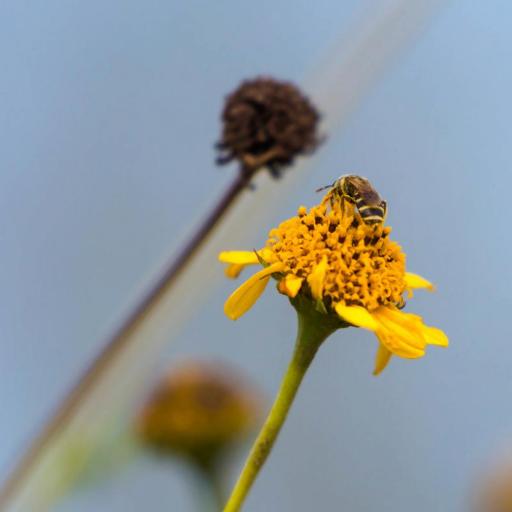
Commonly known as the Ligated Furrow Bee, this industrious little insect is one of the most widespread "sweat bees" in North America. While they might seem like mere flies at first glance, they are actually vital members of the garden cleanup crew and expert pollinators. Often found hovering around sunflowers or landing on your arm for a salty snack, these bees are the friendly neighbors of the insect world.
🔍 How to Identify
- 🐝 The Body: Medium-sized with a dark, robust frame. Unlike the shiny green of some sweat bees, these are usually matte black or dull metallic with distinct pale hair bands on their abdomen.
- 🛡️ The Head: Look closely at the female's head; they possess a unique, slightly pointed "cheek" or spine (genal process) on the underside of their head that distinguishes them from look-alikes.
- 🍯 Pollen Baskets: You will often see females with thick coatings of bright yellow or white pollen trapped in the dense hairs of their hind legs.
🌲 Habitat & Ecology
- 🏘️ Subterranean Socialites: Unlike honeybees that live in hives, these bees are ground-nesters. They excavate intricate tunnels in bare, sunny soil, often living in small, cooperative societies with a queen and worker daughters.
- 🌻 Generalist Pollinators: They aren't picky eaters! They frequent a huge variety of flowers, but they have a particular fondness for "Composite" flowers like Asters, Daisies, and Goldenrods.
- 💧 The "Sweat" Connection: They are famously attracted to human perspiration. They aren't looking to bite; they are simply harvesting the salt and minerals found in your sweat to supplement their diet.
⚠️ Safety & Toxicity
- 🛡️ Non-Aggressive: These bees are exceptionally gentle. They have no interest in humans and will only sting if they are physically pinched, stepped on, or trapped against your skin.
- 🩹 Minor Sting: If you do manage to get stung, the sensation is very mild—often described as a tiny, fleeting prick or a "paper cut with a tickle." It is significantly less painful than a yellowjacket or honeybee sting.
- 🐾 Pet Safety: They pose almost no threat to pets, though a curious dog snapping at a ground nest might receive a small warning poke.
✨ Fun Fact
The Halictus ligatus is a social chameleon! Depending on the climate, they can be either "eusocial" (living in a colony with a queen) or "solitary" (living alone). In the warm South, they stay social all year, but in the cold North, they may switch to a more independent lifestyle to survive the winter.
More Details