Info
Known as the Orange-legged Furrow Bee, this busy little pollinator is a frequent visitor to gardens across the Northern Hemisphere. While many bees pick a lifestyle and stick to it, this species is a "social chameleon," famously adapting its family structure based on the local climate. It is a gentle garden ally that works tirelessly from the first warmth of spring through the cooling days of autumn.
🔍 How to Identify
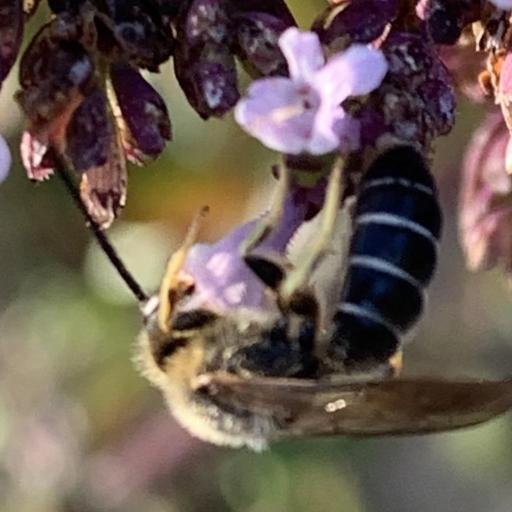
- 🦵 The "Orange Socks": Females are easily recognized by the dense, bright orange-red hairs on their hind legs, which they use to collect and carry thick loads of pollen.
- 🐝 Abdominal Bands: Look for thin, crisp white bands of hair on the lower edges of their dark, slightly metallic body segments.
- 📏 Slender Profile: They have a sleek, "furrowed" shape, typically measuring about 10mm in length—smaller and more slender than a common honeybee.
🐝 Behavior & Ecology
- 🏡 Ground Dwellers: These are "mining bees." Instead of hives, they dig vertical burrows into firm, sun-exposed soil, often favoring south-facing slopes or the edges of garden paths.
- 🌸 Generalist Pollinators: They aren't picky eaters! They visit a massive variety of flowers, from wild daisies to garden herbs, making them one of the most effective pollinators for a biodiverse backyard.
- 🌡️ Social Flexibility: In warm lowland areas, they live in social colonies with a "queen" and workers. However, in cold, high-altitude regions, they switch to a solitary lifestyle where every female acts as her own boss.
⚠️ Safety & Toxicity
- 🛡️ Peaceful Neighbors: These bees are remarkably non-aggressive. They have no "guard" instinct like yellowjackets and will generally only sting if stepped on with bare feet or squeezed in a hand.
- 🐾 Minimal Risk: Their sting is small and much less painful than that of a honeybee or wasp. They pose no threat to pets or children unless a nest site is actively disturbed.
✨ Fun Fact
The Halictus rubicundus is a true globalist; it is one of the very few bee species found natively across the entire Northern Hemisphere, spanning from the wild coasts of Ireland all the way to the mountains of Japan and across North America!
More Details








