Info
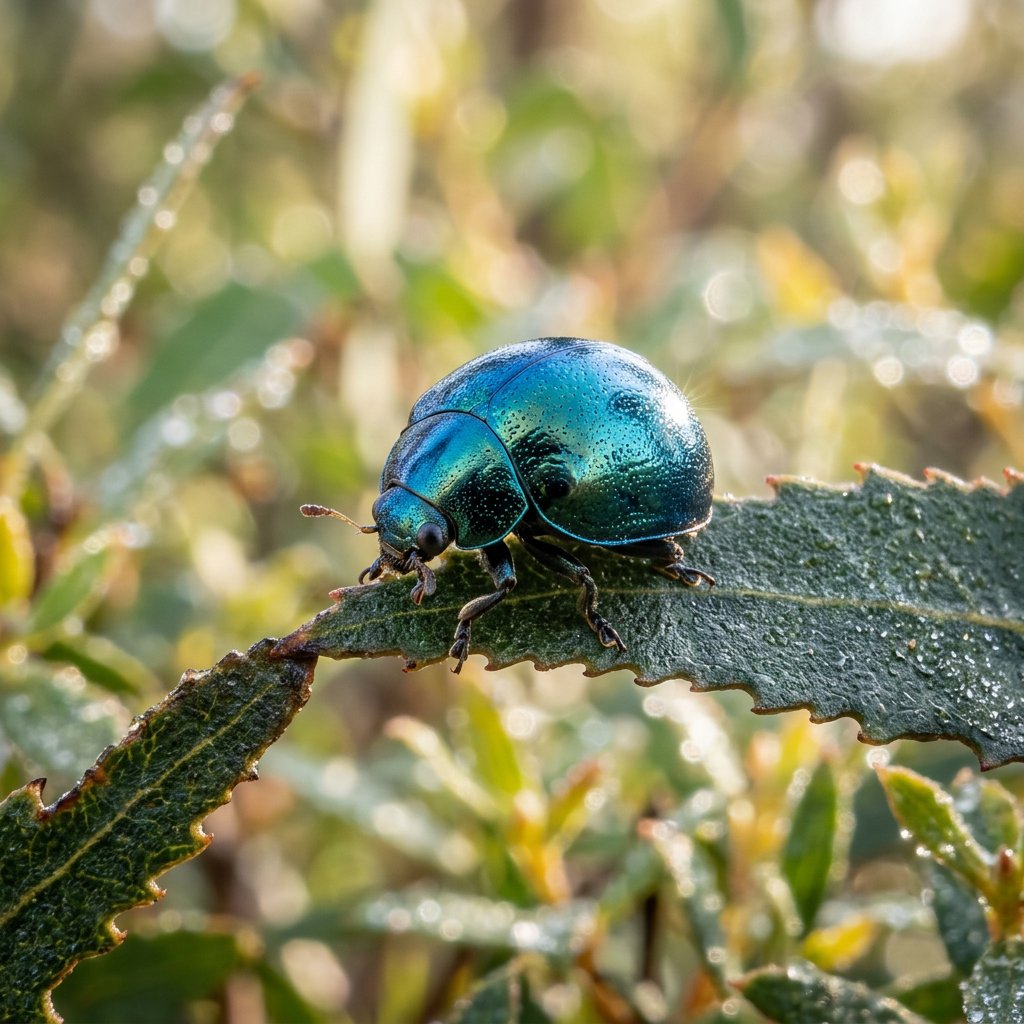
Often called the Steelblue Ladybird, this tiny beetle looks less like a common bug and more like a polished piece of sapphire jewelry. Originally from Australia, it has gained international fame as a "hired mercenary" for gardeners, specifically brought to places like New Zealand and Hawaii to protect citrus groves from invasive pests.
🔍 How to Identify
- 💎 Metallic Sheen: Its most striking feature is its brilliant, uniform metallic blue to teal-green color that shimmers when it catches the light.
- 🌕 Hemispherical Shape: Unlike some elongated beetles, this ladybird is almost perfectly circular and highly convex, resembling a tiny, shiny dome.
- 📏 Compact Size: It is quite small, usually measuring only about 3 to 4 millimeters in length, making it easy to mistake for a stray bead on a leaf.
🌲 Habitat & Ecology
- 🍊 The Scale Hunter: These beetles are specialized predators. While they enjoy the occasional aphid, they are famous for their appetite for "scale insects," particularly those that plague citrus, apple, and pear trees.
- ☀️ Sun Lovers: You will mostly find them patrolling the sunny side of orchards and gardens. They are active during the day, crawling over leaves and stems in search of the waxy shells of their prey.
- 🌿 Life Cycle: Their larvae are just as helpful as the adults; they look like tiny, dark, spiky "alligators" and spend their days devouring pests before transforming into their metallic adult forms.
⚠️ Safety & Toxicity
- ✅ Friend to Humans: The Steelblue Ladybird is completely harmless to humans and pets. It does not sting and is not known to bite people.
- 🛡️ Reflex Bleeding: Like many ladybirds, if it feels extremely threatened, it may excrete a tiny drop of bitter, yellow fluid from its leg joints. This is a harmless defense mechanism meant to tell birds that they taste terrible.
✨ Fun Fact
In the late 1800s, this beetle was one of the first insects ever used for "Biological Control." It was shipped across the ocean specifically to save the citrus industry from scale infestations, proving that sometimes the best pesticide is just a hungrier bug!
More Details








