Info
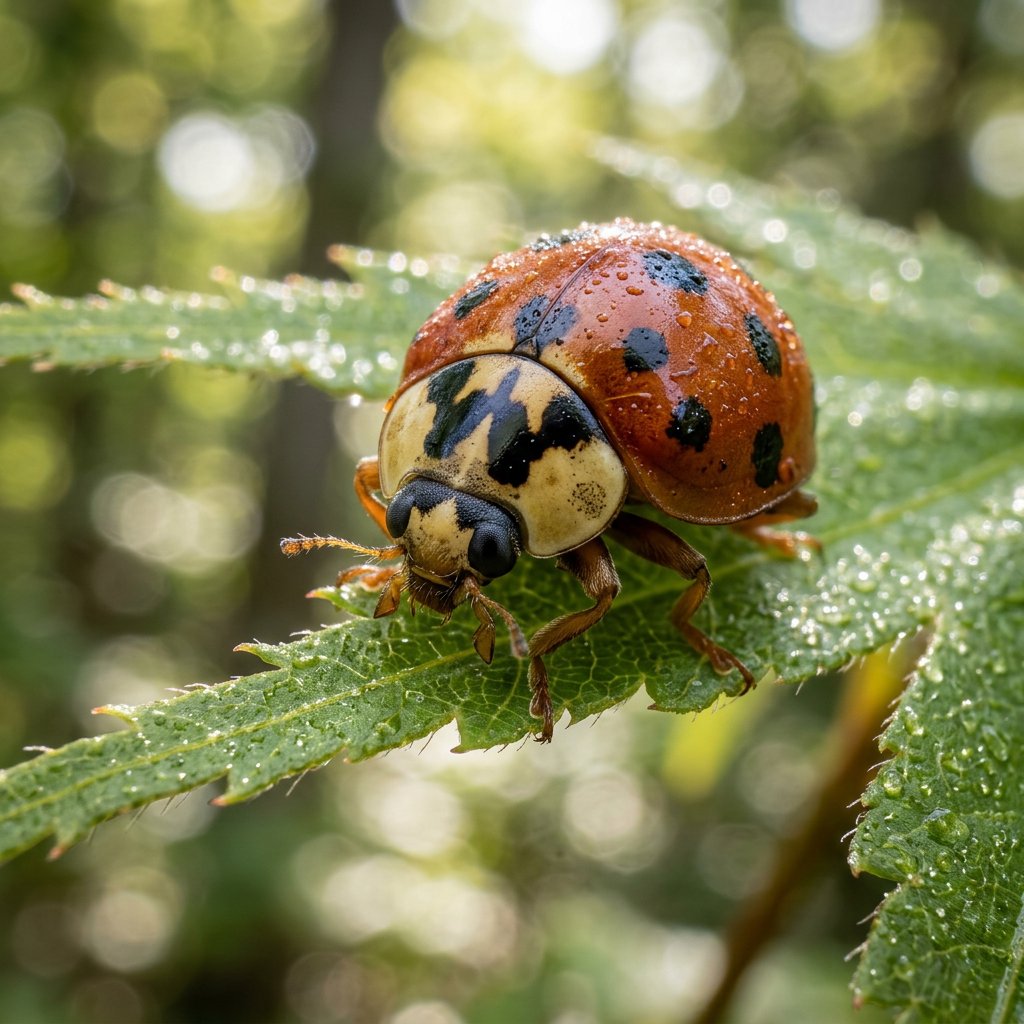
Often called the Harlequin Ladybird or the Asian Lady Beetle, Harmonia axyridis is a master of disguise with hundreds of different color variations. While they are the ultimate "aphid assassins" in the garden, they have a reputation for being uninvited houseguests when the weather turns cold. Though they look like the classic "lucky" ladybug, they are much hardier and more aggressive than their native cousins.
🔍 How to Identify
- 🐞 The "M" Mark: Look closely at the white area behind the head (the pronotum). You will almost always see a black mark shaped like a "M" or "W."
- 🎨 Variable Colors: Their wing covers can be anything from pale yellow and orange to deep red, or even solid black with two red spots.
- 📏 Dome Shape: They are slightly larger and more "domed" or convex than most other ladybug species, measuring about 5-8mm.
🌲 Habitat & Ecology
- 🌿 The Aphid Hunter: These beetles are voracious predators. A single larva can eat hundreds of aphids before reaching adulthood, making them a gardener’s best friend for natural pest control.
- 🏠 Winter Huddles: As the temperature drops, they seek out "cliffs" to hibernate. In suburban areas, your white or light-colored house acts as a fake cliff, leading them to swarm onto walls and crawl into attic crevices by the thousands.
⚠️ Safety & Toxicity
- 👄 Nippy Nature: Unlike most ladybugs, the Harlequin can be a bit "bitey." They don't have stingers or venom, but they can give a tiny, annoying nip to human skin if they are searching for moisture.
- 🧪 Reflex Bleeding: When stressed, they leak a yellow, foul-smelling fluid from their leg joints. This "blood" can stain curtains and furniture and may cause minor skin irritation or allergic reactions in sensitive individuals.
- 🐾 Pet Warning: While not deadly, if a curious dog eats a large cluster of these beetles, the acrid chemicals can cause "chemical burns" or irritation in the mouth or digestive tract.
✨ Fun Fact
In the world of winemaking, these beetles are a dreaded pest. If they are hiding in bunches of grapes during harvest, their "reflex blood" is so potent that even a few beetles can ruin the flavor of an entire vat of wine, giving it a bitter, "peanutty" or "musty" taste!
More Details








