Info
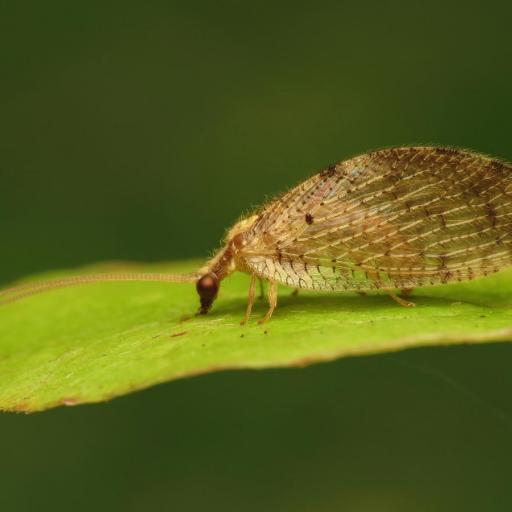
Often referred to as the Pale Brown Lacewing, this delicate insect is a silent guardian of the garden. While it may not have the flashy neon colors of its green cousins, it is a powerhouse of pest control, often nicknamed the "Aphid Lion" during its hungry larval stage. They look like tiny, animated pieces of ancient parchment fluttering through the trees.
🔍 How to Identify
- 🦋 Lacy Wings: It possesses broad, translucent wings covered in a fine network of veins and microscopic hairs, giving the wings a soft, "fuzzy" texture compared to other lacewings.
- 🍂 Autumnal Camouflage: The body and wings are primarily light brown to yellowish-tan, allowing it to blend perfectly with dried leaves, bark, and woody stems.
- 👁️ Prominent Eyes: It has large, dark, bead-like eyes that provide excellent vision for hunting and navigating during the low-light hours of dusk.
🌲 Habitat & Ecology
- 🍽️ The Gardener's Ally: This insect is a dedicated predator. Both the larvae and the adults spend their lives hunting aphids, mites, and scale insects, making them one of the most beneficial residents in a backyard ecosystem.
- 🌳 Deciduous Dweller: You are most likely to spot them in broadleaf woodlands or gardens with fruit trees. They prefer the shelter of deciduous leaves where their prey tends to congregate in large numbers.
⚠️ Safety & Toxicity
- 🛡️ Completely Harmless: The Pale Brown Lacewing is a "friend" in every sense. It does not sting, it is not poisonous, and it carries no diseases.
- 🤏 Larval Pinch: While the adults are gentle, the tiny larvae (aphid lions) are equipped with sickle-shaped mandibles. If one ends up on your skin, it might give a tiny, harmless nip out of curiosity, but it is not painful and causes no reaction.
✨ Fun Fact
Brown lacewings are "leaf-drummers." To find a mate, they vibrate their abdomens rapidly against a leaf's surface. These vibrations create a rhythmic "song" that travels through the plant, allowing males and females to find each other in the dark without making a sound that predators can hear!
More Details








